

I'll be straight with you—when I bought my 2016 Ram 1500 EcoDiesel, I wasn't thinking about emissions equipment. I was thinking about 25 MPG in a half-ton truck that could tow my travel trailer and still fit in my garage. And for the first couple years, it delivered exactly that. No complaints, no issues, just solid fuel economy and enough grunt to get the job done.
But somewhere around the 70,000-mile mark, I started paying closer attention. The truck still ran fine, but I noticed the regeneration cycles happening more often. The exhaust felt hotter than I remembered. And every time I filled up, I did the math and realized my average MPG had slipped a couple points from where it used to be.
I started digging into forums, reading what other EcoDiesel owners were saying. The consensus was interesting: these engines run well, but the DPF system is a compromise. It works, but it works at a cost—fuel, heat, and backpressure.
After a lot of research, I decided to try the TruckTok 3" DPF delete pipe. It's been about six months now, and I wanted to share what I learned for anyone else considering this path.
The basics: The Diesel Particulate Filter is a ceramic wall-flow filter that traps soot from the exhaust. It sits downstream of the turbo, and its job is to catch particulate matter before it reaches the atmosphere. When enough soot accumulates, the engine initiates a regeneration cycle—injecting extra fuel late in the combustion stroke to raise exhaust temperatures and burn off the trapped soot.
The frequency factor: On the EcoDiesel, regeneration frequency depends heavily on driving patterns. Highway miles? Less frequent regens. City driving, short trips, lots of idling? More frequent regens. Each regen burns fuel that doesn't move you down the road.
The backpressure reality: Every filter creates restriction. The DPF forces exhaust gas through porous ceramic walls, which creates backpressure that your engine has to overcome. Higher backpressure means your turbo works harder, EGTs rise, and you lose efficiency.
The ash factor: Here's the part that doesn't get talked about enough. Soot burns off during regen. Ash doesn't. Ash is the non-combustible residue from engine oil additives, and it accumulates in the DPF permanently. Eventually—usually somewhere between 150,000 and 200,000 miles—the ash load becomes significant enough that the DPF needs cleaning or replacement. That's not a cheap service.
Regen frequency: My truck seemed to regen every couple hundred miles, especially in warmer months when I was doing more stop-and-go driving. Each regen was burning fuel I'd rather use for moving.
The heat factor: On longer drives, especially when towing, I could feel the heat soaking into everything under the truck. The DPF gets hot during regen—really hot—and that heat radiates into surrounding components.
The performance question: The truck ran fine, but I couldn't help wondering how much extra work the engine was doing just to push exhaust through a filter. Every horsepower spent overcoming backpressure is horsepower not reaching the wheels.
The long-term thought: I plan to keep this truck for a while. The idea of a $2,000+ DPF replacement at 180,000 miles wasn't appealing.
3-inch diameter: The 3-inch size is well-matched to the EcoDiesel's displacement and flow needs. It's large enough to eliminate the backpressure created by the factory DPF while maintaining enough exhaust velocity for good turbo response.
Stainless steel construction: The pipe is made from high-quality stainless steel, which means it'll outlast the truck. No rust, no corrosion, no deterioration over time.
Direct replacement: The kit includes three pipes and two clamps—everything needed to replace the factory DPF assembly. No cutting, no welding, no fabrication. It bolts in using the existing mounting points.
Maximum flow design: The pipe is designed for competition applications, which means flow is the priority. No restrictions, no unnecessary bends, just a clear path for exhaust to exit.
Complete hardware: All necessary clamps are included. No hunting for parts.
Fuel economy improvement: This was the most measurable change. Without regeneration cycles burning fuel every few hundred miles, my average MPG went up by about 2-3 miles per gallon. On highway trips, the improvement is even more noticeable. The product claims better fuel mileage, and in my experience, that's accurate.
Throttle response: The engine feels more responsive, especially from a stop. With less backpressure, the turbo spools more quickly. The truck just feels livelier.
Lower exhaust temperatures: The product mentions "maximum flow for competition applications," and that flow matters for heat management. With exhaust gases exiting freely, EGTs under load are noticeably lower. For anyone who tows, this is a real benefit.
No more regen cycles: I don't think about regenerations anymore. No watching the dash, no wondering if I interrupted a cycle when I shut the truck off. The DPF is gone, and with it, all the associated mental overhead.
Better sound: The product notes that the system "sounds great," and it does. The exhaust note is deeper and more present without being obnoxious. It sounds like a diesel should.
The EcoDiesel's ECM is programmed to monitor DPF operation—differential pressure, exhaust temperatures, soot load calculations. When it detects that the DPF is missing, it will set codes, light up your dash, and likely derate power.
The product description mentions being "paired with an ECU remap," and that's not optional. A proper delete tune does three things:
What you'll need:
The fitment covers all 2014-2018 Rams with the 3.0L, regardless of cab configuration or bed length.
The TruckTok 3" DPF Delete Race Pipe addresses these compromises directly. It replaces the restrictive factory DPF with a free-flowing 3-inch pipe that lets the engine breathe. When paired with proper tuning, the results are real:
For EcoDiesel owners who plan to keep their trucks long-term and want them to run cooler, more efficiently, and more reliably, this kit makes technical sense. It's not about making the truck louder or smoking—it's about letting the engine perform the way it should.
If you've deleted the DPF on your EcoDiesel, what was your experience with fuel economy and tuning? Drop your thoughts below.
But somewhere around the 70,000-mile mark, I started paying closer attention. The truck still ran fine, but I noticed the regeneration cycles happening more often. The exhaust felt hotter than I remembered. And every time I filled up, I did the math and realized my average MPG had slipped a couple points from where it used to be.
I started digging into forums, reading what other EcoDiesel owners were saying. The consensus was interesting: these engines run well, but the DPF system is a compromise. It works, but it works at a cost—fuel, heat, and backpressure.
After a lot of research, I decided to try the TruckTok 3" DPF delete pipe. It's been about six months now, and I wanted to share what I learned for anyone else considering this path.
Part 1: Understanding the EcoDiesel's DPF Situation
Before we talk about removing it, let's be clear about what the DPF does on these trucks.The basics: The Diesel Particulate Filter is a ceramic wall-flow filter that traps soot from the exhaust. It sits downstream of the turbo, and its job is to catch particulate matter before it reaches the atmosphere. When enough soot accumulates, the engine initiates a regeneration cycle—injecting extra fuel late in the combustion stroke to raise exhaust temperatures and burn off the trapped soot.
The frequency factor: On the EcoDiesel, regeneration frequency depends heavily on driving patterns. Highway miles? Less frequent regens. City driving, short trips, lots of idling? More frequent regens. Each regen burns fuel that doesn't move you down the road.
The backpressure reality: Every filter creates restriction. The DPF forces exhaust gas through porous ceramic walls, which creates backpressure that your engine has to overcome. Higher backpressure means your turbo works harder, EGTs rise, and you lose efficiency.
The ash factor: Here's the part that doesn't get talked about enough. Soot burns off during regen. Ash doesn't. Ash is the non-combustible residue from engine oil additives, and it accumulates in the DPF permanently. Eventually—usually somewhere between 150,000 and 200,000 miles—the ash load becomes significant enough that the DPF needs cleaning or replacement. That's not a cheap service.
Part 2: What I Was Noticing Before the Delete
After putting some miles on my truck, a few things became apparent.Regen frequency: My truck seemed to regen every couple hundred miles, especially in warmer months when I was doing more stop-and-go driving. Each regen was burning fuel I'd rather use for moving.
The heat factor: On longer drives, especially when towing, I could feel the heat soaking into everything under the truck. The DPF gets hot during regen—really hot—and that heat radiates into surrounding components.
The performance question: The truck ran fine, but I couldn't help wondering how much extra work the engine was doing just to push exhaust through a filter. Every horsepower spent overcoming backpressure is horsepower not reaching the wheels.
The long-term thought: I plan to keep this truck for a while. The idea of a $2,000+ DPF replacement at 180,000 miles wasn't appealing.
Part 3: What the TruckTok 3" Pipe Actually Does
The TruckTok kit replaces the factory DPF assembly with a straight-through 3-inch pipe. Here's what's included and why it matters.3-inch diameter: The 3-inch size is well-matched to the EcoDiesel's displacement and flow needs. It's large enough to eliminate the backpressure created by the factory DPF while maintaining enough exhaust velocity for good turbo response.
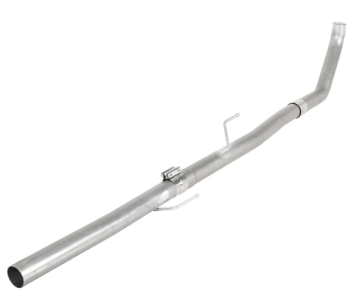
Stainless steel construction: The pipe is made from high-quality stainless steel, which means it'll outlast the truck. No rust, no corrosion, no deterioration over time.
Direct replacement: The kit includes three pipes and two clamps—everything needed to replace the factory DPF assembly. No cutting, no welding, no fabrication. It bolts in using the existing mounting points.
Maximum flow design: The pipe is designed for competition applications, which means flow is the priority. No restrictions, no unnecessary bends, just a clear path for exhaust to exit.
Complete hardware: All necessary clamps are included. No hunting for parts.
Part 4: What I Gained After Installation
After running this setup for six months, here's what I've observed.Fuel economy improvement: This was the most measurable change. Without regeneration cycles burning fuel every few hundred miles, my average MPG went up by about 2-3 miles per gallon. On highway trips, the improvement is even more noticeable. The product claims better fuel mileage, and in my experience, that's accurate.
Throttle response: The engine feels more responsive, especially from a stop. With less backpressure, the turbo spools more quickly. The truck just feels livelier.
Lower exhaust temperatures: The product mentions "maximum flow for competition applications," and that flow matters for heat management. With exhaust gases exiting freely, EGTs under load are noticeably lower. For anyone who tows, this is a real benefit.
No more regen cycles: I don't think about regenerations anymore. No watching the dash, no wondering if I interrupted a cycle when I shut the truck off. The DPF is gone, and with it, all the associated mental overhead.
Better sound: The product notes that the system "sounds great," and it does. The exhaust note is deeper and more present without being obnoxious. It sounds like a diesel should.
Part 5: The Tuning Reality
Here's the part that needs emphasis: the pipe alone isn't enough.The EcoDiesel's ECM is programmed to monitor DPF operation—differential pressure, exhaust temperatures, soot load calculations. When it detects that the DPF is missing, it will set codes, light up your dash, and likely derate power.
The product description mentions being "paired with an ECU remap," and that's not optional. A proper delete tune does three things:
- Disables DPF regeneration logic
- Eliminates fault codes for missing components
- Optimizes fuel delivery for the new exhaust flow
Part 6: The Installation Experience
Installing the pipe is straightforward for anyone comfortable with exhaust work.What you'll need:
- Basic socket set
- Breaker bar for stubborn bolts
- Penetrating oil (soak those bolts ahead of time)
- Jack stands to support the truck safely
- Support the truck safely and locate the factory DPF assembly
- Unbolt the DPF from the turbo outlet and the downstream connections
- Remove the factory DPF (it's heavy—get help or use a jack)
- Install the new pipes using the included clamps
- Tighten all connections
- Double-check for clearance and leaks
Part 7: The Fitment Specifics
This kit fits:- 2014-2018 Ram 1500 with the 3.0L EcoDiesel
The fitment covers all 2014-2018 Rams with the 3.0L, regardless of cab configuration or bed length.
Part 8: The Verdict
The 2014-2018 EcoDiesel is a solid engine that brought diesel efficiency to the half-ton segment. But its DPF system introduces real compromises—fuel burned during regeneration, backpressure that costs power, and a component with a finite service life.The TruckTok 3" DPF Delete Race Pipe addresses these compromises directly. It replaces the restrictive factory DPF with a free-flowing 3-inch pipe that lets the engine breathe. When paired with proper tuning, the results are real:
- 2-3 MPG fuel economy improvement
- Better throttle response
- Lower EGTs under load
- No more regeneration cycles
- Elimination of a future maintenance liability
For EcoDiesel owners who plan to keep their trucks long-term and want them to run cooler, more efficiently, and more reliably, this kit makes technical sense. It's not about making the truck louder or smoking—it's about letting the engine perform the way it should.
If you've deleted the DPF on your EcoDiesel, what was your experience with fuel economy and tuning? Drop your thoughts below.
Last edited:
