

If you command a GM truck powered by the mighty L5P Duramax, you know its strength—yet feel its untapped potential. The factory-installed downpipe is the hidden constraint, a engineered compromise that stifles your engine's true voice. It's the equivalent of an athlete competing with a respiratory mask. Performance is hampered from the start.
Upgrading this single component changes everything. This guide details the what, why, and how of the L5P downpipe—the critical first modification that unlocks a freer-breathing, more responsive, and more powerful diesel experience.
The Engine's Exhaust Valve: Demystifying the Downpipe
Primary Role: The Turbo's Escape Route
Acting as the direct exit from the turbocharger's turbine, the downpipe channels scorching exhaust gases into the initial after-treatment stage (the DOC). Crucially, it is positioned upstream of all major emissions devices. Thus, swapping it for an aftermarket unit does not constitute an emissions delete; it simply streamlines the exhaust's very first pathway.
The Source of the Restriction
Factory design prioritizes a complex matrix of cost, noise, packaging, and warranty considerations. This often results in a downpipe with a suboptimal diameter and mandrel bends, sometimes even incorporating intentionally pinched sections to clear chassis components. These limitations create backpressure, which is the fundamental adversary of power and efficiency.
The Upgrade Mission: Establish a seamless, high-flow conduit for exhaust gases.
The Transformation: What an Upgraded Downpipe Delivers
Dramatically Reduced Backpressure
This is the cornerstone benefit. A smooth, large-diameter pipe allows exhaust energy to exit with minimal resistance. This reduces engine workload, permits the turbo to spool with remarkable agility, and directly translates to power felt at the throttle.
Critical Exhaust Gas Temperature (EGT) Reduction
Efficient evacuation pulls heat away from the turbo and engine bay. Lower EGTs are a non-negotiable for longevity, especially when towing heavy loads or pursuing higher power levels, safeguarding your engine's vital components.
Instantaneous Throttle Reaction
The notorious "turbo lag" diminishes. Expect a sharper, more direct connection between your right foot and the truck's forward thrust—whether merging, passing, or climbing.
Performance Gains: The Measurable Difference
For an L5P Duramax, a performance downpipe is typically good for:
This mod is essential for you if you are:
Prioritize quality: mandrel-bent T304 or T409 stainless steel ensures durability. The design should focus on a smooth interior and optimal diameter for your goals.
Our Premier Offering: The Ultimate Flow Solution
For those seeking to completely eradicate factory restrictions, our 3.5" Downpipe + 5" DPF/EGR Delete + CCV Kit is the definitive package. Engineered for maximum results, it features:
Think of the downpipe as the opening move in a high-performance strategy.
Professional Installation Overview (4-6 Hour Project)
Setup & Safety
Begin by disconnecting the negative battery cable. Safely elevate and support the front of the vehicle. Remove the passenger-side front wheel and the inner fender liner for clear access.
OEM Downpipe Removal
The path to a truly liberated L5P begins at the turbo outlet. Our engineered downpipe upgrade directly targets the factory's primary exhaust restriction. By implementing a precision-formed, large-diameter flow path, it cuts backpressure, accelerates turbo response, and unlocks real horsepower—allowing your Duramax to finally express its full capability.
This upgrade doesn't just stand alone; it perfectly prepares your truck for the next level of modifications, ensuring each subsequent component performs at its peak.
Explore the full range of L5P performance solutions engineered for real results at www.trucktok.com.
Frequently Asked Questions
Q1: Will this mod trigger a check engine light (CEL)?
A1: A downpipe that retains the factory catalytic converter location and sensors will not cause a CEL. It is a direct replacement, not a delete.
Q2: Do I need an intake upgrade to match the downpipe?
A2: While not mandatory, an intake upgrade is a highly recommended companion. Together, they create a balanced, high-flow air intake and exhaust system for compounded gains.
Q3: Can a competent DIYer handle the installation?
A3: Absolutely. With standard mechanics' tools, a good workspace, and careful attention to detail, this is a very achievable weekend project for an experienced enthusiast.
Q4: Is the performance gain worth the investment?
A4: For L5P owners, the downpipe is consistently ranked among the best value-for-money performance modifications, addressing a key factory limitation with tangible driving benefits.
Q5: How important is tuning afterwards?
A5: Tuning is the catalyst. The downpipe provides the physical potential; a professional custom tune rewrites the engine management software to actively exploit that potential, delivering the most significant performance return.
Upgrading this single component changes everything. This guide details the what, why, and how of the L5P downpipe—the critical first modification that unlocks a freer-breathing, more responsive, and more powerful diesel experience.
The Engine's Exhaust Valve: Demystifying the Downpipe
Primary Role: The Turbo's Escape Route
Acting as the direct exit from the turbocharger's turbine, the downpipe channels scorching exhaust gases into the initial after-treatment stage (the DOC). Crucially, it is positioned upstream of all major emissions devices. Thus, swapping it for an aftermarket unit does not constitute an emissions delete; it simply streamlines the exhaust's very first pathway.
The Source of the Restriction
Factory design prioritizes a complex matrix of cost, noise, packaging, and warranty considerations. This often results in a downpipe with a suboptimal diameter and mandrel bends, sometimes even incorporating intentionally pinched sections to clear chassis components. These limitations create backpressure, which is the fundamental adversary of power and efficiency.
The Upgrade Mission: Establish a seamless, high-flow conduit for exhaust gases.
The Transformation: What an Upgraded Downpipe Delivers
Dramatically Reduced Backpressure
This is the cornerstone benefit. A smooth, large-diameter pipe allows exhaust energy to exit with minimal resistance. This reduces engine workload, permits the turbo to spool with remarkable agility, and directly translates to power felt at the throttle.
Critical Exhaust Gas Temperature (EGT) Reduction
Efficient evacuation pulls heat away from the turbo and engine bay. Lower EGTs are a non-negotiable for longevity, especially when towing heavy loads or pursuing higher power levels, safeguarding your engine's vital components.
Instantaneous Throttle Reaction
The notorious "turbo lag" diminishes. Expect a sharper, more direct connection between your right foot and the truck's forward thrust—whether merging, passing, or climbing.
Performance Gains: The Measurable Difference
For an L5P Duramax, a performance downpipe is typically good for:
- Power: +10-15 Wheel Horsepower
- Torque: +15-25 lb-ft
- Responsiveness: Noticeably faster turbo spool
- Efficiency: Marked decrease in exhaust backpressure & improved EGT management
- Engine Tuning: The stock ECU calibration is a limiting factor. To fully capitalize on the improved airflow, a custom tune is the essential key that recalibrates the engine's logic for greater gains.
- Product Choice:
- High-Flow Catted: Maintains the catalytic converter for street legality and environmental compliance, offering a balanced performance uplift.
- Off-Road/Straight-Pipe: Maximizes flow for absolute power, intended strictly for competition or off-highway use where emissions compliance is not required.
- Professional Installation: A perfect seal and fitment are paramount. Leaks or misalignment will sabotage both performance and your satisfaction.
This mod is essential for you if you are:
- The Tow Master: Demands robust, low-end torque and cooler temperatures for safe, sustained hauling.
- The Performance Builder: Views the downpipe as the foundational step in a comprehensive build.
- The Effortless Cruiser: Desires a more responsive, efficient, and enjoyable daily driving character.
- The Long-Term Custodian: Invests in upgrades that enhance both performance and mechanical longevity.
Prioritize quality: mandrel-bent T304 or T409 stainless steel ensures durability. The design should focus on a smooth interior and optimal diameter for your goals.
Our Premier Offering: The Ultimate Flow Solution
For those seeking to completely eradicate factory restrictions, our 3.5" Downpipe + 5" DPF/EGR Delete + CCV Kit is the definitive package. Engineered for maximum results, it features:
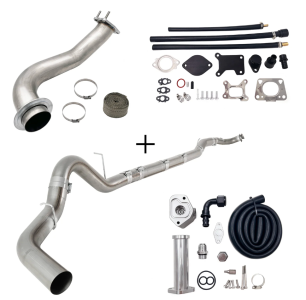
- T-409 Stainless Construction: For exceptional resilience against heat and corrosion.
- Complete Off-Road System: A 4-bolt flange design for a definitive delete solution.
- Unrestricted Flow Path: Eliminates major bottlenecks, cutting backpressure and increasing flow capacity.
- Integrated CCV Reroute: Promotes superior crankcase ventilation for a healthier engine.
Think of the downpipe as the opening move in a high-performance strategy.
- Foundational Mod: Addressing the exhaust bottleneck first creates a solid platform for all subsequent upgrades.
- Synergistic Next Steps:
- Cold Air Intake: Balances the improved "exhale" with a better "inhale."
- Performance Tuning: The essential software unlock to harness the new hardware.
- Fuel System & Turbo: The final steps for monumental power, made effective by the freed-up exhaust flow.
Professional Installation Overview (4-6 Hour Project)
Setup & Safety
Begin by disconnecting the negative battery cable. Safely elevate and support the front of the vehicle. Remove the passenger-side front wheel and the inner fender liner for clear access.
OEM Downpipe Removal
- Loosen the upper V-band clamp near the turbo.
- Remove the protective heat shield and the lower V-band clamp.
- Unbolt the supporting bracket(s).
- Carefully maneuver the factory downpipe out of the engine bay.
- Clean the turbo outlet flange mating surface thoroughly.
- Place a new high-temperature gasket onto the turbo flange.
- Maneuver the new downpipe into position, guiding it from above.
- Hand-tighten the turbo flange bolts first, followed by the upper V-band clamp—but do not fully torque yet.
- Secure all downstream connections and brackets. Ensure full clearance from heat shields and chassis components.
- Once perfectly aligned, finalize all bolts and clamps to specified torque values.
- Reinstall the wheel, fender liner, and heat shield.
- Reconnect the battery. Start the engine and conduct a meticulous auditory and visual inspection for leaks.
- A controlled test drive will verify proper operation and the anticipated improvement in throttle response.
- Bi-Annual Check: Inspect all connections for soot (indicating leaks) or corrosion. Ensure mounting integrity.
- Surface Care: Use appropriate stainless steel cleaner to maintain finish and remove road grime.
- Monitor Performance: Keep an eye on EGT readings under load to confirm improved thermal dynamics. Verify sensor connections if any warning lights appear.
The path to a truly liberated L5P begins at the turbo outlet. Our engineered downpipe upgrade directly targets the factory's primary exhaust restriction. By implementing a precision-formed, large-diameter flow path, it cuts backpressure, accelerates turbo response, and unlocks real horsepower—allowing your Duramax to finally express its full capability.
This upgrade doesn't just stand alone; it perfectly prepares your truck for the next level of modifications, ensuring each subsequent component performs at its peak.
Explore the full range of L5P performance solutions engineered for real results at www.trucktok.com.
Frequently Asked Questions
Q1: Will this mod trigger a check engine light (CEL)?
A1: A downpipe that retains the factory catalytic converter location and sensors will not cause a CEL. It is a direct replacement, not a delete.
Q2: Do I need an intake upgrade to match the downpipe?
A2: While not mandatory, an intake upgrade is a highly recommended companion. Together, they create a balanced, high-flow air intake and exhaust system for compounded gains.
Q3: Can a competent DIYer handle the installation?
A3: Absolutely. With standard mechanics' tools, a good workspace, and careful attention to detail, this is a very achievable weekend project for an experienced enthusiast.
Q4: Is the performance gain worth the investment?
A4: For L5P owners, the downpipe is consistently ranked among the best value-for-money performance modifications, addressing a key factory limitation with tangible driving benefits.
Q5: How important is tuning afterwards?
A5: Tuning is the catalyst. The downpipe provides the physical potential; a professional custom tune rewrites the engine management software to actively exploit that potential, delivering the most significant performance return.
Last edited:
