

The 2011-2022 6.7L Powerstroke represents Ford's most mature and refined diesel platform. Unlike the troubled 6.0L and 6.4L generations, the 6.7L was engineered from the ground up by Ford's own team, resulting in a powerplant that combines class-leading performance with significantly improved reliability. The compacted graphite iron block, reverse-flow cylinder head, and single turbocharger configuration have proven themselves in hundreds of thousands of trucks.
But even this thoroughly engineered platform could not escape the fundamental thermodynamic compromises of diesel particulate filter technology. The DPF, while effective at meeting emissions standards, introduces measurable penalties in backpressure, thermal load, and fuel consumption that affect every aspect of engine operation.
The cumulative effect: A stock 6.7L exhaust system creates measurable backpressure that increases with soot load. While Ford engineers optimized this system to balance performance and compliance, the fundamental physics cannot be engineered away—a wall-flow filter is inherently restrictive.
Quantifying the restriction: When clean, a 6.7L DPF might create 1-3 PSI of backpressure at highway cruise. As soot accumulates, this pressure rises. The PCM monitors differential pressure across the DPF to determine when regeneration is required, typically targeting a soot load of 40-60 grams before initiating a cleaning cycle.
The turbocharger connection: The 6.7L's single turbocharger relies on a pressure differential across the turbine to extract energy from the exhaust. When DPF backpressure increases, the post-turbine pressure rises, reducing this differential. The turbo must work harder to maintain boost, which increases drive pressure and raises exhaust gas temperatures.
The measurable effect: Higher backpressure forces more exhaust gas to remain in the cylinder during valve overlap, diluting the incoming air charge. This reduces volumetric efficiency and increases the work required during the exhaust stroke—a pure efficiency loss that manifests as reduced fuel economy and higher EGTs.
The fuel penalty: The fuel used for post-injection does not contribute to power production. It is burned solely to generate heat in the exhaust system. Real-world data suggests regeneration cycles increase fuel consumption by 2-4 percent, depending on driving conditions and regeneration frequency. For a truck averaging 15 MPG, this represents a loss of 0.3-0.6 MPG over time.
The thermal stress: Sustained 1,100°F+ temperatures in the exhaust system create cumulative thermal fatigue. Components that experience these temperatures repeatedly include:
Ash is the non-combustible metallic residue from engine oil additives. Over the life of the engine, ash accumulates in the DPF permanently. There is no regeneration cycle for ash.
The 200,000-mile wall: By approximately 200,000 miles, ash accumulation becomes sufficient to cause a measurable increase in backpressure, even with a clean soot load. At this point, the DPF has reached the end of its service life. The only options are:
Diameter rationale: The 4-inch downpipe-back configuration represents an optimal balance for the 6.7L's displacement and power potential. It provides substantial flow capacity—significantly more than the stock system—while maintaining sufficient exhaust velocity to support good turbo response.
Material selection: T-409 stainless steel offers several advantages over OEM materials:
Reduced EGTs: Lower backpressure means the engine expends less energy pushing exhaust out, which directly translates to lower exhaust gas temperatures under load. The product information notes "reduced EGTs: lower exhaust gas temperatures for a healthier engine." This is accurate—owners consistently report drops of 100-200°F in sustained towing applications.
Enhanced Power Delivery: Lower backpressure allows the turbo to spool more efficiently. The "enhanced power" and "better engine breathing" claims reflect the reality that an engine not fighting exhaust restriction can devote more energy to propulsion.
Improved Fuel Economy: With no parasitic fuel consumption during regeneration cycles and reduced pumping losses, fuel economy improves. While individual results vary, gains of 2-4 MPG are commonly reported.
Elimination of DPF Maintenance: With the DPF removed, there is no regeneration, no ash accumulation, no cleaning or replacement required. The system is permanent.
The 6.7L's PCM is programmed to monitor:
What proper delete tuning accomplishes:
Cab & Chassis trucks have different frame lengths, exhaust routing, and under-body packaging than pickup configurations. The exhaust system that fits a crew cab short bed will not necessarily fit a cab & chassis truck with a different wheelbase and frame configuration.
For owners of cab & chassis trucks, verifying fitment with the manufacturer before ordering is essential.
2011-2014: First-generation 6.7L with single turbo and basic emissions package. These trucks have simpler exhaust routing.
2015-2016: Updated with larger turbo and improved emissions components. Exhaust configuration changed slightly.
2017-2019: Further refinements to emissions systems. Turbocharger upgraded again.
2020-2022: Latest iterations with continued improvements.
The 4-inch downpipe-back system is designed to fit across this entire range, which requires accommodating variations in flange styles, sensor locations, and chassis configurations.
When paired with proper tuning from a platform like the Minimaxx, this combination transforms the exhaust system from a liability into an asset. Lower EGTs, improved fuel economy, enhanced power delivery, and permanent elimination of a maintenance liability are the measurable outcomes.
For owners who operate their vehicles in jurisdictions without emissions testing and who are prepared to accept the legal responsibilities, the technical case for DPF deletion is robust. It is not about "defeating" a system—it is about removing components that introduce measurable thermodynamic penalties and guaranteed long-term maintenance requirements.
If you've modified the exhaust on your 6.7L Powerstroke, what changes did you observe in EGTs, fuel economy, or turbo response? Drop your experience below.
But even this thoroughly engineered platform could not escape the fundamental thermodynamic compromises of diesel particulate filter technology. The DPF, while effective at meeting emissions standards, introduces measurable penalties in backpressure, thermal load, and fuel consumption that affect every aspect of engine operation.
Part 1: The 6.7L's Exhaust Architecture – A System of Necessary Restrictions
The 6.7L Powerstroke's exhaust aftertreatment system is among the most comprehensive ever fitted to a light-duty diesel. It typically includes:- Diesel Oxidation Catalyst (DOC): Mounted close to the turbo outlet to oxidize CO and hydrocarbons
- Diesel Particulate Filter (DPF): A wall-flow ceramic filter that traps soot
- Selective Catalytic Reduction (SCR): DEF injection for NOx control (added 2011+)
The cumulative effect: A stock 6.7L exhaust system creates measurable backpressure that increases with soot load. While Ford engineers optimized this system to balance performance and compliance, the fundamental physics cannot be engineered away—a wall-flow filter is inherently restrictive.
Part 2: The Backpressure Penalty – A Fluid Dynamics Analysis
The DPF operates on a simple principle: exhaust gas enters channels that are plugged at the outlet, forcing it through porous ceramic walls into adjacent channels that are plugged at the inlet. This wall-flow design traps particulate matter but creates significant flow resistance.Quantifying the restriction: When clean, a 6.7L DPF might create 1-3 PSI of backpressure at highway cruise. As soot accumulates, this pressure rises. The PCM monitors differential pressure across the DPF to determine when regeneration is required, typically targeting a soot load of 40-60 grams before initiating a cleaning cycle.
The turbocharger connection: The 6.7L's single turbocharger relies on a pressure differential across the turbine to extract energy from the exhaust. When DPF backpressure increases, the post-turbine pressure rises, reducing this differential. The turbo must work harder to maintain boost, which increases drive pressure and raises exhaust gas temperatures.
The measurable effect: Higher backpressure forces more exhaust gas to remain in the cylinder during valve overlap, diluting the incoming air charge. This reduces volumetric efficiency and increases the work required during the exhaust stroke—a pure efficiency loss that manifests as reduced fuel economy and higher EGTs.
Part 3: The Regeneration Cycle – A Thermodynamic Cost Analysis
The 6.7L initiates regeneration when the DPF soot load reaches its target threshold. During regeneration, the PCM commands late-cycle post-injection, sending raw fuel into the exhaust stream where it ignites across the DOC, raising exhaust temperatures to approximately 1,100-1,200°F.The fuel penalty: The fuel used for post-injection does not contribute to power production. It is burned solely to generate heat in the exhaust system. Real-world data suggests regeneration cycles increase fuel consumption by 2-4 percent, depending on driving conditions and regeneration frequency. For a truck averaging 15 MPG, this represents a loss of 0.3-0.6 MPG over time.
The thermal stress: Sustained 1,100°F+ temperatures in the exhaust system create cumulative thermal fatigue. Components that experience these temperatures repeatedly include:
- Turbocharger turbine housing
- Exhaust manifolds
- DOC and DPF housings
- Associated sensors and wiring
Part 4: The Ash Accumulation Reality – An Inevitable Endpoint
Soot burns. Ash does not.Ash is the non-combustible metallic residue from engine oil additives. Over the life of the engine, ash accumulates in the DPF permanently. There is no regeneration cycle for ash.
The 200,000-mile wall: By approximately 200,000 miles, ash accumulation becomes sufficient to cause a measurable increase in backpressure, even with a clean soot load. At this point, the DPF has reached the end of its service life. The only options are:
- Professional cleaning ($500-1,000)
- DPF replacement ($2,500-4,000)
Part 5: The 4-Inch Solution – Engineering the Flow Path
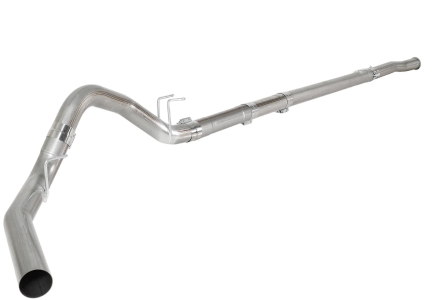
When the DPF and DOC are removed and replaced with a 4-inch straight pipe, the exhaust system's flow characteristics change fundamentally.Diameter rationale: The 4-inch downpipe-back configuration represents an optimal balance for the 6.7L's displacement and power potential. It provides substantial flow capacity—significantly more than the stock system—while maintaining sufficient exhaust velocity to support good turbo response.
Material selection: T-409 stainless steel offers several advantages over OEM materials:
- Heat resistance: T-409 maintains structural integrity at elevated temperatures
- Corrosion resistance: Chromium content prevents rust from road salt and moisture
- Durability: Outlasts mild steel by a factor of 3-5 times in typical operating conditions
Part 6: The Measurable Outcomes
When properly executed with quality hardware and appropriate tuning, DPF deletion on the 6.7L Powerstroke delivers several quantifiable improvements:Reduced EGTs: Lower backpressure means the engine expends less energy pushing exhaust out, which directly translates to lower exhaust gas temperatures under load. The product information notes "reduced EGTs: lower exhaust gas temperatures for a healthier engine." This is accurate—owners consistently report drops of 100-200°F in sustained towing applications.
Enhanced Power Delivery: Lower backpressure allows the turbo to spool more efficiently. The "enhanced power" and "better engine breathing" claims reflect the reality that an engine not fighting exhaust restriction can devote more energy to propulsion.
Improved Fuel Economy: With no parasitic fuel consumption during regeneration cycles and reduced pumping losses, fuel economy improves. While individual results vary, gains of 2-4 MPG are commonly reported.
Elimination of DPF Maintenance: With the DPF removed, there is no regeneration, no ash accumulation, no cleaning or replacement required. The system is permanent.
Part 7: The Tuning Imperative – Non-Negotiable Reality
Physical removal of the DPF without corresponding software modification will result in a non-functional vehicle.The 6.7L's PCM is programmed to monitor:
- Differential pressure across the DPF
- Exhaust gas temperatures pre- and post-DPF
- Soot load models and regeneration frequency
What proper delete tuning accomplishes:
- Disables DPF regeneration logic entirely
- Eliminates fault code reporting for missing sensors
- Optimizes fuel delivery and timing to match the new exhaust flow characteristics
- Provides multiple power levels for different operating conditions
Part 8: The Cab & Chassis Exception – A Fitment Note
The product information notes: "Not suitable for Cab & Chassis trucks." This is an important distinction.Cab & Chassis trucks have different frame lengths, exhaust routing, and under-body packaging than pickup configurations. The exhaust system that fits a crew cab short bed will not necessarily fit a cab & chassis truck with a different wheelbase and frame configuration.
For owners of cab & chassis trucks, verifying fitment with the manufacturer before ordering is essential.
Part 9: The 2011-2022 Evolution – What Changed
The 6.7L Powerstroke underwent several significant updates during its production run, which affect exhaust system design:2011-2014: First-generation 6.7L with single turbo and basic emissions package. These trucks have simpler exhaust routing.
2015-2016: Updated with larger turbo and improved emissions components. Exhaust configuration changed slightly.
2017-2019: Further refinements to emissions systems. Turbocharger upgraded again.
2020-2022: Latest iterations with continued improvements.
The 4-inch downpipe-back system is designed to fit across this entire range, which requires accommodating variations in flange styles, sensor locations, and chassis configurations.
Part 10: The Thermodynamic Summary
From a purely technical standpoint, the DPF on a 6.7L Powerstroke represents a series of engineering compromises:- It increases backpressure, raising pumping losses and reducing thermodynamic efficiency
- It requires periodic regeneration, consuming fuel that does not contribute to power production
- It accumulates non-combustible ash, guaranteeing eventual failure or need for service
- It adds thermal mass and complexity to the exhaust system
When paired with proper tuning from a platform like the Minimaxx, this combination transforms the exhaust system from a liability into an asset. Lower EGTs, improved fuel economy, enhanced power delivery, and permanent elimination of a maintenance liability are the measurable outcomes.
Part 11: The Legal Reality
It is important to state clearly that removing the DPF from a vehicle driven on public roads violates the Clean Air Act. The components discussed are intended for off-road and competition use only.For owners who operate their vehicles in jurisdictions without emissions testing and who are prepared to accept the legal responsibilities, the technical case for DPF deletion is robust. It is not about "defeating" a system—it is about removing components that introduce measurable thermodynamic penalties and guaranteed long-term maintenance requirements.
If you've modified the exhaust on your 6.7L Powerstroke, what changes did you observe in EGTs, fuel economy, or turbo response? Drop your experience below.
Last edited:
