

If you own an LLY, LBZ, or LMM Duramax built between 2004.5 and 2010, you already know you're driving one of the most respected diesel platforms ever made. These engines are renowned for their strength, reliability, and tuning potential. But there's a quiet bottleneck hiding right at the turbo outlet—one that many owners overlook while chasing power through tuners and injectors. I'm talking about the factory downpipe.
For years, I drove my '06 LBZ thinking the stock downpipe was "good enough." It wasn't until I finally swapped it out for a quality 3-inch unit that I realized how much restriction I'd been tolerating. This isn't a flashy mod. It won't make your truck sound like a monster or win you races at the strip. But what it will do is provide a foundational improvement in how your turbo spools, how your EGTs behave, and how your entire exhaust system breathes. Here's why this overlooked upgrade deserves a spot near the top of your to-do list.
The factory downpipe on these Duramax trucks is a compromise. It's crimped, pinched, and sometimes oddly shaped to clear chassis components and meet cost targets. The internal diameter is inconsistent, and the bends are rarely smooth. This creates turbulence and backpressure right at the turbo outlet.
Here's why that matters:
1. Material Quality: High-Grade Stainless Steel
This isn't mild steel that will rust through in two winters. It's constructed from high-quality stainless steel, which offers excellent corrosion resistance and longevity. It's also thick enough to resist dinging or denting during installation.
2. True 3" Diameter, Smooth Mandrel Bends
The critical spec is the 3.0" inlet and outlet diameter and the fact that it's mandrel-bent. Unlike the factory pipe, which is often crush-bent to navigate tight spaces, a mandrel-bent pipe maintains a consistent internal diameter throughout every curve. This preserves exhaust velocity and eliminates turbulence. Airflow stays smooth and laminar.
3. Direct, Bolt-In Fitment
One of the best features is that it's designed to be a direct factory replacement. It bolts directly to the turbo outlet and connects to the rest of the exhaust system without cutting, welding, or modification. The kit includes the necessary hardware, and the pipe is shaped to clear all factory components—no hammering, no wrestling. It took me about an hour in my driveway.
4. Real-World Performance Gains
The description claims an approximate 10-15 horsepower gain. Is that dyno-verified on every truck? Maybe not. But here's what I can confirm from seat-of-the-pants experience:
Where it does shine is as a foundational supporting mod. If you plan to:
Think of it this way: you wouldn't put a high-flow air filter on a snorkel. This is the same principle—clear the restriction closest to the source.
Fitment Confirmation:
This pipe is designed for 2004.5-2010 Chevy Silverado and GMC Sierra 2500/3500 trucks with the 6.6L Duramax LLY, LBZ, and LMM engines. It will not fit earlier LB7 trucks or cab-and-chassis configurations. Double-check your model year and bed length if you're unsure.
Off-Road Use Only:
This is not CYA language—it's the law. This downpipe removes the factory catalytic converter. In the United States, tampering with emissions equipment on a vehicle driven on public roads is a violation of the Clean Air Act. This product is explicitly marked "Not for sale or street use on a licensed vehicle in the State of California and New York & does meet CARB states" and "deemed for 'Off-Road use only.'"
Know your local laws and make your own decisions accordingly.
It reduces heat, improves response, and removes a factory-imposed restriction that serves no purpose once you've decided to actually use your truck's potential. Whether your goal is lower EGTs while towing, quicker turbo spool, or simply building a solid foundation for future mods, this pipe delivers.
Has anyone else here swapped their downpipe and noticed the difference? What was your experience with EGTs and spool-up? Drop your thoughts below.
For years, I drove my '06 LBZ thinking the stock downpipe was "good enough." It wasn't until I finally swapped it out for a quality 3-inch unit that I realized how much restriction I'd been tolerating. This isn't a flashy mod. It won't make your truck sound like a monster or win you races at the strip. But what it will do is provide a foundational improvement in how your turbo spools, how your EGTs behave, and how your entire exhaust system breathes. Here's why this overlooked upgrade deserves a spot near the top of your to-do list.
The Factory Bottleneck: Why the Stock Downpipe Holds You Back
Let's start with what the downpipe actually does. It's the first section of exhaust piping after the turbocharger outlet. Its job is simple: get hot, fast-moving exhaust gas away from the turbine wheel as quickly and efficiently as possible.The factory downpipe on these Duramax trucks is a compromise. It's crimped, pinched, and sometimes oddly shaped to clear chassis components and meet cost targets. The internal diameter is inconsistent, and the bends are rarely smooth. This creates turbulence and backpressure right at the turbo outlet.
Here's why that matters:
- Restricted Flow = Higher EGTs: When the turbo has to push exhaust through a tight, kinked pipe, it works harder. This builds heat. Higher Exhaust Gas Temperatures (EGTs) are the enemy of longevity, especially when towing.
- Slower Turbo Spool: The turbocharger is driven by exhaust pressure. If that pressure is blunted by a restriction immediately after the turbine, spool-up is delayed. Throttle response suffers.
- Choked Performance Gains: If you've added a tuner, bigger injectors, or even just a free-flowing exhaust, the stock downpipe becomes the narrowest point in the system. It's a cork in a bottle.
The 3" Solution: What You're Actually Getting
The aftermarket 3-inch downpipe is a deceptively simple upgrade. It's just a pipe. But the engineering behind a good one makes all the difference.1. Material Quality: High-Grade Stainless Steel
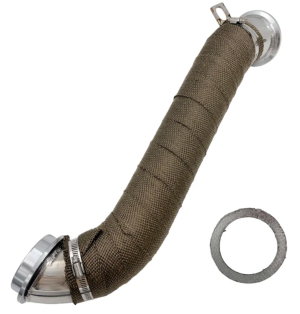
This isn't mild steel that will rust through in two winters. It's constructed from high-quality stainless steel, which offers excellent corrosion resistance and longevity. It's also thick enough to resist dinging or denting during installation.
2. True 3" Diameter, Smooth Mandrel Bends
The critical spec is the 3.0" inlet and outlet diameter and the fact that it's mandrel-bent. Unlike the factory pipe, which is often crush-bent to navigate tight spaces, a mandrel-bent pipe maintains a consistent internal diameter throughout every curve. This preserves exhaust velocity and eliminates turbulence. Airflow stays smooth and laminar.
3. Direct, Bolt-In Fitment
One of the best features is that it's designed to be a direct factory replacement. It bolts directly to the turbo outlet and connects to the rest of the exhaust system without cutting, welding, or modification. The kit includes the necessary hardware, and the pipe is shaped to clear all factory components—no hammering, no wrestling. It took me about an hour in my driveway.
4. Real-World Performance Gains
The description claims an approximate 10-15 horsepower gain. Is that dyno-verified on every truck? Maybe not. But here's what I can confirm from seat-of-the-pants experience:
- Faster Turbo Spool: The most immediate difference. The turbo builds boost more eagerly, especially from a stop or when rolling into the throttle at highway speeds.
- Lower EGTs: I saw a consistent drop of 75-100°F while towing my 8,000-pound trailer up grades. That's meaningful for engine health and peace of mind.
- Improved Throttle Response: The engine feels less "lazy." It responds more crisply to pedal inputs.
Installation: What I Learned Swapping Mine
If you're comfortable with basic hand tools and jack stands, this is an easy afternoon project. Here are a few takeaways from my install:- Penetrating Oil Is Your Friend: The bolts at the turbo outlet and the exhaust clamp can be stubborn. Soak them with PB Blaster or Kroil the night before.
- Patience With the Turbo Clamp: The V-band clamp at the turbo outlet can be tight. A ratcheting 10mm wrench helps. Don't force it—work it loose gradually.
- Alignment Is Key: The new pipe should drop right in. If it's fighting you, check that the factory exhaust hangers aren't under tension. Loosening the rear exhaust mounts can give you the wiggle room needed to align everything perfectly.
- Check for Clearance: Once installed, start the truck and listen for any rattles or contact with the frame or transmission crossmember. A quick tweak of the hangers usually solves it.
Context: Where This Fits in Your Build
It's important to be realistic about what a downpipe does and doesn't do. It's not a standalone power adder. The 10-15 horsepower claim is plausible, but you're not going to gain 50 horsepower from this alone.Where it does shine is as a foundational supporting mod. If you plan to:
- Add a tuner or delete tuning
- Install a larger exhaust system (4" or 5")
- Upgrade your turbo
- Tow heavy loads and want to keep EGTs in check
Think of it this way: you wouldn't put a high-flow air filter on a snorkel. This is the same principle—clear the restriction closest to the source.
The Fine Print: Fitment and Legality
A few critical notes before you click "buy":Fitment Confirmation:
This pipe is designed for 2004.5-2010 Chevy Silverado and GMC Sierra 2500/3500 trucks with the 6.6L Duramax LLY, LBZ, and LMM engines. It will not fit earlier LB7 trucks or cab-and-chassis configurations. Double-check your model year and bed length if you're unsure.
Off-Road Use Only:
This is not CYA language—it's the law. This downpipe removes the factory catalytic converter. In the United States, tampering with emissions equipment on a vehicle driven on public roads is a violation of the Clean Air Act. This product is explicitly marked "Not for sale or street use on a licensed vehicle in the State of California and New York & does meet CARB states" and "deemed for 'Off-Road use only.'"
Know your local laws and make your own decisions accordingly.
Final Thoughts: A Small Pipe, A Big Difference
The 3" downpipe is one of those modifications that doesn't get the glory of a tuner or a compound turbo kit. It's not flashy. It won't win you internet fame. But it's one of the smartest, most cost-effective upgrades you can make to a 2004.5-2010 Duramax.It reduces heat, improves response, and removes a factory-imposed restriction that serves no purpose once you've decided to actually use your truck's potential. Whether your goal is lower EGTs while towing, quicker turbo spool, or simply building a solid foundation for future mods, this pipe delivers.
Has anyone else here swapped their downpipe and noticed the difference? What was your experience with EGTs and spool-up? Drop your thoughts below.
Last edited:
