

If you're driving a 2011-2016 GM with the 6.6L Duramax LML engine, you already own one of the most capable and powerful diesel trucks ever built. But you also know it's been held back—choked down by a complex web of factory emissions equipment that saps power, murders fuel economy, and threatens your engine's long-term health. That nagging feeling of restrained potential, the worry about a $4,000 DEF pump failure, and the sight of your fuel gauge dropping during a forced regeneration... it's all too familiar.
This isn't about reckless modification; it's about reclamation. It's about freeing your LML from its factory-imposed constraints to unlock the reliable, efficient, and powerful machine you paid for. For those ready to take that step, a comprehensive "all-in-one" delete and tune kit is the definitive solution. Today, we're doing a deep dive into two masterful kits from TruckTok that cover the entire LML production run, explaining exactly what they fix, how to install them correctly, and the transformative benefits you'll experience.
Here is the single most important fact you must know: The LML had a major mid-production change in the turbocharger downpipe connection. Getting this wrong means the kit will NOT physically fit your truck.
Tools & Preparation:
Gather a full metric socket set, wrenches, torx bits, a good torque wrench, pry bars, and a quality hose clamp tool. Most importantly, DISCONNECT BOTH BATTERIES before starting. Work on a cool engine and give yourself plenty of space and light.
Key Steps & Pro-Tips:
A Critical Disclaimer: It is imperative to state that the removal of federally mandated emissions control devices (DPF, DEF/SCR, EGR) is illegal for vehicles registered for use on public roads in the United States and many other countries. This information is shared for educational purposes regarding off-road and competition vehicles only. It is the sole responsibility of the vehicle owner to understand and comply with all applicable local, state, and federal laws.
For those whose trucks are used in permissible contexts, this modification represents the pinnacle of the LML ownership experience. The combination of brute-force hardware and sophisticated software in these all-in-one kits delivers a complete and cohesive solution.
Have you liberated your LML? What was your biggest "wow" moment after the install? Share your experiences and tips in the comments below to help fellow owners on their journey!
This isn't about reckless modification; it's about reclamation. It's about freeing your LML from its factory-imposed constraints to unlock the reliable, efficient, and powerful machine you paid for. For those ready to take that step, a comprehensive "all-in-one" delete and tune kit is the definitive solution. Today, we're doing a deep dive into two masterful kits from TruckTok that cover the entire LML production run, explaining exactly what they fix, how to install them correctly, and the transformative benefits you'll experience.
Part 1: The Factory Shackles – Understanding the LML's Four Big Flaws
Before we talk about solutions, let's be crystal clear about the problems. The LML's emissions systems are a quartet of compromises that work against your truck's performance and durability.- The DPF (Diesel Particulate Filter) Bottleneck: This is a ceramic filter in your exhaust that traps soot. To clean itself, it initiates a "regeneration" cycle, injecting raw diesel into the exhaust to burn the soot at extremely high temperatures. This process kills your fuel economy, creates excessive exhaust gas temperatures (EGTs), and creates massive backpressure that strangles power and turbo spool.
- The EGR (Exhaust Gas Recirculation) System: This might be the single most damaging component. It deliberately reroutes dirty, soot-laden exhaust gas back into your engine's intake manifold. This carbonizes your intake, coats your valves, and drastically increases engine oil acidity and wear. It's like forcing your truck to breathe its own exhaust.
- The DEF (Diesel Exhaust Fluid) & SCR System: Added to meet stricter emissions standards, this system injects urea (DEF) into the exhaust stream. It's a complex system of pumps, heaters, and injectors that is notoriously failure-prone. A failed DEF pump or sensor can put your truck into a debilitating "limp mode," and the ongoing cost and hassle of refilling the DEF tank is a constant nuisance.
- The CCV (Closed Crankcase Ventilation) System: The factory system routes oily blow-by vapors from the crankcase back into the turbo inlet. Over time, this oil mixes with the soot from the EGR system, creating a thick sludge that coats your intercooler, intake pipes, and even the intake valves themselves, robbing power and efficiency.
Part 2: The Complete Solution – All-in-One Liberation Kits
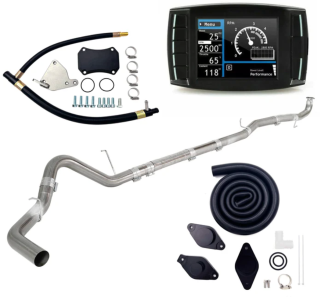
The answer isn't just a tuner or a pipe; it's a complete, integrated system replacement. TruckTok's kits provide precisely that—a matched set of hardware and software that removes the problems and reprograms the truck to run optimally without them. The core components are masterfully chosen:- A High-Flow 4" Exhaust System: Made from durable T-409 stainless steel, this downpipe-back system replaces the restrictive factory exhaust containing the DPF and SCR catalysts. Its smooth, bung-free design ensures completely unobstructed flow, dramatically reducing backpressure and lowering EGTs.
- The Mini Maxx Tuner (V2): This isn't just a "chip." It's a sophisticated handheld device that does two critical jobs: First, it reprograms your truck's ECU and TCM with new, optimized tuning files that eliminate all references to the DPF, EGR, and DEF systems. Second, it provides the necessary monitoring and diagnostics for your newly liberated engine. The tuning is what transforms the raw hardware into a smoothly functioning, powerful package.
- Complete Delete Hardware: The kits include every block-off plate, plug, and hose needed to properly and cleanly remove the EGR system and reroute the CCV vapors away from your intake, venting crankcase blow-by to the atmosphere and keeping your engine internals clean.
Here is the single most important fact you must know: The LML had a major mid-production change in the turbocharger downpipe connection. Getting this wrong means the kit will NOT physically fit your truck.
- For 2011 through early 2015 Models: These trucks use a V-band clamp connection at the turbo outlet. You must use the 2011-2015 LML All-in-One Kit. The product description explicitly warns: *"These kits will only fit models equipped with v-band clamp and will not work for trucks equipped with the 3-bolt flange!"*
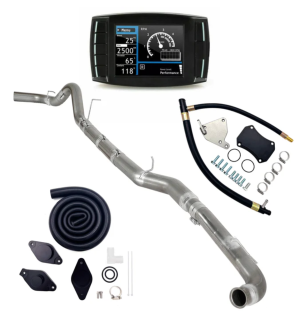
- For Late 2015 (2015.5) to 2016 Models: GM switched to a 3-bolt flange connection. You must use the 2015.5-2016 LML All-in-One Kit. Its description is equally clear: *"Only fit models equipped with 3-bolt flange and will not work for trucks equipped with the V-band clamp!"*
Part 3: The Installation – A Methodical Approach for Success
This is a significant DIY project, but with patience and the right mindset, it's very achievable over a weekend. Here's your roadmap, with critical tips to avoid common pitfalls.Tools & Preparation:
Gather a full metric socket set, wrenches, torx bits, a good torque wrench, pry bars, and a quality hose clamp tool. Most importantly, DISCONNECT BOTH BATTERIES before starting. Work on a cool engine and give yourself plenty of space and light.
Key Steps & Pro-Tips:
- Removing the Old Systems:
- Start by removing the intake and air filter housing to access the EGR cooler and valve. Label every hose and electrical connector you disconnect.
- When removing the massive DPF/SCR assembly, have a helper and a sturdy jack or transmission stand ready. It's awkward and heavy.
- Cleanliness is King: As you remove the EGR components and intake piping, you'll likely find heavy carbon buildup. This is proof of the problem! Take time to thoroughly clean the intake manifold ports before reinstalling anything.
- Installing the New Hardware:
- Fitment is Everything: Before final tightening, do a complete dry-fit of the new 4" exhaust system. Ensure it has proper clearance from the cab floor, fuel lines, and the transmission crossmember. A slight rub can turn into a major annoyance or failure.
- EGR Block-Offs: Use a high-temperature thread sealant on the EGR block-off plate bolts and ensure the gasket surfaces on the intake and exhaust manifolds are perfectly clean for a leak-free seal.
- CCV Reroute: Follow the kit instructions precisely for the CCV. A proper reroute sends oily vapors down and away from the frame, keeping your engine bay clean.
- The Tuning Process – The "Magic" Step:
- With all hardware installed and double-checked, reconnect the batteries.
- Plug the Mini Maxx Tuner into the OBD-II port. It will guide you through marrying the tuner to your truck's VIN and flashing the new, optimized tune files to both the engine (ECU) and transmission (TCM) computers.
- This step is non-negotiable. The truck will not run correctly, or may not start at all, with the delete hardware and the stock tune.
- Final Checks & First Start:
- Before starting, triple-check for any tools left in the engine bay and that all electrical connectors are plugged in.
- On first start, the truck may crank slightly longer as the system pressurizes. Listen carefully for any exhaust leaks (a distinct ticking or hissing). A small amount of white smoke/condensation is normal for the first few minutes as residual oils burn off the new exhaust.
- Use the Mini Maxx to monitor vital parameters like EGTs and boost during the first gentle test drive.
Part 4: The Liberation Payoff – Real-World Benefits
Once the dust settles, the transformation is nothing short of remarkable. You aren't just adding power; you're restoring the truck's fundamental health.- Unshackled Performance: The most immediate sensation is the free-flowing exhaust system eliminating all turbo lag. Throttle response becomes instantaneous and linear. Power gains of 100+ horsepower and 200+ lb-ft of torque are common, completely changing the character of the truck.
- Dramatically Improved Fuel Economy: By eliminating the constant fuel-dumping regeneration cycles, owners regularly report gains of 3 to 6 MPG. The truck simply becomes vastly more efficient.
- True Engine Longevity: This is the hidden victory. Deleting the EGR stops the intake carbonization, keeping your valves and combustion chambers clean. Venting the CCV prevents oily sludge from fouling your intercooler. Lower coolant temps from the deleted EGR system reduce overall engine thermal stress. You are actively extending the life of your engine.
- Elimination of Costly Failures: The anxiety of a failing DEF pump, clogged DPF, or leaking EGR cooler vanishes. Your maintenance schedule reverts to the basics: oil, filters, and fluids.
- Enhanced Drivability: The transmission tuning that accompanies the engine tune makes shifts firmer, smarter, and better suited to the increased power. The truck just feels more robust, responsive, and enjoyable to drive in every situation.
Part 5: Final Thoughts & A Necessary Word
Investing in a complete delete and tune package like the TruckTok kits for your LML is a decision that pays dividends in performance, economy, and long-term reliability. It reverses the factory's compromises and allows your Duramax to operate as intended.A Critical Disclaimer: It is imperative to state that the removal of federally mandated emissions control devices (DPF, DEF/SCR, EGR) is illegal for vehicles registered for use on public roads in the United States and many other countries. This information is shared for educational purposes regarding off-road and competition vehicles only. It is the sole responsibility of the vehicle owner to understand and comply with all applicable local, state, and federal laws.
For those whose trucks are used in permissible contexts, this modification represents the pinnacle of the LML ownership experience. The combination of brute-force hardware and sophisticated software in these all-in-one kits delivers a complete and cohesive solution.
Have you liberated your LML? What was your biggest "wow" moment after the install? Share your experiences and tips in the comments below to help fellow owners on their journey!
Last edited:
