

The Duramax 6.6L engine family has powered Chevrolet and GMC trucks for over two decades, earning a reputation for robust performance and impressive longevity. From the early LB7 through the LML, these engines share a common architecture that has proven itself in millions of miles of service. But like any mechanical system, certain components are subject to stress and wear that can compromise performance over time.
One of the most critical yet often overlooked components in the exhaust system is the up-pipe assembly. These pipes connect the exhaust manifolds to the turbocharger inlet, channeling high-temperature, high-pressure exhaust gas to drive the turbine. When these pipes fail—and they do fail—the consequences extend far beyond a simple exhaust leak.
Understanding why up-pipes fail, what happens when they do, and how a properly engineered replacement addresses these issues requires examining the specific stresses these components endure and the design improvements that make modern replacements superior to factory originals.
The energy transfer: The turbocharger turbine is driven by the pressure and velocity of exhaust gas. Any loss in either pressure or velocity before the gas reaches the turbine reduces the energy available to drive the compressor. This directly affects boost pressure, throttle response, and overall engine performance.
The flow dynamics: For optimal turbine performance, exhaust gas should reach the turbocharger with as little turbulence and pressure drop as possible. The up-pipes must merge the flow from both banks smoothly, maintaining velocity while accommodating the thermal expansion that occurs as the pipes heat from ambient to over 1,000°F.
The thermal challenge: The up-pipes operate at the extreme edge of material capabilities. They experience rapid temperature changes, from cold start to full operating temperature in minutes, and they must accommodate the thermal expansion that results without cracking or leaking.
Material selection: Factory up-pipes are typically constructed from mild steel with limited corrosion resistance. While adequate for the warranty period, these materials degrade over time when exposed to the thermal cycling and corrosive environment of diesel exhaust.
Wall thickness: The factory pipes use thinner wall materials that reduce cost and weight but also reduce durability. Thinner walls are more susceptible to thermal fatigue and can crack after repeated heating and cooling cycles.
Bellows design: The flexible bellows sections that accommodate engine movement and thermal expansion are often the weakest link. Factory bellows can fatigue and crack, creating exhaust leaks that reduce turbo performance.
The 11-gauge advantage: The replacement pipes use 11-gauge stainless steel with 0.120-inch wall thickness. This is significantly heavier than factory materials, providing greater resistance to thermal fatigue and mechanical damage. The 2-inch outer diameter maintains compatibility with factory mounting points while increasing durability.
Boost pressure loss: Any leak before the turbocharger allows exhaust gas to escape before it reaches the turbine. This reduces the energy available to drive the compressor, resulting in lower boost pressure for any given engine load.
Turbo lag increase: With less energy reaching the turbine, the turbocharger spools more slowly. Throttle response suffers, and the engine feels sluggish, particularly when accelerating from low RPM.
EGT elevation: When the turbocharger cannot spool efficiently, more exhaust energy remains in the cylinders, raising exhaust gas temperatures. Higher EGTs increase thermal stress on the turbocharger, exhaust valves, and other components, potentially reducing their service life.
Soot contamination: Exhaust leaks at the up-pipes often deposit soot on the engine and surrounding components. This not only creates a mess but can also indicate a leak large enough to affect performance.
Audible symptoms: A leaking up-pipe often produces a distinct ticking or hissing sound that changes with engine load. This sound is the sound of performance escaping.
Corrosion resistance: T-304 stainless contains 18-20 percent chromium and 8-10 percent nickel, forming a passive oxide layer that resists corrosion from exhaust condensation and combustion byproducts. Unlike mild steel, which rusts progressively, stainless steel maintains its integrity indefinitely.
High-temperature strength: Stainless steel retains its mechanical properties at the elevated temperatures common in diesel exhaust. It resists the creep and fatigue that can cause mild steel to crack over time.
Thermal cycling durability: The alloy composition of T-304 provides excellent resistance to the expansion and contraction stresses that occur with every heat cycle. This reduces the likelihood of cracking over the long term.
The 11-gauge wall thickness: The combination of stainless steel material and 0.120-inch wall thickness creates a pipe that is significantly more durable than factory components. This construction resists both the high-frequency vibrations from the engine and the low-frequency thermal cycling stresses.
How bellows work: The corrugated stainless steel bellows compress and expand as the engine moves and as the pipes heat and cool. This flexibility prevents stress from being transferred to the rigid connections at the manifolds and turbocharger.
Factory bellows limitations: Factory bellows are often the first point of failure. They may use thinner materials or less robust corrugation designs that fatigue and crack after repeated cycling.
Reinforced design: The replacement up-pipes feature stainless steel inner liner bellows designed to withstand high temperatures and harsh conditions. This construction provides the necessary flexibility while maintaining structural integrity over the long term.
The flow consideration: The bellows are designed to minimize flow disruption. Smooth transitions at the bellows ends prevent turbulence that could affect exhaust velocity.
Faster turbo response: The turbocharger spools more quickly and maintains boost more effectively.
Lower exhaust temperatures: When the turbocharger extracts energy effectively, less heat remains in the exhaust stream, reducing thermal stress on downstream components.
Enhanced durability: The 304 stainless steel construction and 11-gauge wall thickness create a component that will outlast the vehicle. Unlike factory pipes that may need replacement at 100,000-150,000 miles, these up-pipes are designed for permanent installation.
Restored power: If the factory pipes were leaking, replacing them restores the power that was lost through the leaks. This is particularly noticeable in trucks that have accumulated significant mileage with undiagnosed up-pipe issues.
LB7 (2001-2004): The first-generation Duramax shares the basic exhaust architecture with later engines. These trucks benefit significantly from up-pipe replacement, as original components may have 150,000+ miles of service.
LLY (2004-2006): The LLY introduced changes to emissions systems but retained similar up-pipe configuration. Replacement addresses any deterioration that may have occurred over nearly two decades.
LBZ (2006-2007): The legendary LBZ benefits from the same durability improvements as other generations.
LMM (2007.5-2010): The LMM's additional emissions equipment doesn't affect up-pipe compatibility.
LML (2011-2016): The latest covered generation includes the same up-pipe design, allowing owners of newer trucks to upgrade proactively.
What this means for owners: A single kit fits almost any Duramax-powered truck from 2001 through 2016. This simplifies ordering and ensures that the correct parts are always available.
The TruckTok 2001-2016 6.6L Duramax Exhaust Up-Pipe Kit addresses these limitations through engineering choices that matter:
Whether you're addressing an existing leak or proactively upgrading before problems occur, properly engineered up-pipes are an investment in your engine's long-term health and performance.
One of the most critical yet often overlooked components in the exhaust system is the up-pipe assembly. These pipes connect the exhaust manifolds to the turbocharger inlet, channeling high-temperature, high-pressure exhaust gas to drive the turbine. When these pipes fail—and they do fail—the consequences extend far beyond a simple exhaust leak.
Understanding why up-pipes fail, what happens when they do, and how a properly engineered replacement addresses these issues requires examining the specific stresses these components endure and the design improvements that make modern replacements superior to factory originals.
Part 1: The Critical Role of Up-Pipes in Turbocharger Performance
The up-pipes serve a function that is fundamental to how a turbocharged diesel engine operates. They collect exhaust gas from both cylinder banks and deliver it to the turbocharger inlet with minimal loss of energy.The energy transfer: The turbocharger turbine is driven by the pressure and velocity of exhaust gas. Any loss in either pressure or velocity before the gas reaches the turbine reduces the energy available to drive the compressor. This directly affects boost pressure, throttle response, and overall engine performance.
The flow dynamics: For optimal turbine performance, exhaust gas should reach the turbocharger with as little turbulence and pressure drop as possible. The up-pipes must merge the flow from both banks smoothly, maintaining velocity while accommodating the thermal expansion that occurs as the pipes heat from ambient to over 1,000°F.
The thermal challenge: The up-pipes operate at the extreme edge of material capabilities. They experience rapid temperature changes, from cold start to full operating temperature in minutes, and they must accommodate the thermal expansion that results without cracking or leaking.
Part 2: The Factory Up-Pipe Problem – A Study in Compromise
The factory up-pipes on Duramax engines were designed to meet cost targets and manufacturing constraints, not to provide maximum durability or performance. Several specific compromises affect their long-term reliability.Material selection: Factory up-pipes are typically constructed from mild steel with limited corrosion resistance. While adequate for the warranty period, these materials degrade over time when exposed to the thermal cycling and corrosive environment of diesel exhaust.
Wall thickness: The factory pipes use thinner wall materials that reduce cost and weight but also reduce durability. Thinner walls are more susceptible to thermal fatigue and can crack after repeated heating and cooling cycles.
Bellows design: The flexible bellows sections that accommodate engine movement and thermal expansion are often the weakest link. Factory bellows can fatigue and crack, creating exhaust leaks that reduce turbo performance.
The 11-gauge advantage: The replacement pipes use 11-gauge stainless steel with 0.120-inch wall thickness. This is significantly heavier than factory materials, providing greater resistance to thermal fatigue and mechanical damage. The 2-inch outer diameter maintains compatibility with factory mounting points while increasing durability.
Part 3: What Happens When Up-Pipes Leak
When up-pipes develop cracks or leaks, the effects cascade through the engine's operating systems.Boost pressure loss: Any leak before the turbocharger allows exhaust gas to escape before it reaches the turbine. This reduces the energy available to drive the compressor, resulting in lower boost pressure for any given engine load.
Turbo lag increase: With less energy reaching the turbine, the turbocharger spools more slowly. Throttle response suffers, and the engine feels sluggish, particularly when accelerating from low RPM.
EGT elevation: When the turbocharger cannot spool efficiently, more exhaust energy remains in the cylinders, raising exhaust gas temperatures. Higher EGTs increase thermal stress on the turbocharger, exhaust valves, and other components, potentially reducing their service life.
Soot contamination: Exhaust leaks at the up-pipes often deposit soot on the engine and surrounding components. This not only creates a mess but can also indicate a leak large enough to affect performance.
Audible symptoms: A leaking up-pipe often produces a distinct ticking or hissing sound that changes with engine load. This sound is the sound of performance escaping.
Part 4: The Material Science Advantage – 304 Stainless Steel
The replacement up-pipes are constructed from T-304 stainless steel, a material choice that offers significant advantages over the mild steel used in factory components.Corrosion resistance: T-304 stainless contains 18-20 percent chromium and 8-10 percent nickel, forming a passive oxide layer that resists corrosion from exhaust condensation and combustion byproducts. Unlike mild steel, which rusts progressively, stainless steel maintains its integrity indefinitely.
High-temperature strength: Stainless steel retains its mechanical properties at the elevated temperatures common in diesel exhaust. It resists the creep and fatigue that can cause mild steel to crack over time.
Thermal cycling durability: The alloy composition of T-304 provides excellent resistance to the expansion and contraction stresses that occur with every heat cycle. This reduces the likelihood of cracking over the long term.
The 11-gauge wall thickness: The combination of stainless steel material and 0.120-inch wall thickness creates a pipe that is significantly more durable than factory components. This construction resists both the high-frequency vibrations from the engine and the low-frequency thermal cycling stresses.
Part 5: The Bellows Design – Accommodating Movement Without Failure
The flexible bellows sections are critical to up-pipe function. They must accommodate engine movement, thermal expansion, and vibration while maintaining a perfect seal.How bellows work: The corrugated stainless steel bellows compress and expand as the engine moves and as the pipes heat and cool. This flexibility prevents stress from being transferred to the rigid connections at the manifolds and turbocharger.
Factory bellows limitations: Factory bellows are often the first point of failure. They may use thinner materials or less robust corrugation designs that fatigue and crack after repeated cycling.
Reinforced design: The replacement up-pipes feature stainless steel inner liner bellows designed to withstand high temperatures and harsh conditions. This construction provides the necessary flexibility while maintaining structural integrity over the long term.
The flow consideration: The bellows are designed to minimize flow disruption. Smooth transitions at the bellows ends prevent turbulence that could affect exhaust velocity.
Part 6: The Performance Outcomes
When leaking or restrictive factory up-pipes are replaced with properly engineered stainless steel units, several measurable improvements occur.Faster turbo response: The turbocharger spools more quickly and maintains boost more effectively.
Lower exhaust temperatures: When the turbocharger extracts energy effectively, less heat remains in the exhaust stream, reducing thermal stress on downstream components.
Enhanced durability: The 304 stainless steel construction and 11-gauge wall thickness create a component that will outlast the vehicle. Unlike factory pipes that may need replacement at 100,000-150,000 miles, these up-pipes are designed for permanent installation.
Restored power: If the factory pipes were leaking, replacing them restores the power that was lost through the leaks. This is particularly noticeable in trucks that have accumulated significant mileage with undiagnosed up-pipe issues.
Part 7: The Comprehensive Fitment – One Kit for Multiple Generations
One of the most practical aspects of this kit is its compatibility across the entire Duramax lineup from 2001 through 2016.LB7 (2001-2004): The first-generation Duramax shares the basic exhaust architecture with later engines. These trucks benefit significantly from up-pipe replacement, as original components may have 150,000+ miles of service.
LLY (2004-2006): The LLY introduced changes to emissions systems but retained similar up-pipe configuration. Replacement addresses any deterioration that may have occurred over nearly two decades.
LBZ (2006-2007): The legendary LBZ benefits from the same durability improvements as other generations.
LMM (2007.5-2010): The LMM's additional emissions equipment doesn't affect up-pipe compatibility.
LML (2011-2016): The latest covered generation includes the same up-pipe design, allowing owners of newer trucks to upgrade proactively.
What this means for owners: A single kit fits almost any Duramax-powered truck from 2001 through 2016. This simplifies ordering and ensures that the correct parts are always available.
Part 8: The Technical Verdict
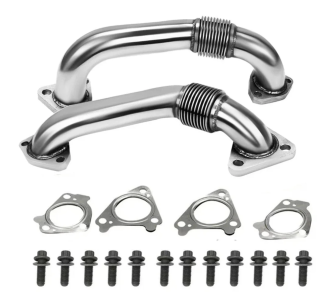
The factory up-pipes on Duramax engines represent a compromise between cost, weight, and durability. Over time, the mild steel construction, thinner walls, and less robust bellows can develop leaks that compromise turbo performance, increase EGTs, and reduce overall engine efficiency.The TruckTok 2001-2016 6.6L Duramax Exhaust Up-Pipe Kit addresses these limitations through engineering choices that matter:
- 304 stainless steel construction for corrosion resistance and durability
- 11-gauge, 0.120-inch wall thickness for strength and thermal fatigue resistance
- 2-inch outer diameter maintaining factory compatibility while improving flow
- Reinforced stainless steel inner liner bellows for flexibility without failure
- Purposely indented passenger side pipe for firewall clearance
- Complete kit with gaskets and hardware for straightforward installation
- Comprehensive fitment across LB7 through LML generations
Whether you're addressing an existing leak or proactively upgrading before problems occur, properly engineered up-pipes are an investment in your engine's long-term health and performance.
Last edited:
