
!Before installation, confirm that:
This high-performance component does not comply with the laws and regulations for highway driving and cannot be used on any vehicle that has been registered or certified for use on highways. This means that the component may only be suitable for racing cars or other off-road vehicles. If it is installed on vehicles driving on the highway, legal issues will be borne by oneself.
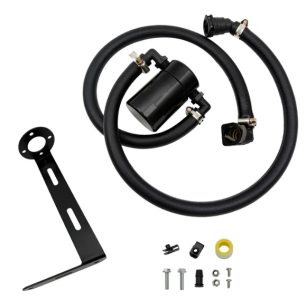
This is the installation process for the ER-0310: 2011-2023 Ford 2.7L 3.5L 5.0L F150 EcoBoost Raptor Oil Catch Can Separator Kit,provided for your reference during installation.
Step 1:
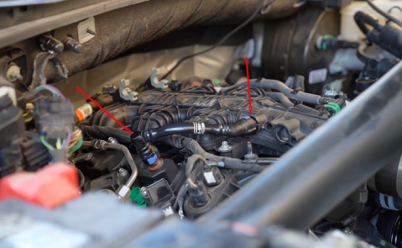
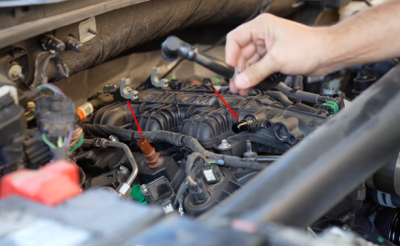
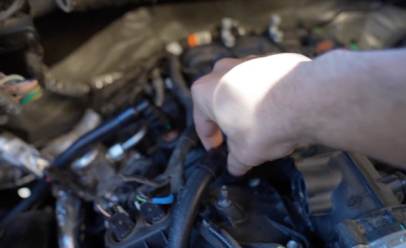
First, Locate the original black plastic hose connecting the PCV valve and the intake manifold. Press the clips on the connector and remove it from both ends.
 Step 2:
 Step 3:
Step 4:
This high-performance component does not comply with the laws and regulations for highway driving and cannot be used on any vehicle that has been registered or certified for use on highways. This means that the component may only be suitable for racing cars or other off-road vehicles. If it is installed on vehicles driving on the highway, legal issues will be borne by oneself.
This is the installation process for the ER-0310: 2011-2023 Ford 2.7L 3.5L 5.0L F150 EcoBoost Raptor Oil Catch Can Separator Kit,provided for your reference during installation.
Step 1:
First, Locate the original black plastic hose connecting the PCV valve and the intake manifold. Press the clips on the connector and remove it from both ends.
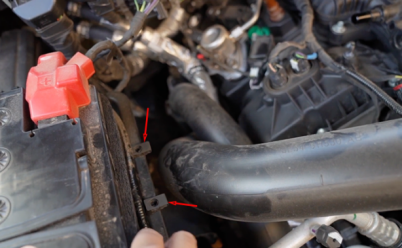
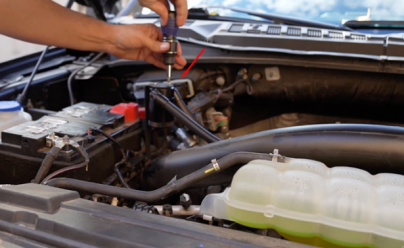
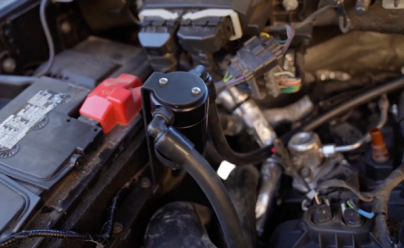
Choose a stable location in the engine compartment for future fuel tank cleaning. Available space near the engine battery box is recommended. If there is no hole, you will need to drill one. Secure the fuel separator using the included bracket.
Connect one end of the new hose to the "IN" port on the fuel separator. Connect the other end of the new hose to the PCV valve outlet on the valve cover. Take another hose and connect one end to the "OUT" port on the fuel separator. Connect the other end to the vacuum port on the intake manifold where the rigid hose was previously removed.
Ensure all hose connections are secure and leak-free.
Last edited:


