

Hey folks,
If you’re running a 2007-2012 6.7L Cummins Dodge Ram, you already know it’s a legendary powerplant. But you also probably know it’s been choked down by factory emissions equipment. That nagging feeling of held-back power, the worry about costly repairs, and the endless regeneration cycles—sound familiar? You’re not alone.
For years, the DPF (Diesel Particulate Filter), EGR (Exhaust Gas Recirculation), and later DEF (Diesel Exhaust Fluid) systems have been the bane of many diesel owners' existence. This post is a deep dive into why these systems are problematic, how to properly and safely remove them, and the night-and-day difference it makes. We'll also tackle some common questions.
Part 1: The "Why" – Understanding the Factory Flaws
Before we talk about fixes, let's break down what holds your truck back:
The solution is a well-engineered delete kit paired with a quality tuner. This isn't just about raw power; it's about efficiency, reliability, and longevity. The right kit removes the physical restrictions, and the tuner reprograms the ECU to work optimally without those systems.
Based on your model year, here are two exceptional all-in-one solutions that take the guesswork out of sourcing parts:
This kit is designed for 2007.5-2009 Dodge Ram 2500/3500 6.7L Cummins models.
This kit is designed for 2010-2012 Dodge Ram 2500/3500 6.7L Cummins models.
Once done, the transformation is incredible:
Freeing your 6.7L Cummins from its factory emissions constraints is one of the most impactful modifications you can make. It returns the engine to its intended state of efficiency and power. The TruckTok All-in-One Kits for the respective year ranges provide a complete, high-quality solution, marrying a robust exhaust system with capable tuning. The result is a truck that runs cooler, cleaner (internally), stronger, and farther on a gallon of fuel.
Do your research, install carefully, tune responsibly, and enjoy the true potential of your Cummins.
Stay safe and keep the rubber side down.
If you’re running a 2007-2012 6.7L Cummins Dodge Ram, you already know it’s a legendary powerplant. But you also probably know it’s been choked down by factory emissions equipment. That nagging feeling of held-back power, the worry about costly repairs, and the endless regeneration cycles—sound familiar? You’re not alone.
For years, the DPF (Diesel Particulate Filter), EGR (Exhaust Gas Recirculation), and later DEF (Diesel Exhaust Fluid) systems have been the bane of many diesel owners' existence. This post is a deep dive into why these systems are problematic, how to properly and safely remove them, and the night-and-day difference it makes. We'll also tackle some common questions.
Part 1: The "Why" – Understanding the Factory Flaws
Before we talk about fixes, let's break down what holds your truck back:
- The DPF Bottleneck: This is a ceramic filter in your exhaust that traps soot. To clean it, the truck forces a "regeneration" cycle, injecting raw fuel into the exhaust to burn the soot away. This kills fuel economy, causes excessive heat (elevated EGTs), and robs power. When it clogs or fails, replacement costs are astronomical.
- The EGR Killer: The EGR valve recirculates dirty, soot-laden exhaust gas back into your intake manifold. This causes carbon buildup on valves, intake, and the cooler itself, reducing efficiency, power, and long-term engine health. It's essentially forcing your engine to breathe its own exhaust.
- DEF Complexity (2010+): Added in 2010, the DEF system injects fluid to break down NOx. It's another system to maintain, can freeze, and if it runs dry or fails, the truck will derate to a crawl.
- The Tuning Deficit: Factory tuning is ultra-conservative to protect these fragile emissions parts, not to maximize performance or engine life.
The solution is a well-engineered delete kit paired with a quality tuner. This isn't just about raw power; it's about efficiency, reliability, and longevity. The right kit removes the physical restrictions, and the tuner reprograms the ECU to work optimally without those systems.
Based on your model year, here are two exceptional all-in-one solutions that take the guesswork out of sourcing parts:
 Kit 1: 2007.5-2009 Specific Kit Advantages
This kit is designed for 2007.5-2009 Dodge Ram 2500/3500 6.7L Cummins models.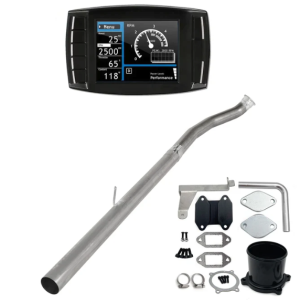
- Complete All-in-One Solution: Includes everything needed for a full DPF/DEF/EGR delete, paired with a Mini Maxx Tuner – V1.
- High-Performance Exhaust System: Features a 4-inch diameter exhaust system from the turbo back, constructed from durable T-409 Stainless Steel and Aluminum Alloy.
- Optimized for Maximum Flow: The clean, bung-free design reduces restrictions, promoting optimal exhaust flow for competition or performance applications.
- Improves Engine Health: Effectively lowers Exhaust Gas Temperatures (EGTs), contributing to better engine longevity and reliability.
- Fitment Note: Fits 2007.5-2009 Dodge Ram 2500/3500. Not compatible with Cab & Chassis trucks or models with air-ride suspension.
Kit 2: 2010-2012 Specific Kit Advantages
This kit is designed for 2010-2012 Dodge Ram 2500/3500 6.7L Cummins models.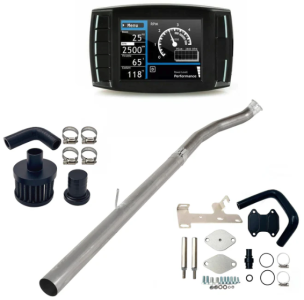
- Comprehensive Delete Solution: A complete kit for DPF, DEF, EGR, and CCV delete, bundled with a Mini Maxx Tuner – V1.
- Durable Full Exhaust Upgrade: Comes with a full 4-inch T-409 Stainless Steel turbo-back exhaust system.
- Targets Key Failure Points: Engineered to effectively eliminate EGR valve dust accumulation and blockage.
- Enhances Cooling & Performance: Allows the engine coolant to recirculate faster and more efficiently than the stock system. Removing the DPF reduces exhaust backpressure, boosting engine performance.
- Promotes Engine Longevity: Like Kit 1, it significantly lowers EGTs for improved engine health.
- Fitment Note: Fits 2010-2012 Dodge Ram 2500/3500. Not compatible with Cab & Chassis trucks or models with air-ride suspension.
- Completeness is Key: Ensure every component from the kit is installed. Missing a block-off plate or sensor simulator can cause codes and issues.
- Exhaust Sealing: Use high-quality exhaust sealant on the joints, especially the downpipe-to-turbo connection, to prevent leaks.
- Tuning Strategy: The Mini Maxx offers multiple power levels. Start conservative. A well-tuned "street" or "economy" file often provides the best blend of power, drivability, lowered EGTs, and massive fuel economy gains. The truck will feel like a different animal even on a mild tune.
- CCV Reroute (2010-2012 Kit): Follow the instructions carefully for the CCV. You'll typically route the hose down and away from the frame.
Once done, the transformation is incredible:
- Power & Throttle Response: Immediate, linear power. The turbo spools faster, and the truck pulls hard without the massive backpressure.
- Fuel Economy: Expect significant gains, often 3-6+ MPG, because you're no longer burning fuel for regens.
- Lower EGTs: This is huge for engine longevity. Towing up grades becomes less stressful on the engine.
- Reduced Maintenance: No more DPF/EGR/DEF failures, no more carbon cleanings. Just regular oil changes.
- Peace of Mind: Knowing your engine is breathing clean air and expelling exhaust freely is priceless.
- Q: Is this legal?
A: In the United States, the Environmental Protection Agency (EPA) prohibits the removal, modification, or tampering with any federally-mandated emissions control device on a vehicle used on public roads. This includes DPF, DEF, and EGR systems. This information is for educational purposes regarding off-road/competition use only. It is your responsibility to understand and comply with all federal, state, and local laws applicable to your vehicle. - Q: Is the tuning safe for my transmission?
A: The Mini Maxx tunes are generally well-regarded. However, the 68RFE transmission in these trucks is the weak link under increased power. For higher power levels, consider transmission tuning, a valve body upgrade, or a built transmission. - Q: Can I do this myself?
A: With good mechanical skills, basic tools, and patience, yes. The most challenging part is often the downpipe connection at the turbo. Allow a full weekend if it's your first time. - Q:How does the EGR delete affect engine temperatures and carbon buildup?
A:This is one of the most significant mechanical benefits:
Deleting it allows only cool, dense air from the intercooler to enter, improving combustion efficiency and power.The soot and unburned hydrocarbons in the exhaust gas are what create heavy carbon deposits on the intake valves, intake manifold, and EGR cooler itself. Removing the EGR stops this contamination at the source, preserving engine cleanliness and airflow. - Q: Why does the kit for my 2010+ truck include a CCV reroute, and is it necessary?
A: For 2010-2012 models, the CCV reroute is highly recommended and complements the EGR delete.The CCV delete kit reroutes these vapors out of the engine bay (typically down near the frame or into the exhaust). This prevents oil accumulation in your intake system, ensuring maximum airflow and reliability after you've removed the EGR.
Freeing your 6.7L Cummins from its factory emissions constraints is one of the most impactful modifications you can make. It returns the engine to its intended state of efficiency and power. The TruckTok All-in-One Kits for the respective year ranges provide a complete, high-quality solution, marrying a robust exhaust system with capable tuning. The result is a truck that runs cooler, cleaner (internally), stronger, and farther on a gallon of fuel.
Do your research, install carefully, tune responsibly, and enjoy the true potential of your Cummins.
Stay safe and keep the rubber side down.
Last edited:
