

Let's have a real talk about the single most transformative modification for the 2013-2018 Ram with the 6.7L Cummins: the exhaust system. If you're here, you already know the feeling—a hint of turbo lag, exhaust gas temperatures (EGTs) that climb a little too eagerly when you're working hard, and a nagging concern about the long-term health of your engine. The culprit isn't the legendary Cummins block; it's the factory-mandated exhaust straitjacket it's forced to wear.
This guide is a deep dive into the "why" and "how" of reclaiming your truck's performance, efficiency, and reliability. We'll dissect the factory flaws, explore your upgrade options in detail, walk through the installation process, and confront the critical legal and practical questions you must consider before turning a single wrench.
For Cab & Chassis Trucks (Ram 3500, 4500, 5500):
These workhorse trucks have unique frame dimensions and space constraints. You need a system engineered specifically for this platform. The 2013-2019 Cab & Chassis DPF Delete Exhaust is designed as a direct, bolt-in replacement that addresses the DPF restriction while ensuring perfect clearance on the commercial chassis.
For Standard Pickup Trucks (Ram 2500, 3500):
Here, you have a spectrum of choices to match your performance goals and sound preference.
 STOP. This is not a suggestion; it is a requirement. You cannot physically remove the DPF and drive your truck. The vehicle's Engine Control Module (ECM) is programmed to monitor and manage the entire emissions system. Without it, the ECM will trigger a cascade of fault codes, illuminate every warning light, and force the engine into a severe "limp mode" that drastically reduces power to prevent perceived damage.
A custom "delete" tune is the brain that must accompany the new hardware. A proper, reputable tune performs these critical functions:
Preparation is 90% of the Battle:
A: In the United States, it is a federal violation of the Clean Air Act to remove or tamper with the DPF on a vehicle registered for on-road use. This is not a gray area. Products are sold strictly "For Off-Road/Competition Use Only." Enforcement varies by state; some have no testing, while states with emissions programs (e.g., California, Colorado, New York, Pennsylvania) will fail a deleted truck during inspection. The legal and financial liability rests entirely with the vehicle owner.
Q: Will my truck produce excessive black smoke?
A: A properly tuned truck should not. Black smoke is unburned diesel fuel, a sign of a poor air-fuel ratio. A quality custom tune is calibrated for performance and cleanliness. You may see a light haze under maximum acceleration, but persistent black smoke indicates an inferior, irresponsible tune.
Q: Is a 5-inch system necessary, or is 4-inch sufficient?
A: For 90% of applications, including trucks with moderate performance tuning, a well-designed 4-inch system is perfectly adequate and offers exceptional flow. The 5-inch system becomes advantageous for high-horsepower builds (600+ HP) where maximizing every last bit of flow is critical. For most daily drivers and tow rigs, the 4-inch option is the more practical and cost-effective performance choice.
Q: Can a DIY mechanic handle this installation?
A: Yes, if you are methodical, have a good set of tools, and follow instructions. The most challenging aspect is typically dealing with seized factory hardware, especially the turbo V-band clamp. If you are not comfortable working under the vehicle with heavy components and applying significant force, professional installation is a wise investment.
Q: What happens to my factory warranty?
A: Performing a DPF delete will immediately and irrevocably void any remaining powertrain and emissions-related warranty coverage. Dealerships can detect the modification and are required to flag the vehicle's VIN in a national database. This is a permanent decision with financial implications.
Remember, this is a system upgrade. The high-quality pipe you bolt under the truck is only half of the equation. The other half is the professional, custom ECU tune that makes it all work safely and effectively. Approach this modification with your eyes open to the technical, legal, and financial considerations. When executed correctly, it liberates your Cummins from its factory constraints, resulting in a truck that performs, sounds, and endures as it was always meant to.
This guide is a deep dive into the "why" and "how" of reclaiming your truck's performance, efficiency, and reliability. We'll dissect the factory flaws, explore your upgrade options in detail, walk through the installation process, and confront the critical legal and practical questions you must consider before turning a single wrench.
Part 1: The Factory Bottleneck - A System Designed to Restrict
The heart of the issue for all 2013 and newer trucks is the Diesel Particulate Filter (DPF) system. Mandated for emissions compliance, this complex assembly is a performance and reliability anti-feature.- Crippling Exhaust Backpressure: The DPF is a dense, ceramic honeycomb filter. Your turbocharger must work exhaustively to force spent gases through this wall, creating significant backpressure. This steals horsepower, increases turbo lag, and forces the engine to operate inefficiently.
- Engine-Damaging Heat: As the DPF traps soot, it must be cleaned through a process called "regeneration." The engine injects raw diesel into the exhaust stroke, burning it inside the DPF to incinerate the soot. This creates extreme, sustained heat (often exceeding 1200°F) that radiates back through the turbo and exhaust manifolds, placing immense thermal stress on critical components.
- A Financial Time Bomb: The DPF, its associated sensors (differential pressure, temperature), and the complicated regeneration plumbing are all high-cost failure points. A failed DPF can mean a repair bill in the thousands, not to mention the wasted fuel from constant regeneration cycles. It is, without exaggeration, the least reliable part of an otherwise robust powertrain.
Part 2: Choosing Your Path - A Tailored Exhaust Solution
One size does not fit all. The correct delete solution depends entirely on your specific truck configuration. Your first and most important step is identification: Is your truck a standard Pickup (Ram 2500/3500) or a Cab & Chassis model? Getting this wrong means a part that will not fit.For Cab & Chassis Trucks (Ram 3500, 4500, 5500):
These workhorse trucks have unique frame dimensions and space constraints. You need a system engineered specifically for this platform. The 2013-2019 Cab & Chassis DPF Delete Exhaust is designed as a direct, bolt-in replacement that addresses the DPF restriction while ensuring perfect clearance on the commercial chassis.
For Standard Pickup Trucks (Ram 2500, 3500):
Here, you have a spectrum of choices to match your performance goals and sound preference.
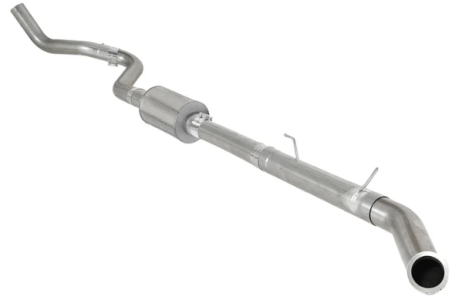
- The Complete Overhaul (Turbo-Back): This is the ultimate performance solution, replacing every single component from the turbocharger outlet to the tailpipe. A 5-inch Turbo-Back System offers the maximum possible reduction in backpressure. For the most aggressive flow and sound, the 5" Turbo Back DPF Delete Pipe (No Muffler) is a top choice. If you prefer a powerful but more civilized daily driving experience, the 5" Turbo Back version with a Muffler is ideal. *(Note: 5" systems do not fit trucks with factory air-ride suspension).*
- The Performance-Focused Delete (Downpipe-Back): This excellent middle-ground option replaces the exhaust from the downpipe rearward, removing the DPF and catalytic converter. The 4" Downpipe Back DPF Delete Race Pipe (No Muffler) offers a direct, loud, and high-flow path. For those who want the performance without the extreme volume, the 4" Downpipe Back version with a Muffler is the perfect balance.
- The Essential Delete: If your goal is purely to remove the DPF canister with a straightforward, direct pipe, a basic 4" Exhaust Delete Tube Kit will accomplish the core task effectively.
Part 3: The Absolute Necessity - Professional ECU Tuning
STOP. This is not a suggestion; it is a requirement. You cannot physically remove the DPF and drive your truck. The vehicle's Engine Control Module (ECM) is programmed to monitor and manage the entire emissions system. Without it, the ECM will trigger a cascade of fault codes, illuminate every warning light, and force the engine into a severe "limp mode" that drastically reduces power to prevent perceived damage.A custom "delete" tune is the brain that must accompany the new hardware. A proper, reputable tune performs these critical functions:
- Disables Emissions Controls: Permanently turns off all monitoring for the DPF, SCR, and related sensors.
- Optimizes Engine Calibration: Re-maps fueling, timing, and turbocharger vane logic to work in perfect harmony with the new, free-flowing exhaust. This is where you unlock safe power and throttle response.
- Eliminates Regeneration: Stops all fuel-wasting, heat-generating DPF regeneration cycles.
- Prevents Engine Derate: Allows your truck to operate normally and access its full power band.
Part 4: Installation Mastery - Tips for a Flawless Job
A proper installation ensures performance, prevents leaks, and avoids dangerous contact with other components.Preparation is 90% of the Battle:
- Let the truck cool overnight. Working on a hot exhaust is dangerous.
- Soak every factory exhaust fastener, especially the turbo V-band clamp, in a quality penetrating oil (like PB Blaster or Kroil) multiple times over 24 hours.
- Gather the right tools: 6-point sockets, a strong breaker bar or impact wrench, safety glasses, and sturdy jack stands.
- Have a helper or a transmission jack ready—the DPF assembly is very heavy.
- Disconnect & Depressurize: Disconnect the negative battery terminal. Relieve fuel system pressure if necessary.
- Remove Sensors & Components: Carefully unplug all electrical connectors and remove any sensors from the DPF assembly. Disconnect the Diesel Exhaust Fluid (DEF) injector line if equipped.
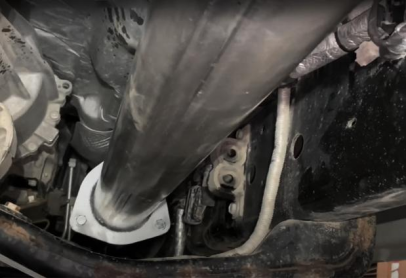
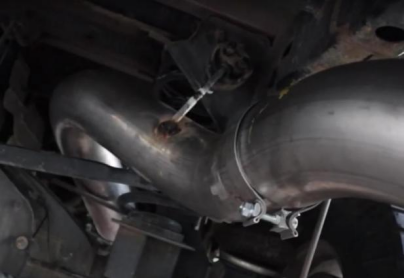
- Unbolt the Factory System: Starting from the rear, unbolt the exhaust from the mid-pipe or hangers. Then, attack the most critical connection: the V-band clamp at the turbo outlet. This is often the most stubborn bolt. Work slowly and use steady force.
- Support and Remove: With all connections free, support the massive DPF/catalytic converter assembly and carefully lower it from the truck.
- Dry-Fit the New System: Before using any gaskets or sealant, loosely assemble the new pipes on the ground and hold them under the truck. Check alignment of all hangers and connections. This prevents forcing misaligned parts.
- Install from Front to Back: Begin at the turbo. Use a new gasket and a light coat of anti-seize on the V-band clamp hardware. Hand-tighten only. Work your way rearward, connecting each section and loosely attaching hangers.
- The Final Torque Sequence: Once everything is aligned and hanging freely, start at the turbo and work back, tightening all clamps and connections to the manufacturer's specification. This ensures the system is stress-free.
- The Critical Clearance Check: This step is non-negotiable. Have an assistant start the engine while you watch the entire exhaust system. Look for any contact with the frame, fuel tank, brake lines, or suspension. Gently rev the engine and observe movement. There must be at least 1 inch of clearance at all points, through the full range of engine movement. Adjust hangers as necessary.
Part 5: The Tangible Rewards - What to Expect
- Transformed Throttle Response & Power: The reduction in backpressure is immediately felt. Turbo spool is faster, lag is minimized, and the engine pulls more freely across the entire RPM range, unlocking significant latent horsepower and torque.
- Dramatically Lower EGTs: This is the premier benefit for engine longevity. With the restrictive DPF gone, exhaust gases flow freely. It's common to see EGT reductions of 200-400°F under heavy load (towing, climbing). This drastically reduces thermal stress on the turbo, pistons, valves, and cylinder head.
- Improved Fuel Economy: Eliminating regeneration cycles (which burn fuel) and reducing engine pumping losses routinely results in a 1-3 MPG increase in real-world combined driving.
- Enhanced Reliability: You remove the most complex and fragile part of the emissions system, preventing future four-figure repair bills.
- Authoritative Sound: The Cummins gains its true, deep voice—from a muscular rumble (with a muffler) to a commanding roar (straight pipe).
Part 6: Navigating the Real World - Your Questions Answered
Q: What is the legal status of this modification?A: In the United States, it is a federal violation of the Clean Air Act to remove or tamper with the DPF on a vehicle registered for on-road use. This is not a gray area. Products are sold strictly "For Off-Road/Competition Use Only." Enforcement varies by state; some have no testing, while states with emissions programs (e.g., California, Colorado, New York, Pennsylvania) will fail a deleted truck during inspection. The legal and financial liability rests entirely with the vehicle owner.
Q: Will my truck produce excessive black smoke?
A: A properly tuned truck should not. Black smoke is unburned diesel fuel, a sign of a poor air-fuel ratio. A quality custom tune is calibrated for performance and cleanliness. You may see a light haze under maximum acceleration, but persistent black smoke indicates an inferior, irresponsible tune.
Q: Is a 5-inch system necessary, or is 4-inch sufficient?
A: For 90% of applications, including trucks with moderate performance tuning, a well-designed 4-inch system is perfectly adequate and offers exceptional flow. The 5-inch system becomes advantageous for high-horsepower builds (600+ HP) where maximizing every last bit of flow is critical. For most daily drivers and tow rigs, the 4-inch option is the more practical and cost-effective performance choice.
Q: Can a DIY mechanic handle this installation?
A: Yes, if you are methodical, have a good set of tools, and follow instructions. The most challenging aspect is typically dealing with seized factory hardware, especially the turbo V-band clamp. If you are not comfortable working under the vehicle with heavy components and applying significant force, professional installation is a wise investment.
Q: What happens to my factory warranty?
A: Performing a DPF delete will immediately and irrevocably void any remaining powertrain and emissions-related warranty coverage. Dealerships can detect the modification and are required to flag the vehicle's VIN in a national database. This is a permanent decision with financial implications.
Conclusion: An Informed Decision for a Transformed Truck
Upgrading the exhaust on your 6.7L Cummins is a decisive step that yields profound benefits in drivability, efficiency, and mechanical peace of mind. The path you choose—from the precise Cab & Chassis solution, to the comprehensive 5" Turbo-Back systems, or the balanced 4" Downpipe-Back deletes—should be dictated by your specific truck and goals.Remember, this is a system upgrade. The high-quality pipe you bolt under the truck is only half of the equation. The other half is the professional, custom ECU tune that makes it all work safely and effectively. Approach this modification with your eyes open to the technical, legal, and financial considerations. When executed correctly, it liberates your Cummins from its factory constraints, resulting in a truck that performs, sounds, and endures as it was always meant to.
Last edited:
