

What’s up, 6.4L crew? Let’s cut to the chase. We own one of the most potent, torque-monster engines Ford ever dropped in a Super Duty. With its twin-turbo punch and common-rail fury, the 6.4L Powerstroke has the bones of a absolute legend. But as we all know too well, its potential is often shackled by factory engineering compromises, most notoriously in the emissions system. While we rightfully focus on the big-ticket bulletproofing items—EGR coolers, DPF deletes, up-pipes—there’s a foundational system that often gets overlooked until it becomes a problem: the air intake.
I’m not talking about chasing peak dyno numbers with this mod. I’m talking about foundational engine health, supporting the mods you already have (or plan to get), and correcting a simple but significant flaw. The stock air intake on our 2008-2010 trucks is, frankly, a bottleneck disguised as a black plastic box. After living with the factory setup and then upgrading to a dedicated cold air intake system—specifically the Trucktok Cold Air Intake for the 6.4L Powerstroke—the difference was clear enough to warrant a detailed breakdown for the forum.
1. Material & Construction: Sturdy Aluminum Alloy with Power-Coated Finish.
Tools & Supplies You’ll Need:
Q: Will this cause a check engine light (CEL)?
A: It should not, provided you follow two rules: 1) Use the supplied dry filter—never an oiled one, and 2) Thoroughly clean your MAF sensor during installation. The tube is engineered to maintain correct internal diameter at the MAF location to keep airflow readings accurate.
Q: Do I need a custom tune to run this intake?
A: No, it is a completely standalone bolt-on modification. The engine’s computer can adapt to the increased airflow within its normal parameters. It’s a perfect first mod or a supporting mod for an existing tuned truck.
Q: Are the horsepower gains real, or just marketing?
A: The gains are real but are best felt as part of the overall package—improved response and supporting other mods. You won’t “gain 14 HP” in a seat-of-the-pants slam, but you will feel a more responsive, freer-breathing engine. The dyno number is a validated peak improvement.
Q: How often should I clean the reusable filter?
A: For typical street use, every 30,000-50,000 miles is a good interval. If you drive in extremely dusty or off-road conditions, inspect it every 10,000-15,000 miles. Clean it according to the kit’s instructions (usually tapping out loose debris, then washing with mild soap and water, and air-drying completely).
If you’re tired of the stock setup’s limitations and want to unlock a more responsive, better-sounding, and healthier-running engine, this is a premier place to start. You can check out the specific Trucktok Cold Air Intake for the 2008-2010 6.4L Powerstroke here.
Have you made the switch to a cold air intake? What was your experience with spool-up and sound? Any other installation tips for the community? Share your thoughts and questions below
I’m not talking about chasing peak dyno numbers with this mod. I’m talking about foundational engine health, supporting the mods you already have (or plan to get), and correcting a simple but significant flaw. The stock air intake on our 2008-2010 trucks is, frankly, a bottleneck disguised as a black plastic box. After living with the factory setup and then upgrading to a dedicated cold air intake system—specifically the Trucktok Cold Air Intake for the 6.4L Powerstroke—the difference was clear enough to warrant a detailed breakdown for the forum.
Part 1: The Factory Flaw – Why the Stock Setup is Failing Your Engine
Before we look at the solution, let’s diagnose the problem. The 6.4L’s compound turbo system is a masterpiece of forced induction, but it’s utterly reliant on a massive volume of clean, cool air. The factory system is built for cost, packaging, and meeting specific sound and emissions thresholds, not for optimal performance or longevity.- The “Hot Air” Box (Literally): This is the core issue. The stock airbox is nestled in the engine bay, directly absorbing radiant heat from the turbos, exhaust manifolds, and the block itself. It’s pulling in air that’s already been pre-warmed. Physics 101: colder air is denser air. Denser air packs more oxygen molecules per cubic foot, leading to more efficient and powerful combustion. The stock setup is forcing your turbos to work with a less-dense charge from the very start, reducing efficiency and raising your intake air temperatures (IAT) before the air even hits the first turbo.
- The Collapsing Intake Tube: A notorious and embarrassing issue on early 6.4L models. The accordion-style rubber intake hose between the airbox and the turbo inlet pipe is weak. Under high load and boost, this tube can actually collapse inward, severely restricting airflow at the worst possible moment. This isn’t a minor quirk; it’s a critical failure point that strangles your engine when you need power most, like when merging or towing a grade.
- Restrictive Flow Path & Filter: The internal design of the factory airbox and the paper filter element prioritize filtration and silence over outright flow. The filter has limited surface area and, as it gets dirty, becomes restrictive quickly. The entire assembly creates turbulence and resistance that your turbos must overcome, stealing a bit of spool-up time and efficiency.
- The Missed Auditory Feedback: Silly to some, important to others—the stock system muffles the incredible symphony of the compound turbos. You’re missing out on the full, deep intake roar and the complex spooling sounds that are part of the diesel ownership experience.
Part 2: The Engineering Solution – Dissecting a Proper Cold Air Intake
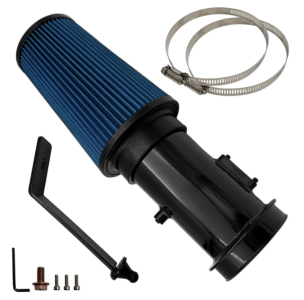
A true cold air intake kit isn’t just an aesthetic upgrade. It’s a system engineered to correct the flaws above. The Trucktok kit is built with specific features that directly address the 6.4L’s shortcomings. Let’s break it down based on the product specs and real-world application:1. Material & Construction: Sturdy Aluminum Alloy with Power-Coated Finish.
- Why It Matters: Goodbye, flimsy plastic and collapse-prone rubber. The use of sturdy aluminum alloy provides immense structural integrity. That tube is not collapsing under any amount of boost. Aluminum also acts as a slight heat sink and doesn’t degrade with heat cycles like plastic.
- The Power-Coated Black Advantage: The description mentions a polished and power-coated black finish. This isn't just for a sleek, OEM+ look. A quality powder coat is incredibly durable, providing superior heat and wear resistance compared to paint. It protects the aluminum from corrosion and helps it withstand the harsh under-hood environment for years.
- This is a critical engineering highlight. Unlike cheaply mandrel-bent or crimped pipes, a CNC roller-bent process ensures the aluminum tube has perfectly smooth, consistent inner walls with minimal turbulence-inducing ridges or seams.
- The Result: This meticulous design, as the description states, achieves maximum airflow. Air moves through the intake in a smooth, laminar stream, reducing drag and making it easier for the turbos to ingest air. This directly translates to improved throttle response and turbo spool characteristics.
- This is non-negotiable for the 6.4L, and they nailed it. You must use a dry filteron these trucks.
- MAF Sensor Protection: The 6.4L uses a Mass Air Flow (MAF) sensor for precise engine management. Oil from traditional "oiled" gauze filters (like K&N style) can slowly contaminate the sensitive MAF wires, leading to faulty readings, erratic idle, loss of power, and check engine lights. A dry filter eliminates this risk entirely.
- Enhanced Filtration (The 95% Claim): This high-efficiency dry media is designed to trap fine particulate matter without sacrificing flow. Preventing fine dust from entering the intake is crucial. That dust acts as an abrasive, sandblasting your expensive turbo compressor wheels and, over extreme distances, contributing to cylinder wear. This filter is your first line of defense.
- Reusable & Cost-Effective: Instead of buying disposable paper filters, you simply clean and re-use this one per the instructions. For owners who put on serious miles, this pays for the kit over time.
- Let’s be pragmatic. You won’t feel like you just added a supercharger. These figures are typically peak gains measured on a dyno. The real-world benefits are more nuanced and perhaps more valuable:
- Sharper Throttle Response: This is the most immediate sensation. With the restrictive, collapse-prone stock tube gone, the turbos can spool more freely. The lag between pedal input and boost build is reduced.
- A Supporting Actor for Other Mods: This intake shines as part of a system. If you have a tuner, an exhaust, or are considering them, this upgrade ensures your intake isn’t the weak link holding everything back. It provides the airflow foundation those other mods need to work to their full potential.
- Heat Management Aid: By pulling in denser, cooler ambient air from the fenderwell (a true "cold air" location), you are lowering the starting temperature of your intake charge. This gives your intercoolers a fighting chance to do their job more effectively, contributing to lower overall intake temps and happier EGTs, especially under load.
Part 3: Installation – A Straightforward Upgrade with Key Tips
This is one of the more accessible mods for the 6.4L, perfect for a Saturday morning project. Plan for 1.5 to 2.5 hours.Tools & Supplies You’ll Need:
- Basic socket set (8mm, 10mm)
- Screwdrivers
- Pliers
- ESSENTIAL: Can of CRC MAF Sensor Cleaner (electronic contact cleaner).
- Disconnect the Battery: Safety first. Always disconnect the negative terminal before working near electrical sensors.
- Remove the Factory Airbox: Open the lid, remove the old filter. Unclip the intake tube from the fender liner and turbo inlet pipe. Unbolt the airbox from its mounting bracket. It’s a logical process.
- CLEAN YOUR MAF SENSOR – DO NOT SKIP THIS! Once the stock intake tube is out, you’ll see the MAF sensor. Carefully unplug its connector, remove the sensor (usually Torx screws), and give the sensing elements several generous sprays with the MAF cleaner. Let it air dry completely. Do not wipe or touch the filaments. Installing a high-flow intake with a dirty sensor is counterproductive and can cause driveability issues.
- Assemble the New Kit: Follow the included instructions. The Trucktok kit is designed for direct fitment. Attach the dry filter to the beautifully finished aluminum intake tube.
- Install the New Assembly: Route the new tube through the factory location (into the fenderwell for true cold air). Connect it securely to the turbo inlet pipe using the supplied heavy-duty clamp. This connection is critical—ensure it’s very tight. Mount the assembly using the provided bracket(s).
- Re-install the MAF Sensor: Place your cleaned MAF sensor into its housing on the new tube and secure it. Reconnect the electrical plug.
- The Final Check: Before closing up, double-check every clamp. Ensure the filter is seated securely in the tube and that no part of the intake or its piping is contacting sharp edges, hot components, or the radiator fan.
- Reconnect the Battery & Fire Up: Reconnect the battery, start the truck, and listen for any major suction leaks (a loud hissing). Let it idle for a minute as the PCM re-learns. Take it for a drive and listen to that new soundtrack!
Part 4: Real-World Impressions & Your Questions Answered
After several months and a few thousand miles, here’s the honest feedback:- The Immediate Wins: Throttle response is noticeably crisper. The engine feels more eager off the line. The sound… it’s transformative. The deep, resonant intake growl and the pronounced turbo spool sounds completely change the character of the truck, in the best way possible. Visually, the powder-coated black tube looks aggressive and purposeful under the hood.
- The Long-Term Benefit: Peace of mind. No more worrying about a collapsing intake tube during a hard pull. Knowing the filtration is top-notch and my MAF is safe from oil contamination. Seeing that reusable filter and knowing I’ll never buy a disposable paper one again.
Q: Will this cause a check engine light (CEL)?
A: It should not, provided you follow two rules: 1) Use the supplied dry filter—never an oiled one, and 2) Thoroughly clean your MAF sensor during installation. The tube is engineered to maintain correct internal diameter at the MAF location to keep airflow readings accurate.
Q: Do I need a custom tune to run this intake?
A: No, it is a completely standalone bolt-on modification. The engine’s computer can adapt to the increased airflow within its normal parameters. It’s a perfect first mod or a supporting mod for an existing tuned truck.
Q: Are the horsepower gains real, or just marketing?
A: The gains are real but are best felt as part of the overall package—improved response and supporting other mods. You won’t “gain 14 HP” in a seat-of-the-pants slam, but you will feel a more responsive, freer-breathing engine. The dyno number is a validated peak improvement.
Q: How often should I clean the reusable filter?
A: For typical street use, every 30,000-50,000 miles is a good interval. If you drive in extremely dusty or off-road conditions, inspect it every 10,000-15,000 miles. Clean it according to the kit’s instructions (usually tapping out loose debris, then washing with mild soap and water, and air-drying completely).
Final Verdict: An Essential Foundation, Not Just an Accessory
Upgrading the intake on your 6.4L Powerstroke with a kit like the Trucktok Cold Air Intake is one of the smartest foundational mods you can perform. It’s not about chasing a massive standalone power number; it’s about:- Correcting a Design Flaw: Eliminating the restrictive, heat-soaked, and failure-prone factory intake.
- Providing Critical Protection: Employing a high-efficiency dry filter to guard your turbos and engine from abrasive contaminants.
- Unlocking Potential: Improving throttle response, enhancing the sound of your compound turbos, and creating the optimal airflow foundation for any future performance upgrades.
If you’re tired of the stock setup’s limitations and want to unlock a more responsive, better-sounding, and healthier-running engine, this is a premier place to start. You can check out the specific Trucktok Cold Air Intake for the 2008-2010 6.4L Powerstroke here.
Have you made the switch to a cold air intake? What was your experience with spool-up and sound? Any other installation tips for the community? Share your thoughts and questions below
Last edited:
