

Let's talk about the most restrictive piece of factory plumbing on your 2011-2016 Duramax LML. We spend countless hours and dollars debating tuners, turbo upgrades, and intake systems, often overlooking a critical, simple, and highly effective bolt-on modification: the downpipe.
For LML owners, the factory downpipe is the first and most significant choke point in the entire exhaust system. Upgrading it is a foundational performance mod that pays dividends in responsiveness, efficiency, and engine health, whether you're keeping the rest of the emissions equipment stock or planning a full delete. Today, we're breaking down the "why" and "how" of the LML downpipe upgrade.
This design creates a fundamental compromise. The factory downpipe is not optimized for flow; it's optimized for packaging. It's often a smaller diameter (typically around 2.5-2.75 inches) and features tight bends to snake around the transmission, crossmember, and frame rails to connect to the DPF. This creates substantial exhaust backpressure right at the turbo outlet.
Here’s what that backpressure costs you:
However, the single most crucial factor in this upgrade is choosing the correct model for your truck. GM changed the turbo-to-downpipe connection mid-production, and the two parts are not interchangeable.
Remember: Your success hinges on selecting the correct downpipe for your truck's turbo connection. Verify your connection type, take your time during installation, and enjoy unlocking a new level of efficiency from your Duramax.
Have you installed an aftermarket downpipe on your LML? What differences did you feel the most? Share your experiences and any installation tips in the comments below to help out the community!
For LML owners, the factory downpipe is the first and most significant choke point in the entire exhaust system. Upgrading it is a foundational performance mod that pays dividends in responsiveness, efficiency, and engine health, whether you're keeping the rest of the emissions equipment stock or planning a full delete. Today, we're breaking down the "why" and "how" of the LML downpipe upgrade.
Part 1: The Factory Flaw – Understanding the Downpipe Dilemma
The LML Duramax left the factory as the most powerful and clean-burning diesel GM had ever produced, boasting 397 horsepower and 765 lb-ft of torque. To achieve this while meeting stringent 2010 emissions standards, engineers packed a complex array of hardware under the truck. The turbocharger's exhaust outlet feeds directly into a downpipe that must immediately route exhaust gas into the massive Diesel Particulate Filter (DPF) and Selective Catalytic Reduction (SCR) canisters.This design creates a fundamental compromise. The factory downpipe is not optimized for flow; it's optimized for packaging. It's often a smaller diameter (typically around 2.5-2.75 inches) and features tight bends to snake around the transmission, crossmember, and frame rails to connect to the DPF. This creates substantial exhaust backpressure right at the turbo outlet.
Here’s what that backpressure costs you:
- Strangled Turbo Spool: The turbocharger works by harnessing exhaust energy. Backpressure acts like a foot on the hose, making it harder for the turbo to expel spent gases and spin up quickly. The result is slower boost response and noticeable lag.
- Elevated Exhaust Gas Temperatures (EGTs): Trapped, pressurized exhaust gas gets hotter. High EGTs are the enemy of diesel engine longevity, increasing thermal stress on pistons, valves, and the turbo itself.
- Lost Efficiency and Power: The engine has to work harder to push exhaust out, robbing you of potential horsepower and torque. This parasitic power loss directly impacts fuel economy, as the engine operates less efficiently.
- A Performance Ceiling: Any future modifications—like tuning or a larger turbo—will be severely limited by this restrictive first step. It's the classic case of trying to drink a thick milkshake through a skinny straw.
Part 2: The Precision Solution – Two Downpipes, One Critical Choice
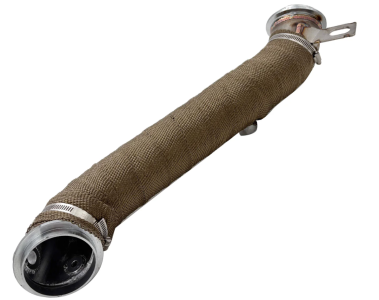
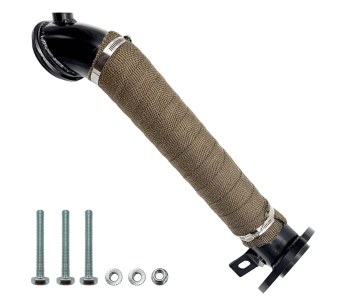
The fix is a high-flow, large-diameter downpipe. The TruckTok options, both crafted from high-quality stainless steel, replace this restrictive section with a smooth, 3-inch diameter pipe designed for unrestricted flow. This immediate reduction in backpressure allows the turbo to spool faster, exhaust gases to exit more freely, and EGTs to drop—a win across the board.However, the single most crucial factor in this upgrade is choosing the correct model for your truck. GM changed the turbo-to-downpipe connection mid-production, and the two parts are not interchangeable.
- For 2011 through Early 2015 LMLs (V-Band Connection): These trucks use a robust, circular V-band clamp to secure the downpipe to the turbo outlet. The TruckTok 3-Inch Downpipe for 2011-2015 models is engineered specifically for this connection. The product description is unambiguous: it is for trucks "With V-Band Style." Installing this on a later truck with a 3-bolt flange is physically impossible.
- For Late 2015 (2015.5) to 2016 LMLs (3-Bolt Flange Connection): In a running change, GM switched to a three-bolt triangular flange. The TruckTok 3-Inch Downpipe for 2015.5-2016 models is built for this pattern. Its description is equally clear, stating it "Only works with a 3 bolt flange style connection!"
Part 3: The Installation – A Hands-On Guide and Critical Tips
This is a moderately challenging DIY job, best tackled with the truck safely supported on jack stands and with a basic metric socket set, extensions, wrenches, and penetrating oil. Allow 2-4 hours for your first attempt.- Safety and Access First: Disconnect the negative battery cable. The best access is gained by removing the passenger-side front tire and the inner fender liner. This provides a surprisingly clear view of the entire downpipe, DPF connection, and turbo area.
- Removing the Old Downpipe:
- Start by unbolting the downpipe from the DPF inlet. These bolts can be rusty; soak them in penetrating oil.
- Next, loosen and remove the V-band clamp or three bolts at the turbo connection. This is often the toughest part, as heat cycles can seize these fasteners.
- There will be one or more bracket(s) supporting the downpipe to the engine or transmission. Unbolt these last, once the pipe is free at both ends, then carefully maneuver the old pipe out.
- Installing the New Downpipe – The Keys to Success:
- Dry Fit: Before using any gaskets or sealant, offer up the new TruckTok downpipe. Ensure it aligns perfectly with both the turbo outlet and the DPF inlet without forcing anything. A proper-quality downpipe will fit like OEM.
- Gaskets and Sealant: Always use new gaskets. For the turbo connection, a high-temperature copper gasket sealant can help ensure an airtight seal, which is critical for proper turbo operation and preventing leaks. On the DPF end, a fresh factory-style gasket is usually sufficient.
- Connection Sequence: A good practice is to loosely connect the downpipe to the turbo first, then align it with the DPF and support brackets. Once everything is aligned and the support brackets are finger-tight, go back and torque all connections to specification. Over-tightening, especially at the turbo, can warp flanges and cause leaks.
Part 4: The Payoff – Tangible Performance and Reliability Gains
The moment you start the truck after the install, you may notice a deeper, cleaner exhaust tone from the turbo back. But the real benefits are felt on the road and seen on the gauges.- Immediate Throttle Response and Faster Turbo Spool: This is the most noticeable improvement. The reduction in backpressure allows the turbo to spin up more quickly, dramatically reducing lag. The truck feels more alert and eager.
- Proven Power and Torque Gains: As quantified by the manufacturer's testing for the later model pipe, you can expect gains in the range of +21 horsepower and +24 lb-ft of torque. This comes from the engine operating more efficiently, not from aggressive tuning.
- Lower Exhaust Gas Temperatures (EGTs): This is a major reliability benefit. With less restriction, heat energy is carried out of the engine faster. You will see lower peak EGTs, especially under load like towing or climbing grades, which reduces thermal stress on critical components.
- Improved Fuel Economy: A more efficient engine is a more economical engine. By reducing the pumping losses caused by backpressure, many owners report a 1-2 MPG improvement in fuel economy, depending on driving habits.
- A Foundation for Future Mods: This upgrade doesn't just stand alone. If you later decide to tune your truck, remove the DPF, or upgrade the turbo, the high-flow 3-inch downpipe will already be in place, ensuring those subsequent mods can perform to their full potential without being bottlenecked at the very first step.
Part 5: Final Thoughts
The TruckTok 3-inch downpipe upgrade is one of the smartest, most cost-effective modifications you can perform on your LML Duramax. It directly addresses a key factory design compromise, delivering real-world gains in drivability, performance, and engine health. Whether your goal is a more responsive daily driver, better fuel economy on the highway, or laying the groundwork for a more powerful build, this bolt-on modification delivers.Remember: Your success hinges on selecting the correct downpipe for your truck's turbo connection. Verify your connection type, take your time during installation, and enjoy unlocking a new level of efficiency from your Duramax.
Have you installed an aftermarket downpipe on your LML? What differences did you feel the most? Share your experiences and any installation tips in the comments below to help out the community!
Last edited:
