

Hey everyone,
If you are reading this, you probably own a 2003-2007 Ford 6.0L Powerstroke. You also probably know that owning a 6.0L is a bit like a toxic relationship—when she’s running right, she’s the best ride you’ve ever had. The whistle of that VGT turbo, the torque, the throttle response... it’s addictive. But when she’s acting up? It’s a nightmare of heat issues, cracked parts, and expensive repair bills.
We talk a lot about "bulletproofing" the internals (head studs, oil coolers), but today I want to talk about "breathing." The 6.0L factory setup is essentially suffocating your engine. From the narrow plastic intake piping to the restrictive exhaust that traps heat, the stock configuration is a recipe for high Exhaust Gas Temperatures (EGTs) and sluggish performance.
I just finished a complete overhaul of the airflow system on my ‘05 F-350, focusing on the intake elbow, cold air intake, up-pipes, and a full exhaust clear-out. The difference is night and day.
I’m going to break down the defects of the stock system, what parts I used, installation tips, and the results.
1. The "Plastic" Problem (Intake)The factory intake elbow and intercooler pipes on the 6.0L are made of plastic. Over time, heat cycles make this plastic brittle.
Tools You Will Need:
1. The SoundThe first thing you notice is the whistle. With the 3.5" delete pipe and the open cold air intake, the 6.0L sounds like a jet engine taxiing on a runway. At idle, you get that deep, throaty rumble that a diesel should have, not the muffled hiss of the stock setup.
2. Throttle ResponseThe aluminum intake elbow and CAI definitely changed the "off-the-line" feel. The turbo spools about 200-300 RPM sooner. That "dead spot" when you step on the gas at a stoplight is significantly reduced.
3. EGT Management (The Big Win)This is why we do it.
Q: Do I need a tuner for these mods?A:
Q: What about the legal stuff?A: Important Note: Modifications that remove emissions equipment (like the EGR delete on the up-pipes or the Cat delete pipe) are generally for Off-Road / Competition Use Only in the United States. Removing federal emissions equipment can violate the Clean Air Act. If you live in a state with strict visual inspections or emissions testing (like California), you will not pass with the delete pipe or the EGR-delete up-pipes installed. Always check your local laws before installing these specific exhaust components.
The combination of the aluminum intake elbow and the heavy-duty up-pipes has made my truck feel 10 years younger. It runs cooler, sounds meaner, and pulls harder.
Just remember to soak those bolts in penetrating oil before you start!
Next Step for you guys: If you are noticing soot on your firewall or hearing a "hissing" sound under load, check your up-pipes immediately. If they are cracked, don't replace them with stock ones—upgrade them now or you'll be doing it again in 20k miles.
Let me know if you have any questions on the install, happy to help a fellow 6.0 owner out!
If you are reading this, you probably own a 2003-2007 Ford 6.0L Powerstroke. You also probably know that owning a 6.0L is a bit like a toxic relationship—when she’s running right, she’s the best ride you’ve ever had. The whistle of that VGT turbo, the torque, the throttle response... it’s addictive. But when she’s acting up? It’s a nightmare of heat issues, cracked parts, and expensive repair bills.
We talk a lot about "bulletproofing" the internals (head studs, oil coolers), but today I want to talk about "breathing." The 6.0L factory setup is essentially suffocating your engine. From the narrow plastic intake piping to the restrictive exhaust that traps heat, the stock configuration is a recipe for high Exhaust Gas Temperatures (EGTs) and sluggish performance.
I just finished a complete overhaul of the airflow system on my ‘05 F-350, focusing on the intake elbow, cold air intake, up-pipes, and a full exhaust clear-out. The difference is night and day.
I’m going to break down the defects of the stock system, what parts I used, installation tips, and the results.
Part 1: The Bottlenecks (Why Stock Sucks)
Before we start throwing parts at the truck, you need to understand why we are doing this. The 6.0L relies heavily on its Variable Geometry Turbo (VGT). For that turbo to work efficiently, it needs to inhale massive amounts of cool air and exhale hot gas instantly.1. The "Plastic" Problem (Intake)The factory intake elbow and intercooler pipes on the 6.0L are made of plastic. Over time, heat cycles make this plastic brittle.
- The Defect: They are prone to cracking around the clamps or blowing off completely under high boost.
- The Restriction: The stock elbow on many models has a butterfly valve/throttle plate housing inside (used for EGR mixing) that disrupts airflow turbulence right before it hits the intake manifold.
- The Defect: The factory up-pipes (connecting the exhaust manifolds to the turbo) use flexible bellows that are notorious for cracking.
- The Symptom: When these crack, you lose drive pressure. Your turbo lags, your engine bay gets covered in soot, and your EGTs skyrocket because the turbo can’t clear the cylinders efficiently.
Part 2: The Solution (Parts Breakdown)
I decided to go with a setup that maximizes flow and eliminates failure points. I sourced my kit from TruckTok because they use proper materials (T-6061 Aluminum and T-304 Stainless) rather than cheap mild steel that rusts out in a year.Step A: Feeding the Beast (Intake Upgrades)
First, I wanted to ditch the stock airbox. The stock filter is okay for a work truck, but if you want the turbo to scream, you need an open element. I went with a solid aluminum cold air intake kit.- Why this one: It uses a dry filter. Pro-Tip: Never use oiled filters on a 6.0L Powerstroke. The oil from the filter can coat the MAF sensor, causing erratic idle and check engine lights. This kit is dry, reusable, and the piping is polished aluminum which dissipates heat better than plastic.
- Expectation: About a 14HP bump, but more importantly, faster spool-up.
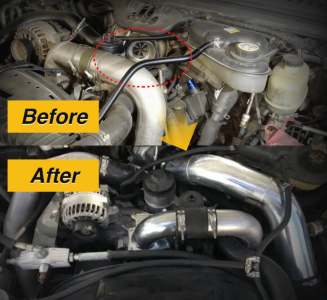
- The Tech: This is mandrel-bent T-6061 aluminum. It removes the internal restrictions of the stock unit. It also comes with a 1/8" NPT port, which is crucial if you plan on running a boost gauge or water-methanol injection later.
- Flow: The manufacturer claims an 80% airflow increase. While that’s theoretical, the removal of the internal turbulence is physically visible when you compare the parts side-by-side.
Step B: The Hot Side (Up-Pipes)
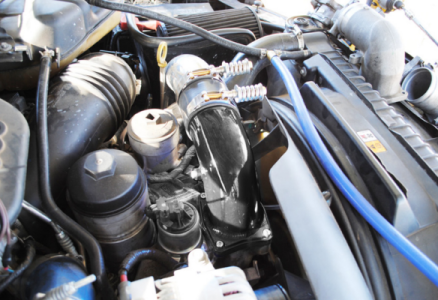
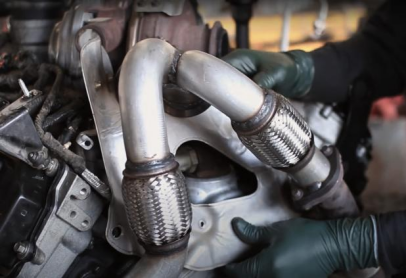
This was the most critical part of the build. If your up-pipes are leaking, your turbo is lazy. I installed a set of polished heavy-duty up-pipe assembly.- Durability: These are made of T-304 Stainless Steel with heavy-gauge piping walls. The bellows (the flex part) are reinforced.
- The Design: This is a "scoop" style Y-pipe design. It smooths out the collision of exhaust gases from the left and right banks before they hit the turbo.
- Note: This specific pipe setup is designed to delete the factory EGR port. This cleans up the engine bay significantly and removes a major failure point (the EGR cooler), but be aware of the tuning requirements (more on that in the FAQ).
Step C: The Exit (Exhaust Delete)
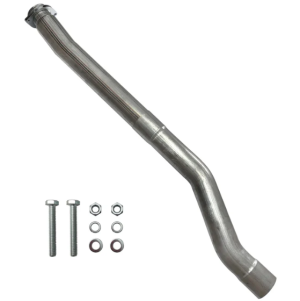
Finally, to get that heat out of the truck, I removed the restriction after the turbo. I utilized a 3.5-inch cat delete pipe.- Why 3.5 inch? Some guys go 4 or 5 inch. However, unless you are running a massive non-VGT turbo and huge injectors, a 3.5" or 4" system is actually better for low-end torque. 5-inch pipes can sometimes cause you to lose a bit of bottom-end grunt on a stock turbo.
- Material: 409 Stainless Steel. It’s not as pretty as 304, but for under-truck exhaust, it resists corrosion well enough and is much stronger than aluminized steel.
Part 3: Installation Guide (The "Knuckle Buster" Section)
I won't lie to you—working on a 6.0L requires patience, especially with the up-pipes. Here is the workflow and some tips I learned the hard way.Tools You Will Need:
- Deep socket set (10mm, 11mm, 13mm are your best friends).
- Wobble extensions (lots of them).
- Penetrating oil (PB Blaster or Kroil).
- Torque wrench.
- A few cold beverages.
Phase 1: The Teardown
- Soak Everything: The night before, crawl under the truck and soak the exhaust manifold bolts and turbo clamp bolts with penetrating oil. Do it again in the morning.
- Remove the Turbo: You cantechnically do up-pipes with the turbo in, but I highly recommend pulling the turbo. It gives you room to work and ensures you can seat the Y-pipe collector perfectly.
- Tip: When removing the turbo, be very careful with the oil drain tube. It is easy to bend.
Phase 2: Up-Pipes (The Hard Part)
- Remove the fender liners if you want easier access to the exhaust manifolds.
- When installing the new heavy-duty up-pipes, keep all bolts loose at first. Connect the manifolds first, then the collector to the turbo.
- Alignment is Key: Before torquing anything down, ensure the Y-pipe collector is perfectly flat against the turbo mounting face. If it's crooked, you will have a boost leak.
- Once aligned, torque the manifold bolts, then the turbo clamp.
Phase 3: Intake and Exhaust
- Intake Elbow: This is the easiest part. Remove the plastic clamps, pull the old one, put the O-ring on the new aluminum elbow, and bolt it down. Ensure the NPT plug is tight if you aren't using a gauge.
- Cold Air Intake: Remove the battery box cover if needed. The TruckTok kit fits the factory mounting points well. Make sure the MAF sensor is cleaned with electronic cleaner before swapping it to the new pipe.
- Delete Pipe: Sawzall or unbolt the factory cat/muffler. The new stainless pipe slips in. Use good quality band clamps—don't use the U-bolts that crimp the pipe, as they make future removal impossible.
Part 4: The Results & Experience
After about 6 hours of work (and a few scraped knuckles), I fired it up.1. The SoundThe first thing you notice is the whistle. With the 3.5" delete pipe and the open cold air intake, the 6.0L sounds like a jet engine taxiing on a runway. At idle, you get that deep, throaty rumble that a diesel should have, not the muffled hiss of the stock setup.
2. Throttle ResponseThe aluminum intake elbow and CAI definitely changed the "off-the-line" feel. The turbo spools about 200-300 RPM sooner. That "dead spot" when you step on the gas at a stoplight is significantly reduced.
3. EGT Management (The Big Win)This is why we do it.
- Pre-Mod: Towing 8,000 lbs up a 6% grade, my EGTs would creep up to 1250°F-1300°F, forcing me to back off.
- Post-Mod: Same hill, same load. EGTs stayed steady at 1050°F-1100°F.The unrestricted flow allows the heat to escape. The engine runs cooler, the fan clutch engages less often, and the truck feels like it's breathing freely.
Part 5: Common Questions (FAQ)
Q: Will the Cold Air Intake cause a Check Engine Light?A: It shouldn't, provided you handle the MAF sensor carefully. The TruckTok kit maintains the correct diameter at the sensor location so the computer reads the airflow correctly.Q: Do I need a tuner for these mods?A:
- For the Intake Elbow and CAI: No tuning required. The truck’s ECU can adjust for the extra air.
- For the Up-Pipes and Exhaust Delete: YES. Because the up-pipes delete the EGR port and the exhaust removes the Cat, you will get a Check Engine Light for "EGR Flow Insufficient" or "Catalyst Efficiency" without a tune. You need an SCT or similar tuner with custom tunes to turn off these sensors and optimize the fueling for the increased airflow.
Q: What about the legal stuff?A: Important Note: Modifications that remove emissions equipment (like the EGR delete on the up-pipes or the Cat delete pipe) are generally for Off-Road / Competition Use Only in the United States. Removing federal emissions equipment can violate the Clean Air Act. If you live in a state with strict visual inspections or emissions testing (like California), you will not pass with the delete pipe or the EGR-delete up-pipes installed. Always check your local laws before installing these specific exhaust components.
Conclusion
If you plan on keeping your 6.0L Powerstroke on the road for the long haul, getting air in and heat out is the best insurance policy you can buy. The plastic stock parts are ticking time bombs, and the restrictive exhaust is just cooking your engine.The combination of the aluminum intake elbow and the heavy-duty up-pipes has made my truck feel 10 years younger. It runs cooler, sounds meaner, and pulls harder.
Just remember to soak those bolts in penetrating oil before you start!
Next Step for you guys: If you are noticing soot on your firewall or hearing a "hissing" sound under load, check your up-pipes immediately. If they are cracked, don't replace them with stock ones—upgrade them now or you'll be doing it again in 20k miles.
Let me know if you have any questions on the install, happy to help a fellow 6.0 owner out!
Last edited:
