

I've owned my 2008 Ram 3500 with the 6.7L Cummins for about five years now.
One of the first things I learned was that the factory DPF system on these early 6.7L trucks is... let's say "enthusiastic" about regeneration. The truck would regen every couple hundred miles, fuel economy suffered, and I could watch my EGTs climb anytime I was towing. I started researching options and eventually landed on a 4" DPF delete pipe from TruckTok.
After running it for a couple years now, I wanted to share what I learned about why this modification matters on the 2007.5-2012 6.7L and what the kit actually delivers.
How the DPF works: The DPF is a ceramic wall-flow filter that traps soot particles from the exhaust. As soot accumulates, the engine initiates regeneration—injecting fuel late in the combustion stroke to raise exhaust temperatures and burn off the trapped soot.
The problem with regen: During regeneration, your truck is burning fuel to clean a filter, not to move you down the road. That's a direct fuel economy penalty. On these early 6.7L trucks, regeneration could happen as often as every 200-300 miles depending on driving conditions.
The backpressure issue: Every filter creates restriction. The DPF forces exhaust gas through porous ceramic walls, creating backpressure that the engine must overcome. Higher backpressure means your turbo works harder, EGTs rise, and you're losing efficiency.
The ash factor: Soot burns. Ash doesn't. Ash is the non-combustible residue from engine oil additives, and it accumulates in the DPF permanently. Eventually—typically around 150,000-200,000 miles—the ash load becomes significant enough to require DPF cleaning or replacement. That's an expensive repair waiting to happen.
Regeneration frequency: Early 6.7L calibration strategies tended to regen more frequently than later models. Owners report regen intervals anywhere from 200 to 500 miles depending on driving. That's a lot of fuel burned for no propulsion.
The VGT connection: These trucks use a variable-geometry turbo that's sensitive to backpressure changes. A restricted exhaust affects how the turbo performs, and the DPF adds significant backpressure.
The emissions evolution: The 2007.5-2012 trucks represent the first generation of Cummins emissions equipment. Later years saw refinements, but these early trucks have the "simpler" (if you can call it that) DPF-only setup without the SCR systems that came later.
The tuner support: This generation has excellent support from the tuning community. The ECMs are accessible, and delete tuning is well-established.
4-inch diameter: The 4-inch size is well-matched to the 6.7L's displacement and flow requirements. It provides a significant reduction in backpressure compared to the restrictive factory DPF while maintaining exhaust velocity for good turbo response. For a stock or mildly tuned truck, 4 inches is the sweet spot.
T-409 stainless steel: The pipe is made from T-409 stainless, which is the right material for this application. Unlike T-304, T-409 is magnetic—so don't panic if a magnet sticks to it. That's normal. T-409 offers excellent heat resistance and corrosion protection at a reasonable cost.
2mm wall thickness: At 2mm thick, this pipe is built to last. It won't crack from thermal cycling or vibration, and it'll hold up to years of service.
Direct replacement: The pipe is designed as a direct bolt-in replacement for the factory DPF. No cutting, no welding, no fabrication. It uses the existing mounting points and hardware.
Complete hardware: The kit includes the pipe, clamps, gasket, and bolts. Everything you need is in the box.
Improved fuel economy: This was the most immediate and measurable change. Without regeneration cycles burning fuel every few hundred miles, my average MPG went up by 2-3 miles per gallon. On the highway, the improvement is even more noticeable.
Lower EGTs: With the restriction gone, exhaust flows freely. My EGTs under load dropped significantly—100-150°F lower when towing the same trailer up the same grades. That's less thermal stress on the engine and turbo.
Faster turbo response: The VGT turbo spools more quickly when it's not fighting backpressure. The truck feels more responsive, especially from a stop or when rolling into the throttle.
No more regen anxiety: I don't think about regenerations anymore. No watching the dash, no worrying about interrupting a regen cycle when I shut the truck off. The DPF is gone, and with it, all the associated headaches.
Elimination of a failure point: DPFs can fail. They can crack, they can clog irreversibly, they can cause backpressure issues that damage the turbo. Removing the DPF eliminates this entire category of potential problems.
The 6.7L's ECM is programmed to monitor DPF operation—differential pressure, exhaust temperatures, soot load models. When it detects that the DPF is missing, it will set codes, light up your dash, and likely derate power.
You need a tune that:
Tools needed:
T-409 is specifically formulated for exhaust applications. It offers excellent oxidation resistance at high temperatures and good corrosion protection. It's the right material for a delete pipe, even if it doesn't have the shiny, non-magnetic properties of T-304.
The TruckTok 4" DPF Delete Race Pipe replaces the restrictive factory DPF with a free-flowing 4-inch pipe. It's made from T-409 stainless steel with 2mm wall thickness, includes all necessary hardware, and bolts directly to the factory mounting points.
When paired with proper delete tuning, the results are real:
*If you've deleted the DPF on your 2007.5-2012 6.7L Cummins, what was your experience with fuel economy and tuning? Drop your thoughts below.*
One of the first things I learned was that the factory DPF system on these early 6.7L trucks is... let's say "enthusiastic" about regeneration. The truck would regen every couple hundred miles, fuel economy suffered, and I could watch my EGTs climb anytime I was towing. I started researching options and eventually landed on a 4" DPF delete pipe from TruckTok.
After running it for a couple years now, I wanted to share what I learned about why this modification matters on the 2007.5-2012 6.7L and what the kit actually delivers.
Part 1: Understanding the 6.7L's DPF System
The 2007.5 model year marked a major shift for Cummins. The 5.9L was retired, and the 6.7L took its place with a host of changes—bigger displacement, a stronger block, and a variable-geometry turbo. But it also brought something the 5.9L never had: a comprehensive emissions system including a Diesel Particulate Filter.How the DPF works: The DPF is a ceramic wall-flow filter that traps soot particles from the exhaust. As soot accumulates, the engine initiates regeneration—injecting fuel late in the combustion stroke to raise exhaust temperatures and burn off the trapped soot.
The problem with regen: During regeneration, your truck is burning fuel to clean a filter, not to move you down the road. That's a direct fuel economy penalty. On these early 6.7L trucks, regeneration could happen as often as every 200-300 miles depending on driving conditions.
The backpressure issue: Every filter creates restriction. The DPF forces exhaust gas through porous ceramic walls, creating backpressure that the engine must overcome. Higher backpressure means your turbo works harder, EGTs rise, and you're losing efficiency.
The ash factor: Soot burns. Ash doesn't. Ash is the non-combustible residue from engine oil additives, and it accumulates in the DPF permanently. Eventually—typically around 150,000-200,000 miles—the ash load becomes significant enough to require DPF cleaning or replacement. That's an expensive repair waiting to happen.
Part 2: Why the 2007.5-2012 Trucks Are Different
The first-generation 6.7L trucks have some unique characteristics that make DPF deletion particularly relevant.Regeneration frequency: Early 6.7L calibration strategies tended to regen more frequently than later models. Owners report regen intervals anywhere from 200 to 500 miles depending on driving. That's a lot of fuel burned for no propulsion.
The VGT connection: These trucks use a variable-geometry turbo that's sensitive to backpressure changes. A restricted exhaust affects how the turbo performs, and the DPF adds significant backpressure.
The emissions evolution: The 2007.5-2012 trucks represent the first generation of Cummins emissions equipment. Later years saw refinements, but these early trucks have the "simpler" (if you can call it that) DPF-only setup without the SCR systems that came later.
The tuner support: This generation has excellent support from the tuning community. The ECMs are accessible, and delete tuning is well-established.
Part 3: What the TruckTok 4" Pipe Actually Does
The TruckTok kit replaces the factory DPF assembly with a straight-through 4-inch pipe. Here's what makes it worth considering.4-inch diameter: The 4-inch size is well-matched to the 6.7L's displacement and flow requirements. It provides a significant reduction in backpressure compared to the restrictive factory DPF while maintaining exhaust velocity for good turbo response. For a stock or mildly tuned truck, 4 inches is the sweet spot.
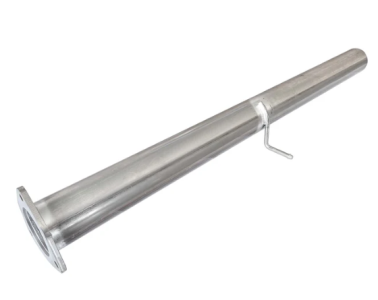
T-409 stainless steel: The pipe is made from T-409 stainless, which is the right material for this application. Unlike T-304, T-409 is magnetic—so don't panic if a magnet sticks to it. That's normal. T-409 offers excellent heat resistance and corrosion protection at a reasonable cost.
2mm wall thickness: At 2mm thick, this pipe is built to last. It won't crack from thermal cycling or vibration, and it'll hold up to years of service.
Direct replacement: The pipe is designed as a direct bolt-in replacement for the factory DPF. No cutting, no welding, no fabrication. It uses the existing mounting points and hardware.
Complete hardware: The kit includes the pipe, clamps, gasket, and bolts. Everything you need is in the box.
Part 4: What You Actually Gain
After running this setup for a couple years, here's what I've observed.Improved fuel economy: This was the most immediate and measurable change. Without regeneration cycles burning fuel every few hundred miles, my average MPG went up by 2-3 miles per gallon. On the highway, the improvement is even more noticeable.
Lower EGTs: With the restriction gone, exhaust flows freely. My EGTs under load dropped significantly—100-150°F lower when towing the same trailer up the same grades. That's less thermal stress on the engine and turbo.
Faster turbo response: The VGT turbo spools more quickly when it's not fighting backpressure. The truck feels more responsive, especially from a stop or when rolling into the throttle.
No more regen anxiety: I don't think about regenerations anymore. No watching the dash, no worrying about interrupting a regen cycle when I shut the truck off. The DPF is gone, and with it, all the associated headaches.
Elimination of a failure point: DPFs can fail. They can crack, they can clog irreversibly, they can cause backpressure issues that damage the turbo. Removing the DPF eliminates this entire category of potential problems.
Part 5: The Tuning Reality
Here's the part that needs emphasis: the pipe alone isn't enough.The 6.7L's ECM is programmed to monitor DPF operation—differential pressure, exhaust temperatures, soot load models. When it detects that the DPF is missing, it will set codes, light up your dash, and likely derate power.
You need a tune that:
- Disables DPF regeneration logic
- Eliminates fault codes for the missing components
- Optimizes fuel delivery for the new exhaust flow
Part 6: The Installation Experience
Installing the pipe is straightforward for anyone comfortable with exhaust work.Tools needed:
- Basic socket set
- Breaker bar for stubborn bolts
- Penetrating oil (soak those bolts ahead of time)
- Jack stands to support the truck safely
- Support the truck safely and locate the factory DPF assembly
- Unbolt the DPF from the turbo outlet and the downstream connections
- Remove the factory DPF (it's heavy—get help or use a jack)
- Install the new pipe using the included hardware
- Tighten all clamps and bolts
- Double-check for clearance and leaks
Part 7: The 409 Stainless Note
The product description includes an important note about T-409 stainless steel. Unlike T-304, T-409 is magnetic. If you test it with a magnet and it sticks, don't panic—that's normal for this grade of stainless.T-409 is specifically formulated for exhaust applications. It offers excellent oxidation resistance at high temperatures and good corrosion protection. It's the right material for a delete pipe, even if it doesn't have the shiny, non-magnetic properties of T-304.
Part 8: The Verdict
The 2007.5-2012 6.7L Cummins is a capable engine that was saddled with early-generation emissions equipment. The factory DPF system adds backpressure, burns fuel during regeneration, and carries a finite service life. For owners who plan to keep their trucks long-term, addressing this system makes technical sense.The TruckTok 4" DPF Delete Race Pipe replaces the restrictive factory DPF with a free-flowing 4-inch pipe. It's made from T-409 stainless steel with 2mm wall thickness, includes all necessary hardware, and bolts directly to the factory mounting points.
When paired with proper delete tuning, the results are real:
- 2-3 MPG fuel economy improvement
- 100-150°F lower EGTs under load
- Faster turbo response
- No more regeneration cycles
- Elimination of a potential failure point
*If you've deleted the DPF on your 2007.5-2012 6.7L Cummins, what was your experience with fuel economy and tuning? Drop your thoughts below.*
Last edited:
