

The 2003-2007 6.0L Powerstroke is an engine that needs no introduction to anyone familiar with diesel forums. Its reputation for both power and problems is legendary, and at the center of many of those problems sits the Diesel Particulate Filter system. But here's the detail that often gets overlooked in forum discussions: the 6.0L's relationship with DPF technology is complicated by the fact that this engine predates widespread DPF adoption in light-duty trucks.
Understanding why DPF modification matters on this platform requires looking at how the system was adapted to an engine architecture that wasn't originally designed for it—and what that means for your truck's long-term health.
This creates confusion for owners today. Some 6.0L trucks have factory DPFs. Some don't. Some have had aftermarket systems added. But for those trucks equipped with DPFs, the engineering reality is that the system was added to an existing engine architecture rather than designed into it from the ground up.
The result is a system that can feel like an afterthought—one that introduces significant backpressure, thermal stress, and maintenance requirements without corresponding benefits to the owner.
The fluid dynamics are straightforward: The turbocharger turbine is driven by the pressure difference between the exhaust manifold and the post-turbine exhaust. When DPF backpressure increases, the post-turbine pressure rises, reducing that differential. The turbo must work harder to maintain boost, which increases drive pressure and raises exhaust gas temperatures .
The measurable effect: Higher backpressure forces more exhaust gas to remain in the cylinder during the valve overlap period, diluting the incoming air charge and reducing combustion efficiency. This manifests as reduced power, higher EGTs, and increased fuel consumption.
The fuel cost: The fuel used for post-injection during regeneration does not contribute to power production. It is burned solely to generate heat in the exhaust system. This represents a direct parasitic loss that can reduce fuel economy by 1-3 MPG during normal driving cycles .
The thermal stress: Sustained high temperatures in the exhaust system accelerate thermal fatigue in components not originally designed for continuous exposure to these temperatures. The turbocharger's turbine housing, the exhaust manifolds, and even the cylinder heads experience additional thermal cycling that can contribute to cracking and failure over time.
The long-term consequence: Every mile driven with a DPF-equipped 6.0L adds to the ash load. At approximately 150,000 miles, the ash accumulation becomes sufficient to create a permanent increase in backpressure, even immediately after regeneration . The only remedies are:
Backpressure Elimination: The most immediate and measurable effect is the elimination of the pressure drop across the DPF and CAT. Without these restrictions, exhaust gases flow freely from the turbo outlet to the tailpipe. This reduction in backpressure allows the turbocharger to operate at a lower drive pressure for any given boost level, reducing pumping losses and improving overall efficiency .
The 3.5-Inch Diameter Rationale: For the 6.0L Powerstroke's displacement and typical power levels, 3.5 inches represents an optimal balance between flow capacity and exhaust velocity. Larger diameters (4-inch or 5-inch) can sometimes reduce exhaust velocity to the point where low-end torque suffers. The 3.5-inch size maintains sufficient velocity to support good spool characteristics while providing ample flow capacity for modified power levels .
Material Selection: T-409 stainless steel offers the ideal combination of corrosion resistance and cost-effectiveness for exhaust applications. Its chromium content provides oxidation resistance at elevated temperatures, while its magnetic properties (which sometimes confuse owners) are normal for this alloy grade.
Fuel Economy Gains: The product information notes that owners with clogged DPFs averaging 13-14 MPG can expect to achieve 18-19 MPG after removal . This represents a 30-40 percent improvement in fuel efficiency, coming primarily from:
EGT Reduction: With exhaust gases flowing freely, temperatures in the exhaust system drop significantly under load. This reduces thermal stress on the turbocharger and exhaust components, potentially extending their service life.
Maintenance Elimination: The phrase "DPF maintenance is not required on a regular basis" is understated. With the DPF removed, there is no maintenance—period. No worrying about clogging, no regeneration cycles, no ash accumulation concerns.
The 6.0L's PCM is programmed to monitor:
What proper delete tuning accomplishes:
A critical note on fitment: The product information notes that modifications may be necessary for bed/cab configurations with a shorter wheelbase . This is not unusual for exhaust modifications, as wheelbase variations can affect the length of pipe required to reach the tailpipe. Owners should be prepared to measure their specific configuration and, if necessary, have a local exhaust shop make minor adjustments.
The fitment exceptions: The kit fits 2003-2007 F250/F350 trucks with two specific exceptions:
The risks:
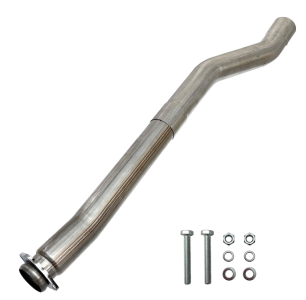
A properly engineered DPF delete system—such as the TruckTok 2003-2007 6.0L Powerstroke 3.5" Cat & Muffler Delete Pipe—addresses these compromises by removing the restriction entirely. Constructed from T-409 stainless steel with a 3.5-inch diameter optimized for this platform, it restores the exhaust system to a free-flowing state.
When paired with proper tuning from a platform like the Mini Maxx, this modification eliminates regeneration cycles, reduces backpressure, lowers EGTs, and can improve fuel economy by 30-40 percent. For owners willing to accept the legal responsibilities of operating a modified vehicle, it represents a technically sound approach to restoring the 6.0L's natural breathing capacity.
If you've modified the exhaust on your 6.0L Powerstroke, what changes did you observe in fuel economy, EGTs, or overall drivability? Drop your experience below.
Understanding why DPF modification matters on this platform requires looking at how the system was adapted to an engine architecture that wasn't originally designed for it—and what that means for your truck's long-term health.
Part 1: The 6.0L's Emissions Timeline – A Historical Context
The 2003-2007 production run spans a critical transition period in diesel emissions regulation. Early 6.0L trucks (2003-2004) were built to meet less stringent emissions standards and often left the factory without a DPF. Later models, particularly 2005-2007, incorporated more comprehensive emissions equipment as regulations tightened .This creates confusion for owners today. Some 6.0L trucks have factory DPFs. Some don't. Some have had aftermarket systems added. But for those trucks equipped with DPFs, the engineering reality is that the system was added to an existing engine architecture rather than designed into it from the ground up.
The result is a system that can feel like an afterthought—one that introduces significant backpressure, thermal stress, and maintenance requirements without corresponding benefits to the owner.
Part 2: The DPF as a Backpressure Source
At its core, a Diesel Particulate Filter is a restriction. The 6.0L's VGT turbocharger is designed to operate within specific drive pressure ranges. When the DPF adds significant backpressure downstream, it alters the pressure differential across the turbine wheel.The fluid dynamics are straightforward: The turbocharger turbine is driven by the pressure difference between the exhaust manifold and the post-turbine exhaust. When DPF backpressure increases, the post-turbine pressure rises, reducing that differential. The turbo must work harder to maintain boost, which increases drive pressure and raises exhaust gas temperatures .
The measurable effect: Higher backpressure forces more exhaust gas to remain in the cylinder during the valve overlap period, diluting the incoming air charge and reducing combustion efficiency. This manifests as reduced power, higher EGTs, and increased fuel consumption.
Part 3: The Regeneration Penalty
For 6.0L trucks equipped with factory DPF systems, regeneration events impose their own costs. During regeneration, the engine must elevate exhaust temperatures to approximately 1,100-1,200°F to oxidize trapped soot.The fuel cost: The fuel used for post-injection during regeneration does not contribute to power production. It is burned solely to generate heat in the exhaust system. This represents a direct parasitic loss that can reduce fuel economy by 1-3 MPG during normal driving cycles .
The thermal stress: Sustained high temperatures in the exhaust system accelerate thermal fatigue in components not originally designed for continuous exposure to these temperatures. The turbocharger's turbine housing, the exhaust manifolds, and even the cylinder heads experience additional thermal cycling that can contribute to cracking and failure over time.
Part 4: The Ash Accumulation Reality
Unlike soot, which burns off during regeneration, ash is permanent. Ash is the non-combustible metallic residue from engine oil additives, and it accumulates in the DPF over the life of the engine .The long-term consequence: Every mile driven with a DPF-equipped 6.0L adds to the ash load. At approximately 150,000 miles, the ash accumulation becomes sufficient to create a permanent increase in backpressure, even immediately after regeneration . The only remedies are:
- Professional cleaning ($500-1,000)
- DPF replacement ($2,500-4,000)
Part 5: The 3.5-Inch Solution – Engineering the Flow Path
When the DPF and catalytic converter are removed and replaced with a straight 3.5-inch pipe, the exhaust system's flow characteristics change fundamentally.Backpressure Elimination: The most immediate and measurable effect is the elimination of the pressure drop across the DPF and CAT. Without these restrictions, exhaust gases flow freely from the turbo outlet to the tailpipe. This reduction in backpressure allows the turbocharger to operate at a lower drive pressure for any given boost level, reducing pumping losses and improving overall efficiency .
The 3.5-Inch Diameter Rationale: For the 6.0L Powerstroke's displacement and typical power levels, 3.5 inches represents an optimal balance between flow capacity and exhaust velocity. Larger diameters (4-inch or 5-inch) can sometimes reduce exhaust velocity to the point where low-end torque suffers. The 3.5-inch size maintains sufficient velocity to support good spool characteristics while providing ample flow capacity for modified power levels .
Material Selection: T-409 stainless steel offers the ideal combination of corrosion resistance and cost-effectiveness for exhaust applications. Its chromium content provides oxidation resistance at elevated temperatures, while its magnetic properties (which sometimes confuse owners) are normal for this alloy grade.
Part 6: The Measurable Outcomes
When properly executed with quality hardware and appropriate tuning, DPF modification on the 6.0L delivers several quantifiable improvements:Fuel Economy Gains: The product information notes that owners with clogged DPFs averaging 13-14 MPG can expect to achieve 18-19 MPG after removal . This represents a 30-40 percent improvement in fuel efficiency, coming primarily from:
- Elimination of fuel-heavy regeneration cycles
- Reduced pumping losses from lower backpressure
- More complete combustion due to improved cylinder evacuation
EGT Reduction: With exhaust gases flowing freely, temperatures in the exhaust system drop significantly under load. This reduces thermal stress on the turbocharger and exhaust components, potentially extending their service life.
Maintenance Elimination: The phrase "DPF maintenance is not required on a regular basis" is understated. With the DPF removed, there is no maintenance—period. No worrying about clogging, no regeneration cycles, no ash accumulation concerns.
Part 7: The Tuning Imperative – Non-Negotiable Reality
Physical removal of the DPF without corresponding software modification will result in a non-functional vehicle.The 6.0L's PCM is programmed to monitor:
- Exhaust backpressure readings
- Temperature differentials across the DPF
- Regeneration frequency and completion
What proper delete tuning accomplishes:
- Disables DPF regeneration logic entirely
- Eliminates fault code reporting for missing sensors
- Optimizes fuel delivery and timing to match the new exhaust flow characteristics
Part 8: Installation Practicalities
The installation timeline is quoted at approximately one hour using basic hand tools . This is realistic for a straightforward exhaust swap when nothing goes wrong. The kit includes two pipes and the necessary bolts.A critical note on fitment: The product information notes that modifications may be necessary for bed/cab configurations with a shorter wheelbase . This is not unusual for exhaust modifications, as wheelbase variations can affect the length of pipe required to reach the tailpipe. Owners should be prepared to measure their specific configuration and, if necessary, have a local exhaust shop make minor adjustments.
The fitment exceptions: The kit fits 2003-2007 F250/F350 trucks with two specific exceptions:
- 2004 Ford F-250 Super Duty XL standard cab with the 6.0 diesel
- 2004 Ford F-350 Super Duty Lariat Crew Cab Pickup 4-Door 6.0L
Part 9: The Risk-Reward Calculation
For owners considering DPF modification, the calculation is straightforward:The risks:
- Legal exposure (off-road use only)
- Tuning costs
- Potential fitment complications on specific configurations
- 30-40 percent fuel economy improvement
- Elimination of regeneration cycles and their associated fuel penalty
- Permanent removal of a component with a finite service life
- Lower EGTs and reduced thermal stress
- Improved throttle response and power delivery
Conclusion: The Technical Verdict
The 2003-2007 6.0L Powerstroke is an engine with tremendous potential that was hamstrung by emissions equipment added to an architecture not originally designed for it. The DPF system, in particular, introduces backpressure, thermal stress, and maintenance requirements that directly oppose the engine's mechanical strengths.A properly engineered DPF delete system—such as the TruckTok 2003-2007 6.0L Powerstroke 3.5" Cat & Muffler Delete Pipe—addresses these compromises by removing the restriction entirely. Constructed from T-409 stainless steel with a 3.5-inch diameter optimized for this platform, it restores the exhaust system to a free-flowing state.
When paired with proper tuning from a platform like the Mini Maxx, this modification eliminates regeneration cycles, reduces backpressure, lowers EGTs, and can improve fuel economy by 30-40 percent. For owners willing to accept the legal responsibilities of operating a modified vehicle, it represents a technically sound approach to restoring the 6.0L's natural breathing capacity.
If you've modified the exhaust on your 6.0L Powerstroke, what changes did you observe in fuel economy, EGTs, or overall drivability? Drop your experience below.
Last edited:
