

We’ve all been there. You’re miles down a two‑track, the scenery is perfect, and then—silence. Your truck is high‑centered on a mud ridge, or maybe the rear axle is buried to the frame in sand. The radio has no signal, and your buddy with the winch bumper is three hours away. What you do in the next twenty minutes matters more than most off‑roaders realize.
I learned this the hard way four years ago in the Oregon high desert. A recovery that should have been straightforward turned sketchy fast because I was using an old stretchy strap with rusted hooks and nothing to dampen anything if it let go. No one got hurt, but the incident forced me to re‑evaluate every piece of recovery gear I carried. Since then, I’ve standardized on two items that now live permanently behind my rear seat: a quality kinetic recovery rope with soft shackles, and a proper winch line damper.
This isn’t about buying the most expensive gear or impressing people at the trailhead. It’s about understanding the physics of vehicle recovery and choosing tools that work with those forces rather than against them. Let’s break down why these two components—a 35,000‑lb kinetic rope and a high‑visibility line damper—have become non‑negotiable for anyone who wheels a full‑size truck or SUV.
For decades, the standard recovery tool was the nylon snatch strap. You hooked it to both vehicles, the recovery vehicle backed up to create slack, then hit the gas. The strap stretched, then snapped taut, yanking the stuck vehicle out with a violent shock load.
A kinetic recovery rope is fundamentally different. It’s designed to stretch significantly and then recoil at a controlled, predictable rate. This isn’t a limitation; it’s the entire point.
The 1" x 30ft rope I carry is constructed from double‑braided Nylon 66 with a military‑grade polyurethane coating. Here’s why that matters:
Soft Shackles: The Upgrade You Didn’t Know You Needed
The kit includes two 1/2" x 22" synthetic soft shackles, and honestly, these changed my rigging setup more than the rope itself.
Soft shackles are woven from the same high‑modulus polyethylene used in winch lines. They’re rated to 35,000 lbs and weigh virtually nothing. Compared to traditional D‑ring shackles:
Real‑World Feel: What 30 Feet of Stretch Actually Does
The first time you use a kinetic rope correctly, the difference is immediately obvious. Instead of a neck‑snapping jerk, the recovery vehicle accelerates smoothly, the rope stretches, and the stuck vehicle is pulled forward with increasing, steady force. It feels less like a tow and more like being gently ejected from a hole.
This controlled energy transfer:
The product page offers three ordering options:
Winch dampers (sometimes called “safety blankets”) are the least glamorous recovery gear you can buy. They don’t pull, stretch, or shackle anything. They just sit there, draped over a tensioned line, waiting for something to fail.
That waiting is the point.
When a winch cable, synthetic rope, or tow strap breaks under load, the energy released is staggering. A broken line doesn’t just fall to the ground—it whips back toward the nearest vehicle with enough force to cause severe injury or death. I’ve seen photos of a 3/8” cable that punched through a truck’s rear window and embedded in the headliner. The occupants were inches away.
What This Damper Does Differently
The Trucktok damper is constructed from heavy‑duty, waterproof vinyl with full‑coverage reflective strips on both sides. It’s not a folded tarp or an old blanket—it’s engineered specifically to absorb and dissipate the kinetic energy of a failed line.
Key features I’ve come to appreciate:
When and How I Use It
Any time I winch—whether self‑recovery or pulling another vehicle—the damper goes on. Placement is about two‑thirds of the way from the winch to the anchor point, centered over the line. The reflective stripes face the vehicles so everyone on scene can see the tension zone.
It also works with kinetic rope recoveries if you’re winch‑assisting. Even though kinetic rope is less prone to catastrophic failure than steel cable, the damper adds a layer of protection that costs nothing in time or effort.
First: Kinetic Recovery Rope + Soft Shackles
This is your primary tool for vehicle‑to‑vehicle recovery. It’s faster than winching, easier on equipment, and works in 90% of situations. The 35,000‑lb rating covers everything from a Tacoma to a one‑ton Cummins.
Second: Winch Line Damper
If you have a winch, you need a damper. Period. This isn’t a “nice to have.” It’s the difference between a broken line being an inconvenience and a tragedy.
Third: Everything Else
Gloves, traction boards, a proper shovel, air compressor. All valuable, but none replace the core safety and recovery capability of a kinetic rope and damper.
The kinetic rope and soft shackles have pulled my truck out of deep sand in Nevada and thick mud in Michigan. The damper has hung over my winch line a dozen times, doing its job quietly and without drama. Both have paid for themselves many times over in peace of mind and avoided damage.
What’s in your recovery bag? Any close calls that changed how you rig? Drop your stories and questions below.
I learned this the hard way four years ago in the Oregon high desert. A recovery that should have been straightforward turned sketchy fast because I was using an old stretchy strap with rusted hooks and nothing to dampen anything if it let go. No one got hurt, but the incident forced me to re‑evaluate every piece of recovery gear I carried. Since then, I’ve standardized on two items that now live permanently behind my rear seat: a quality kinetic recovery rope with soft shackles, and a proper winch line damper.
This isn’t about buying the most expensive gear or impressing people at the trailhead. It’s about understanding the physics of vehicle recovery and choosing tools that work with those forces rather than against them. Let’s break down why these two components—a 35,000‑lb kinetic rope and a high‑visibility line damper—have become non‑negotiable for anyone who wheels a full‑size truck or SUV.
Part 1: The Kinetic Rope – Replacing Brutal Force with Controlled Energy
The Old Way: Snatch Straps and Metal HooksFor decades, the standard recovery tool was the nylon snatch strap. You hooked it to both vehicles, the recovery vehicle backed up to create slack, then hit the gas. The strap stretched, then snapped taut, yanking the stuck vehicle out with a violent shock load.
It worked—until it didn’t. Snatch straps have several inherent problems:- Limited stretch: Most shoulder straps have limited range of motion, creating a short, sharp shock rather than a controlled pull.
- Metal hooks: A hook under extreme tension can become a lethal projectile if the strap breaks or detaches.
- Frame and component damage: That instantaneous shock load doesn’t just move the vehicle—it travels through the frame, suspension, and driveline, often bending shackle mounts or cracking welds.
A kinetic recovery rope is fundamentally different. It’s designed to stretch significantly and then recoil at a controlled, predictable rate. This isn’t a limitation; it’s the entire point.
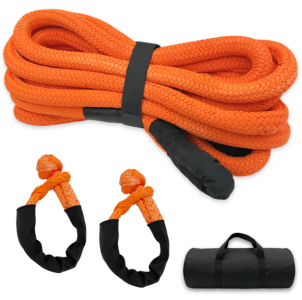
The 1" x 30ft rope I carry is constructed from double‑braided Nylon 66 with a military‑grade polyurethane coating. Here’s why that matters:
- Nylon 66 offers superior elasticity and abrasion resistance compared to standard nylon or polyester.
- Double‑braided construction means the core carries the load while the outer sheath protects against UV, mud, and abrasion.
- Polyurethane coating adds waterproofing and cold‑weather flexibility—critical when you’re recovering a truck at 20°F.
Soft Shackles: The Upgrade You Didn’t Know You Needed
The kit includes two 1/2" x 22" synthetic soft shackles, and honestly, these changed my rigging setup more than the rope itself.
Soft shackles are woven from the same high‑modulus polyethylene used in winch lines. They’re rated to 35,000 lbs and weigh virtually nothing. Compared to traditional D‑ring shackles:
- No metal‑on‑metal contact: You’re not slamming a 3/4‑inch steel pin into a painted recovery point. No scratches, no rust.
- Lighter and quieter: They store in a pocket, not a heavy bag.
- Faster to use: A soft shackle threads through a recovery point and locks with a simple splice—no tools, no loose pins to drop in the mud.
Real‑World Feel: What 30 Feet of Stretch Actually Does
The first time you use a kinetic rope correctly, the difference is immediately obvious. Instead of a neck‑snapping jerk, the recovery vehicle accelerates smoothly, the rope stretches, and the stuck vehicle is pulled forward with increasing, steady force. It feels less like a tow and more like being gently ejected from a hole.
This controlled energy transfer:
- Reduces peak shock loads on both vehicles
- Prevents damage to recovery points and frame attachments
- Lowers the risk of rope failure from sudden over‑load
The product page offers three ordering options:
- Full Kit: Rope + 2 soft shackles + waterproof PVC storage bag
- Rope Only: Rope + bag
- Shackle Only: 2 soft shackles
Part 2: The Winch Line Damper – Boring, Ugly, and Absolutely Essential
Why You Need a Damper Even If You Don’t Winch OftenWinch dampers (sometimes called “safety blankets”) are the least glamorous recovery gear you can buy. They don’t pull, stretch, or shackle anything. They just sit there, draped over a tensioned line, waiting for something to fail.
That waiting is the point.
When a winch cable, synthetic rope, or tow strap breaks under load, the energy released is staggering. A broken line doesn’t just fall to the ground—it whips back toward the nearest vehicle with enough force to cause severe injury or death. I’ve seen photos of a 3/8” cable that punched through a truck’s rear window and embedded in the headliner. The occupants were inches away.
What This Damper Does Differently
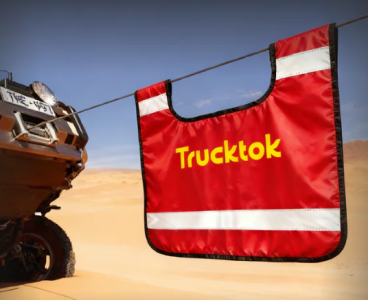
The Trucktok damper is constructed from heavy‑duty, waterproof vinyl with full‑coverage reflective strips on both sides. It’s not a folded tarp or an old blanket—it’s engineered specifically to absorb and dissipate the kinetic energy of a failed line.
Key features I’ve come to appreciate:
- Multiple wide hook‑and‑loop straps: Secure it around winch line, synthetic rope, or tow strap in seconds. No buckles, no threading.
- Reflective strips: Genuinely useful for low‑light recoveries. I’ve also used it draped over my shoulders as an improvised safety vest when changing a tire on a dark forest road.
- Integrated inner storage pocket:This is smarter than it sounds. You can slide the damper over your winch line and then stuff the pocket with:
- Recovery shackles and a soft shackle
- A few pounds of sand or small rocks as ballast
- Your phone or wallet during the recovery
When and How I Use It
Any time I winch—whether self‑recovery or pulling another vehicle—the damper goes on. Placement is about two‑thirds of the way from the winch to the anchor point, centered over the line. The reflective stripes face the vehicles so everyone on scene can see the tension zone.
It also works with kinetic rope recoveries if you’re winch‑assisting. Even though kinetic rope is less prone to catastrophic failure than steel cable, the damper adds a layer of protection that costs nothing in time or effort.
Part 3: Building Your Recovery Kit – Priorities and Trade‑offs
If you’re starting from zero, here’s how I’d prioritize:First: Kinetic Recovery Rope + Soft Shackles
This is your primary tool for vehicle‑to‑vehicle recovery. It’s faster than winching, easier on equipment, and works in 90% of situations. The 35,000‑lb rating covers everything from a Tacoma to a one‑ton Cummins.
Second: Winch Line Damper
If you have a winch, you need a damper. Period. This isn’t a “nice to have.” It’s the difference between a broken line being an inconvenience and a tragedy.
Third: Everything Else
Gloves, traction boards, a proper shovel, air compressor. All valuable, but none replace the core safety and recovery capability of a kinetic rope and damper.
The Legal and Practical Disclaimer
These products are designed for off‑road recovery situations and are tested to rigorous standards. However, recovery is inherently dangerous. No piece of equipment can eliminate all risk.- Always inspect your rope, shackles, and damper before each use.
- Replace any component showing fraying, cuts, chemical exposure, or UV damage.
- Never exceed rated capacities.
- Keep bystanders well clear of tensioned lines.
- Understand that modifications to emissions systems and use of recovery gear both fall under operator responsibility. Know your terrain, know your gear, and know your limits.
Final Thoughts: Gear You Hope to Never Use
The best recovery equipment is the kind you carry for years without needing—and then, when you absolutely need it, you’re glad you didn’t compromise.The kinetic rope and soft shackles have pulled my truck out of deep sand in Nevada and thick mud in Michigan. The damper has hung over my winch line a dozen times, doing its job quietly and without drama. Both have paid for themselves many times over in peace of mind and avoided damage.
What’s in your recovery bag? Any close calls that changed how you rig? Drop your stories and questions below.
Last edited:
