

If you own a 2013-2023 Ram 3500, 4500, or 5500 Cab & Chassis truck with the 6.7L Cummins, you're driving a serious piece of equipment. These trucks are built for work—hauling, towing, commercial applications where downtime means lost money. The 6.7L Cummins is legendary for reliability, but like all modern diesels, it comes with an EGR system that introduces heat, soot, and potential failure points.
I've spent a lot of time around these trucks, both in fleet settings and with owner-operators. The EGR system on the cab and chassis models is the same as the pickup trucks, but the usage patterns are often different. These trucks tend to idle more, run heavier loads, and accumulate miles faster. That means the EGR system gets worked harder.
After helping a friend delete the EGR on his 2017 Ram 5500, I learned a lot about what these kits do and why they make sense for certain applications. Here's what I found.
The EGR Problem on 6.7L Cummins
The Exhaust Gas Recirculation system routes a portion of exhaust gas back into the intake to lower combustion temperatures and reduce NOx emissions. It works, but it comes with trade-offs.
Soot buildup: The recirculated exhaust carries soot that deposits in the intake manifold, on the valves, and in the EGR valve itself. Over time, this buildup restricts airflow and can cause the EGR valve to stick or fail to seal properly.
Heat load: The EGR cooler uses engine coolant to cool the exhaust gas before it re-enters the intake. That means your cooling system is absorbing heat from the exhaust, adding thermal load that it wouldn't otherwise have.
Cooler failure: EGR coolers can crack or leak over time. When they fail, coolant can enter the exhaust or intake, leading to white smoke, coolant loss, and in worst cases, engine damage.
Maintenance: EGR valves need cleaning. Coolers need inspection. On a truck that's working for a living, any downtime for maintenance is lost revenue.
Why Cab & Chassis Trucks Are Different
The cab and chassis trucks are often used differently than pickups. They might spend more time idling with PTO equipment running. They might run heavier loads more consistently. They accumulate miles faster and often have longer service intervals.
That means the EGR system on these trucks gets abused. More idling means more soot buildup. More load means more heat. More miles mean more wear.
For owners who plan to keep these trucks long-term, eliminating the EGR system can make a lot of sense.
What the TruckTok Kit Does
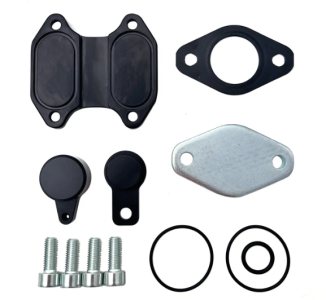
The TruckTok EGR delete kit for cab and chassis trucks is designed to completely remove the EGR valve and cooler. It includes laser-cut steel plates, a billet block plug, a billet standpipe cap, and all necessary gaskets and fittings.
The plates block off the exhaust ports where the EGR system draws exhaust gas. The billet plugs seal the coolant passages. Once installed, the EGR system is completely removed from the engine.
No more soot: With the EGR gone, no exhaust gas is recirculated back into the intake. That means no more soot buildup in your intake manifold, on your valves, or in your EGR valve.
Cooler coolant temps: The EGR cooler is no longer dumping exhaust heat into your cooling system. That means your coolant runs cooler and your radiator has less work to do.
Faster coolant circulation: Without the EGR cooler in the circuit, coolant flows more efficiently through the engine. The system can do its job without fighting through a restrictive heat exchanger.
Eliminated failure points: The EGR cooler and valve are complex components with moving parts and exposure to extreme conditions. Removing them eliminates the possibility of failure entirely.
What You Gain
After installing the kit on my friend's 5500, several benefits became apparent.
Cleaner intake air: With no exhaust gas recirculating, the intake tract stays clean. No soot buildup, no carbon deposits, no gradual restriction over time.
Lower operating temps: Coolant temperatures dropped noticeably, especially under load. The engine cooling system doesn't have to work as hard.
Eliminated maintenance: No EGR valve to clean, no cooler to worry about. Once the system is gone, it's gone.
Better reliability: Fewer components means fewer things that can break. For a work truck, that's real value.
Installation Reality
The product notes that installation takes about two hours with basic hand tools. That's accurate for someone familiar with these engines. The kit includes everything needed—plates, plugs, gaskets, fittings. No chasing down missing parts.
The EGR components are accessible with basic tools, and the kit is designed to bolt directly in place of the factory parts. No modification, no fabrication, no special skills required beyond normal mechanical competence.
The Tuning Requirement
Here's the critical part. The hardware alone isn't enough. The truck's computer monitors the EGR system and will set codes and derate power if it detects something wrong.
You need EGR delete tuning to disable that monitoring and optimize the engine for the new configuration. Without tuning, the kit won't work properly.
Common Questions
How long does installation take?
About two hours with basic hand tools. The kit includes everything needed.
Do I need special tools?
No, just standard sockets and wrenches.
Will this affect my warranty?
Yes. This is for off-road use only. It will void emissions-related warranty coverage.
Is it legal?
For off-road use only. In states with emissions testing, a deleted truck won't pass.
Does it fit my truck?
Fits 2013-2023 Ram 3500, 4500, and 5500 cab and chassis trucks with the 6.7L Cummins.
What's in the box?
Laser-cut steel plates, billet block plug, billet standpipe cap, gaskets, and all necessary fittings.
The Verdict
The 2013-2023 6.7L Cummins in cab and chassis trucks is a workhorse engine. But the EGR system adds heat, soot, and potential failure points that can cost you downtime and money.
The TruckTok EGR delete kit removes those issues entirely. Cleaner intake air, cooler operating temps, eliminated maintenance, and better reliability. For a truck that earns its keep, that's real value.
If you're considering deleting the EGR on your cab and chassis truck, this kit is worth a look.
Have you deleted the EGR on a cab and chassis truck? Drop your experience below.
I've spent a lot of time around these trucks, both in fleet settings and with owner-operators. The EGR system on the cab and chassis models is the same as the pickup trucks, but the usage patterns are often different. These trucks tend to idle more, run heavier loads, and accumulate miles faster. That means the EGR system gets worked harder.
After helping a friend delete the EGR on his 2017 Ram 5500, I learned a lot about what these kits do and why they make sense for certain applications. Here's what I found.
The EGR Problem on 6.7L Cummins
The Exhaust Gas Recirculation system routes a portion of exhaust gas back into the intake to lower combustion temperatures and reduce NOx emissions. It works, but it comes with trade-offs.
Soot buildup: The recirculated exhaust carries soot that deposits in the intake manifold, on the valves, and in the EGR valve itself. Over time, this buildup restricts airflow and can cause the EGR valve to stick or fail to seal properly.
Heat load: The EGR cooler uses engine coolant to cool the exhaust gas before it re-enters the intake. That means your cooling system is absorbing heat from the exhaust, adding thermal load that it wouldn't otherwise have.
Cooler failure: EGR coolers can crack or leak over time. When they fail, coolant can enter the exhaust or intake, leading to white smoke, coolant loss, and in worst cases, engine damage.
Maintenance: EGR valves need cleaning. Coolers need inspection. On a truck that's working for a living, any downtime for maintenance is lost revenue.
Why Cab & Chassis Trucks Are Different
The cab and chassis trucks are often used differently than pickups. They might spend more time idling with PTO equipment running. They might run heavier loads more consistently. They accumulate miles faster and often have longer service intervals.
That means the EGR system on these trucks gets abused. More idling means more soot buildup. More load means more heat. More miles mean more wear.
For owners who plan to keep these trucks long-term, eliminating the EGR system can make a lot of sense.
What the TruckTok Kit Does
The TruckTok EGR delete kit for cab and chassis trucks is designed to completely remove the EGR valve and cooler. It includes laser-cut steel plates, a billet block plug, a billet standpipe cap, and all necessary gaskets and fittings.
The plates block off the exhaust ports where the EGR system draws exhaust gas. The billet plugs seal the coolant passages. Once installed, the EGR system is completely removed from the engine.
No more soot: With the EGR gone, no exhaust gas is recirculated back into the intake. That means no more soot buildup in your intake manifold, on your valves, or in your EGR valve.
Cooler coolant temps: The EGR cooler is no longer dumping exhaust heat into your cooling system. That means your coolant runs cooler and your radiator has less work to do.
Faster coolant circulation: Without the EGR cooler in the circuit, coolant flows more efficiently through the engine. The system can do its job without fighting through a restrictive heat exchanger.
Eliminated failure points: The EGR cooler and valve are complex components with moving parts and exposure to extreme conditions. Removing them eliminates the possibility of failure entirely.
What You Gain
After installing the kit on my friend's 5500, several benefits became apparent.
Cleaner intake air: With no exhaust gas recirculating, the intake tract stays clean. No soot buildup, no carbon deposits, no gradual restriction over time.
Lower operating temps: Coolant temperatures dropped noticeably, especially under load. The engine cooling system doesn't have to work as hard.
Eliminated maintenance: No EGR valve to clean, no cooler to worry about. Once the system is gone, it's gone.
Better reliability: Fewer components means fewer things that can break. For a work truck, that's real value.
Installation Reality
The product notes that installation takes about two hours with basic hand tools. That's accurate for someone familiar with these engines. The kit includes everything needed—plates, plugs, gaskets, fittings. No chasing down missing parts.
The EGR components are accessible with basic tools, and the kit is designed to bolt directly in place of the factory parts. No modification, no fabrication, no special skills required beyond normal mechanical competence.
The Tuning Requirement
Here's the critical part. The hardware alone isn't enough. The truck's computer monitors the EGR system and will set codes and derate power if it detects something wrong.
You need EGR delete tuning to disable that monitoring and optimize the engine for the new configuration. Without tuning, the kit won't work properly.
Common Questions
How long does installation take?
About two hours with basic hand tools. The kit includes everything needed.
Do I need special tools?
No, just standard sockets and wrenches.
Will this affect my warranty?
Yes. This is for off-road use only. It will void emissions-related warranty coverage.
Is it legal?
For off-road use only. In states with emissions testing, a deleted truck won't pass.
Does it fit my truck?
Fits 2013-2023 Ram 3500, 4500, and 5500 cab and chassis trucks with the 6.7L Cummins.
What's in the box?
Laser-cut steel plates, billet block plug, billet standpipe cap, gaskets, and all necessary fittings.
The Verdict
The 2013-2023 6.7L Cummins in cab and chassis trucks is a workhorse engine. But the EGR system adds heat, soot, and potential failure points that can cost you downtime and money.
The TruckTok EGR delete kit removes those issues entirely. Cleaner intake air, cooler operating temps, eliminated maintenance, and better reliability. For a truck that earns its keep, that's real value.
If you're considering deleting the EGR on your cab and chassis truck, this kit is worth a look.
Have you deleted the EGR on a cab and chassis truck? Drop your experience below.
