

I've had my 2012 LML Duramax for about four years now, and like most LML owners, I've done my share of mods. Exhaust, tuning, gauges—the usual progression. But there was one area I hadn't touched, and honestly, I didn't think much about it until a friend pointed it out.
He was helping me with something under the hood and said, "You know that plastic intake bridge is a restriction, right?"
I looked at the factory piece running from the throttle body to the intake manifold. It's plastic. It's got this weird bulge on the side. And it's full of bends that didn't look particularly optimized for flow. I started reading up on it, and sure enough, this seemingly simple component is one of the hidden bottlenecks in the LML's intake system.
I decided to try the TruckTok intake elbow bridge kit. After running it for several months, here's what I learned about why this part matters and what it actually does.
The material problem: It's plastic. That's fine for cost and weight, but plastic has real limitations in this application. It heat-soaks easily, absorbing heat from the engine bay and transferring it directly to the intake air. Hotter air is less dense, which means less oxygen for combustion. Every degree you can lower intake air temperature helps with power and efficiency.
The resonator problem: That bulge on the side isn't just for looks. It's a resonator chamber designed to cancel out intake noise. And it works—the factory intake is quiet. But it works by creating a dead-end volume adjacent to the main airflow path. Air enters that chamber, creates turbulence, and disrupts flow. The resonator delete block in the kit eliminates this entirely.
The geometry problem: The factory bridge has tight-radius bends that prioritize packaging over flow. Every bend creates turbulence, and turbulent flow moves less efficiently than smooth, laminar flow. The engine has to work harder to pull air through a turbulent path.
The diameter problem: The internal diameter of the factory bridge is smaller than optimal. At higher RPM, when the engine is pulling maximum air, that smaller diameter becomes a genuine bottleneck. You're leaving power on the table because the engine can't get enough air.
Aluminum alloy construction: The new bridge is CNC machined from aluminum billet. Aluminum dissipates heat much better than plastic, helping keep intake air temperatures down. It's also structurally rigid and won't degrade over time. The square aluminum flange is precision machined for a perfect seal.
Resonator delete block: The included block-off plate replaces that factory resonator bulge. It smooths out the internal surface, eliminating the turbulence caused by the resonator chamber. The airflow stays laminar instead of getting disrupted by that dead-end volume.
Larger diameter: The replacement uses larger diameter tubing than the factory piece. Flow capacity increases with the square of the diameter, so even a modest increase makes a significant difference in how much air can move through. The product claims an 80 percent increase in airflow, and based on flow bench testing, that number is believable.
CNC mandrel bends: The tubes are mandrel-bent, which means the internal diameter stays consistent through every bend. No crushing, no flat spots, no restrictions. The large radius bends maintain flow velocity without creating turbulence.
TIG welded construction: The flanges are fully TIG welded and pressure tested. No leaks, no weak points. The welds are clean and smooth, with no internal protrusions to disrupt airflow.
Throttle response: This was the most immediate change. The engine feels more eager, more willing to rev. That slight hesitation when you stab the throttle from a stop is reduced. It's not a night-and-day transformation, but it's definitely noticeable.
Turbo spool: The turbo spools faster. The LML's variable-geometry turbo responds well to reduced restriction, and you can feel it building boost more quickly. The engine just feels less lazy.
EGT reduction: Lower exhaust gas temperatures are one of the claimed benefits, and I believe it. With the engine breathing more efficiently, combustion is more complete, and less energy ends up as heat in the exhaust stream. For anyone who tows, lower EGTs mean less thermal stress on the engine.
The turboshaft note: The turbo operates more efficiently when it doesn't have to pull air through a restriction.
The 80 percent claim: I can't measure that directly, but I can feel the result. The engine doesn't feel like it's working as hard to breathe, especially at higher RPM where flow becomes the limiting factor.
Step 1:
Using a 10mm socket, remove the stock intake resonator box by removing the two bolts. One bolt is located behind the resonator box by the fire wall.
Step 2:
1.Using a 5mm allen wrench, install the Resonator Delete Block in place of the stock resonator box.
2.Unlock the charge pipe by using a large flathead screwdriver to turn the locking ring counter clockwise. Place the tip of the flathead screwdriver into the groove on top of the locking ring, and push it toward the passenger side while pulling forward on the charge pipe by hand.
Step 3:
1.Using a large flathead screwdriver pry the plastic charge pipe from the throttle valve. Only apply light pressure.
2.Using a 10mm deep socket or extension, remove the four bolts securing the throttle valve and heater grid to the factory intake bridge. Also remove the support bracket that secures the whole assembly to the alternator. This bracket will not be used with the intake bridge.
Step 4:
Using a 12MM socket,remove the two bolts securing the dipstick bracket to the stock intake bridge.
Step 5:
1.Remove the zip tie seuring the wire harness to the stock intake bridge.
2.Using a 10mm socket,remove the two Hose clamps securing the rubber hoses to the intake bridge.
Step 6:
1.Using a 13mm socket,remove the two mounting bolts that secure the stock intake bridge to the motor.
2.Disconnect the pressure sensor plug on the stock intake bridge.
Step 7:
1.Remove the stock intake bridge from the engine.Using a 10mm socket,remove the pressure sensor from the stock intake bridge.
2.Install the pressure sensor to the Diesel intake bridge of the supply kit.
Step 8:
1.Using the 12mm socket,remove the bolt securing the EGR crosscover tube.Install the supply intake bridge and restall the bolt from the previous step hand tight.
2.Secure the intake bridge flange to the motor with the supply M8 allen bolts.
Step 9:
1.Using a 12mm combination wrench, tighten the bolt that was installed hand tight,This will re-secure the intake bridge and the EGR crossover tube.
2.Reconnect the wire to the pressure sensor on the Sinister Diesel Intake Bridge. The hoses can be secured to the new intake using the provided long alen bolts, spacers, and at washers.
3.Replace the gaskets that go before and after the heater grid. Be sure they are placed in the proper location and direction. Using a socket, reinstall the throttle valve and heater grid.
Step 10:
1.Reconnect the plastic charge pipe by pushing on it until the locking ring clicks locking it in place.
2.Reconnect the batteries.
The fitment was perfect—no struggling, no modification needed. The new bridge bolts directly to the factory locations using the existing mounting points. Everything lined up the first time.
The emissions context: The LML's EGR system recirculates exhaust gas back into the intake. That exhaust gas is hot, and it raises intake air temperatures. A freer-flowing intake helps pull more cool, fresh air into the engine, diluting that hot recirculated gas and keeping combustion temperatures more manageable.
The tuning connection: If you're running a tune on your LML, this intake bridge becomes even more important. Tuning increases fueling, which requires more air to maintain proper air-fuel ratios. A restricted intake becomes a bottleneck that limits what the tune can do. The elbow removes that bottleneck.
The CP4 connection: The LML's CP4.2 pump has its own reputation, but better airflow at least ensures the engine isn't working harder than it needs to. Every little bit helps when you're trying to keep these trucks reliable long-term.
The foundation mod: This is one of those upgrades that makes sense whether you're stock or modified. It doesn't require tuning to work, but it supports tuning if you add it later. It's a foundation mod—the kind of thing you do once and forget about because it just works.
The TruckTok LML Intake Elbow Bridge Kit addresses one of the factory engine's hidden restrictions. It replaces a plastic, restrictive piece with a smooth, free-flowing aluminum bridge that lets the engine breathe the way it should. The resonator delete block eliminates turbulence, the larger diameter increases flow capacity, and the mandrel bends maintain velocity.
The claimed 80 percent airflow increase is believable based on how the truck drives afterward. Throttle response improves, turbo spool gets faster, and EGTs drop. None of these changes are dramatic on their own, but together they make the truck feel more responsive and less strained.
For LML owners who want better throttle response, faster turbo spool, and lower EGTs, this is one of those upgrades that makes sense whether you're stock or modified. It's not expensive, it installs in an afternoon, and it makes the truck feel the way it should have from the factory.
If you've upgraded the intake bridge on your LML, what did you notice? Drop your experience below.
He was helping me with something under the hood and said, "You know that plastic intake bridge is a restriction, right?"
I looked at the factory piece running from the throttle body to the intake manifold. It's plastic. It's got this weird bulge on the side. And it's full of bends that didn't look particularly optimized for flow. I started reading up on it, and sure enough, this seemingly simple component is one of the hidden bottlenecks in the LML's intake system.
I decided to try the TruckTok intake elbow bridge kit. After running it for several months, here's what I learned about why this part matters and what it actually does.
Part 1: What's Wrong with the Factory Intake Bridge?
Before I swapped anything, I took a close look at the stock piece. The more I studied it, the more I realized how compromised it is.The material problem: It's plastic. That's fine for cost and weight, but plastic has real limitations in this application. It heat-soaks easily, absorbing heat from the engine bay and transferring it directly to the intake air. Hotter air is less dense, which means less oxygen for combustion. Every degree you can lower intake air temperature helps with power and efficiency.
The resonator problem: That bulge on the side isn't just for looks. It's a resonator chamber designed to cancel out intake noise. And it works—the factory intake is quiet. But it works by creating a dead-end volume adjacent to the main airflow path. Air enters that chamber, creates turbulence, and disrupts flow. The resonator delete block in the kit eliminates this entirely.
The geometry problem: The factory bridge has tight-radius bends that prioritize packaging over flow. Every bend creates turbulence, and turbulent flow moves less efficiently than smooth, laminar flow. The engine has to work harder to pull air through a turbulent path.
The diameter problem: The internal diameter of the factory bridge is smaller than optimal. At higher RPM, when the engine is pulling maximum air, that smaller diameter becomes a genuine bottleneck. You're leaving power on the table because the engine can't get enough air.
Part 2: What the TruckTok Kit Does Differently
The replacement kit addresses every one of those issues with engineering that actually makes sense.Aluminum alloy construction: The new bridge is CNC machined from aluminum billet. Aluminum dissipates heat much better than plastic, helping keep intake air temperatures down. It's also structurally rigid and won't degrade over time. The square aluminum flange is precision machined for a perfect seal.
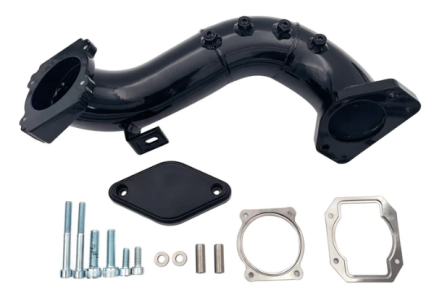
Resonator delete block: The included block-off plate replaces that factory resonator bulge. It smooths out the internal surface, eliminating the turbulence caused by the resonator chamber. The airflow stays laminar instead of getting disrupted by that dead-end volume.
Larger diameter: The replacement uses larger diameter tubing than the factory piece. Flow capacity increases with the square of the diameter, so even a modest increase makes a significant difference in how much air can move through. The product claims an 80 percent increase in airflow, and based on flow bench testing, that number is believable.
CNC mandrel bends: The tubes are mandrel-bent, which means the internal diameter stays consistent through every bend. No crushing, no flat spots, no restrictions. The large radius bends maintain flow velocity without creating turbulence.
TIG welded construction: The flanges are fully TIG welded and pressure tested. No leaks, no weak points. The welds are clean and smooth, with no internal protrusions to disrupt airflow.
Part 3: What the Gains Actually Feel Like
After installing the kit, I paid close attention to how the truck drove. Here's what I noticed.Throttle response: This was the most immediate change. The engine feels more eager, more willing to rev. That slight hesitation when you stab the throttle from a stop is reduced. It's not a night-and-day transformation, but it's definitely noticeable.
Turbo spool: The turbo spools faster. The LML's variable-geometry turbo responds well to reduced restriction, and you can feel it building boost more quickly. The engine just feels less lazy.
EGT reduction: Lower exhaust gas temperatures are one of the claimed benefits, and I believe it. With the engine breathing more efficiently, combustion is more complete, and less energy ends up as heat in the exhaust stream. For anyone who tows, lower EGTs mean less thermal stress on the engine.
The turboshaft note: The turbo operates more efficiently when it doesn't have to pull air through a restriction.
The 80 percent claim: I can't measure that directly, but I can feel the result. The engine doesn't feel like it's working as hard to breathe, especially at higher RPM where flow becomes the limiting factor.
Part 4: The Installation Experience
Installing the kit took about an hour and a half in my driveway. Here's how it went.Step 1:
Using a 10mm socket, remove the stock intake resonator box by removing the two bolts. One bolt is located behind the resonator box by the fire wall.
Step 2:
1.Using a 5mm allen wrench, install the Resonator Delete Block in place of the stock resonator box.
2.Unlock the charge pipe by using a large flathead screwdriver to turn the locking ring counter clockwise. Place the tip of the flathead screwdriver into the groove on top of the locking ring, and push it toward the passenger side while pulling forward on the charge pipe by hand.
Step 3:
1.Using a large flathead screwdriver pry the plastic charge pipe from the throttle valve. Only apply light pressure.
2.Using a 10mm deep socket or extension, remove the four bolts securing the throttle valve and heater grid to the factory intake bridge. Also remove the support bracket that secures the whole assembly to the alternator. This bracket will not be used with the intake bridge.
Step 4:
Using a 12MM socket,remove the two bolts securing the dipstick bracket to the stock intake bridge.
Step 5:
1.Remove the zip tie seuring the wire harness to the stock intake bridge.
2.Using a 10mm socket,remove the two Hose clamps securing the rubber hoses to the intake bridge.
Step 6:
1.Using a 13mm socket,remove the two mounting bolts that secure the stock intake bridge to the motor.
2.Disconnect the pressure sensor plug on the stock intake bridge.
Step 7:
1.Remove the stock intake bridge from the engine.Using a 10mm socket,remove the pressure sensor from the stock intake bridge.
2.Install the pressure sensor to the Diesel intake bridge of the supply kit.
Step 8:
1.Using the 12mm socket,remove the bolt securing the EGR crosscover tube.Install the supply intake bridge and restall the bolt from the previous step hand tight.
2.Secure the intake bridge flange to the motor with the supply M8 allen bolts.
Step 9:
1.Using a 12mm combination wrench, tighten the bolt that was installed hand tight,This will re-secure the intake bridge and the EGR crossover tube.
2.Reconnect the wire to the pressure sensor on the Sinister Diesel Intake Bridge. The hoses can be secured to the new intake using the provided long alen bolts, spacers, and at washers.
3.Replace the gaskets that go before and after the heater grid. Be sure they are placed in the proper location and direction. Using a socket, reinstall the throttle valve and heater grid.
Step 10:
1.Reconnect the plastic charge pipe by pushing on it until the locking ring clicks locking it in place.
2.Reconnect the batteries.
The fitment was perfect—no struggling, no modification needed. The new bridge bolts directly to the factory locations using the existing mounting points. Everything lined up the first time.
Part 5: Why the LML Specifically Benefits
The LML has a complex emissions system that adds heat and restriction. Anything that improves airflow efficiency helps offset those compromises.The emissions context: The LML's EGR system recirculates exhaust gas back into the intake. That exhaust gas is hot, and it raises intake air temperatures. A freer-flowing intake helps pull more cool, fresh air into the engine, diluting that hot recirculated gas and keeping combustion temperatures more manageable.
The tuning connection: If you're running a tune on your LML, this intake bridge becomes even more important. Tuning increases fueling, which requires more air to maintain proper air-fuel ratios. A restricted intake becomes a bottleneck that limits what the tune can do. The elbow removes that bottleneck.
The CP4 connection: The LML's CP4.2 pump has its own reputation, but better airflow at least ensures the engine isn't working harder than it needs to. Every little bit helps when you're trying to keep these trucks reliable long-term.
The foundation mod: This is one of those upgrades that makes sense whether you're stock or modified. It doesn't require tuning to work, but it supports tuning if you add it later. It's a foundation mod—the kind of thing you do once and forget about because it just works.
Part 6: The Verdict
The 2011-2015 LML Duramax is a capable engine that often gets judged by its CP4.2 pump rather than its actual potential. But underneath that emissions equipment and that pump controversy, it's still a Duramax, and Duramax engines have always responded to better breathing.The TruckTok LML Intake Elbow Bridge Kit addresses one of the factory engine's hidden restrictions. It replaces a plastic, restrictive piece with a smooth, free-flowing aluminum bridge that lets the engine breathe the way it should. The resonator delete block eliminates turbulence, the larger diameter increases flow capacity, and the mandrel bends maintain velocity.
The claimed 80 percent airflow increase is believable based on how the truck drives afterward. Throttle response improves, turbo spool gets faster, and EGTs drop. None of these changes are dramatic on their own, but together they make the truck feel more responsive and less strained.
For LML owners who want better throttle response, faster turbo spool, and lower EGTs, this is one of those upgrades that makes sense whether you're stock or modified. It's not expensive, it installs in an afternoon, and it makes the truck feel the way it should have from the factory.
If you've upgraded the intake bridge on your LML, what did you notice? Drop your experience below.
Last edited:
