

I've had my 2015 Ram 1500 EcoDiesel for about four years now. When I bought it, I was drawn to the idea of a half-ton truck with diesel fuel economy. And honestly, it delivered—25 MPG on the highway, enough torque to tow my boat, and a surprisingly comfortable ride. But as the miles added up, I started noticing things. Not major problems, but little hints that the engine was working harder than it should.
The EcoDiesel is a fascinating engine. It's compact, efficient, and surprisingly refined for a diesel. But like every modern diesel, it carries emissions equipment that introduces compromises. The EGR system on these trucks is particularly active, and over time, I became curious about what was happening inside my intake.
After a lot of reading and talking to other EcoDiesel owners, I decided to look into EGR deletion. I eventually picked up the TruckTok kit for the 2014-2019 models. After running it for several months, I wanted to share what I learned about why this modification matters on this engine and what the kit actually does.
The basics: Exhaust Gas Recirculation takes a portion of exhaust gas, cools it, and routes it back into the intake manifold. This dilutes the incoming air, lowering combustion temperatures and reducing NOx formation. On paper, it works. In practice, it introduces some real trade-offs.
How the EcoDiesel implements it: The 3.0L uses a cooled EGR system with a dedicated cooler and an electronically controlled valve. The system is active across a wide range of operating conditions, constantly adjusting flow based on engine load, temperature, and other factors.
The frequency: On these trucks, the EGR system cycles continuously. It's not something you notice day-to-day, but it's always there, always moving exhaust gas through your intake.
The soot factor: Every time I worked on the truck, I'd see that telltale black residue around intake connections. It wasn't terrible, but it was there. That soot was coming from somewhere, and that somewhere was the EGR system.
The occasional stumble: Every now and then, especially after long periods of light-load driving, the engine would have a slight hesitation. Nothing dramatic, but enough to notice. I started reading about EGR valve sticking on these engines.
The heat question: The engine bay gets hot—all engine bays do. But I wondered how much of that heat was from the engine itself and how much was from routing 1,000°F exhaust gas through a cooler mounted right next to everything.
The maintenance thought: EGR valves need cleaning eventually. EGR coolers can fail eventually. I started thinking about whether I wanted to deal with those things at 100,000 or 150,000 miles.
Block-off plates: The kit includes multiple precision-cut plates for sealing off the EGR system at various points:
Coolant hose: When the EGR cooler is removed, the coolant circuit needs to be maintained. This silicone hose replaces the cooler, allowing coolant to flow normally without passing through the heat exchanger.
Reducer and clamps: These components ensure proper connections and leak-free sealing throughout the system.
Hardware: All necessary bolts and nuts are included—10mm bolts in various lengths, 10mm nuts, and zip ties for routing and securing components.
Bonus feature: The kit includes a 1/8th NPT nipple for an optional boost gauge. If you're running gauges, this gives you a convenient port.
Materials: The kit combines aluminum plates, stainless steel components where strength matters, and silicone for the coolant hose. Each material is chosen for its specific application.
Cleaner intake air: With no exhaust gas recirculating, the intake tract stays clean. No soot buildup, no carbon deposits, no gradual restriction over time. The engine breathes clean air, period.
Lower under-hood temperatures: The product notes that "EGR removed and the temperature in the engine compartment area dropped." This makes sense—you're no longer routing 1,000°F exhaust gas through a cooler mounted in the engine bay. That heat stays in the exhaust and exits through the tailpipe instead of soaking into everything around it.
Elimination of a maintenance item: No EGR valve to clean, no cooler to worry about, no carbon buildup to address. The product notes "no need for regular clean/replace," and that's accurate. Once the system is gone, it's gone.
Reduced failure risk: EGR coolers can fail. They can crack, leak coolant into the intake or exhaust, and cause expensive repairs. Removing the cooler eliminates this risk entirely.
Smoother operation: With the EGR system gone, the engine isn't constantly adjusting flow based on operating conditions. Operation is simpler and more consistent.
This is not optional. The EcoDiesel's ECM is programmed to monitor EGR operation—valve position, flow rates, temperatures. When it detects that the system is missing, it will set codes, light up your dash, and likely derate power.
A proper delete tune does three things:
The kit includes everything needed—plates, hose, reducer, clamps, hardware, zip ties. No chasing down missing parts. The 1/8th NPT nipple is a thoughtful addition for anyone running gauges.
For someone with intermediate mechanical skills and the right tools, this is a manageable project. For others, finding a shop familiar with these trucks might be the better path.
The TruckTok EGR Valve & Cooler Delete Kit addresses these issues directly. It includes everything needed to remove the EGR system: precision block-off plates for the turbo manifold, cooler, and intake manifold; a silicone coolant hose to maintain cooling system function; all necessary hardware; and even a boost gauge port for those who want it.
What you gain:
For EcoDiesel owners who plan to keep their trucks long-term and are willing to invest in proper tuning, this kit addresses one of the engine's most significant compromises. It's not about chasing horsepower—it's about efficiency, reliability, and peace of mind.
If you've deleted the EGR on your EcoDiesel, what was your experience? Drop your thoughts below.
The EcoDiesel is a fascinating engine. It's compact, efficient, and surprisingly refined for a diesel. But like every modern diesel, it carries emissions equipment that introduces compromises. The EGR system on these trucks is particularly active, and over time, I became curious about what was happening inside my intake.
After a lot of reading and talking to other EcoDiesel owners, I decided to look into EGR deletion. I eventually picked up the TruckTok kit for the 2014-2019 models. After running it for several months, I wanted to share what I learned about why this modification matters on this engine and what the kit actually does.
Part 1: Understanding the EcoDiesel's EGR System
Before we talk about removing it, let's understand what the EGR system does on the 3.0L.The basics: Exhaust Gas Recirculation takes a portion of exhaust gas, cools it, and routes it back into the intake manifold. This dilutes the incoming air, lowering combustion temperatures and reducing NOx formation. On paper, it works. In practice, it introduces some real trade-offs.
How the EcoDiesel implements it: The 3.0L uses a cooled EGR system with a dedicated cooler and an electronically controlled valve. The system is active across a wide range of operating conditions, constantly adjusting flow based on engine load, temperature, and other factors.
The frequency: On these trucks, the EGR system cycles continuously. It's not something you notice day-to-day, but it's always there, always moving exhaust gas through your intake.
Part 2: What I Started Noticing Over Time
After about 60,000 miles, I began to notice a few things that made me curious about the EGR system.The soot factor: Every time I worked on the truck, I'd see that telltale black residue around intake connections. It wasn't terrible, but it was there. That soot was coming from somewhere, and that somewhere was the EGR system.
The occasional stumble: Every now and then, especially after long periods of light-load driving, the engine would have a slight hesitation. Nothing dramatic, but enough to notice. I started reading about EGR valve sticking on these engines.
The heat question: The engine bay gets hot—all engine bays do. But I wondered how much of that heat was from the engine itself and how much was from routing 1,000°F exhaust gas through a cooler mounted right next to everything.
The maintenance thought: EGR valves need cleaning eventually. EGR coolers can fail eventually. I started thinking about whether I wanted to deal with those things at 100,000 or 150,000 miles.
Part 3: What the TruckTok Kit Actually Does
The TruckTok EGR delete kit is designed specifically for the 2014-2019 EcoDiesel. Here's what's included and why each component matters.Block-off plates: The kit includes multiple precision-cut plates for sealing off the EGR system at various points:
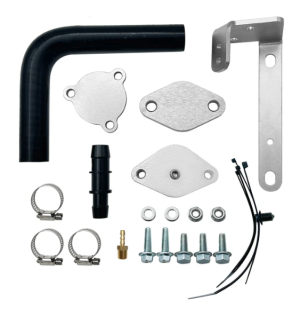
- A turbo manifold block-off plate
- A cooler side block-off plate
- An intake manifold side blocker plate
Coolant hose: When the EGR cooler is removed, the coolant circuit needs to be maintained. This silicone hose replaces the cooler, allowing coolant to flow normally without passing through the heat exchanger.
Reducer and clamps: These components ensure proper connections and leak-free sealing throughout the system.
Hardware: All necessary bolts and nuts are included—10mm bolts in various lengths, 10mm nuts, and zip ties for routing and securing components.
Bonus feature: The kit includes a 1/8th NPT nipple for an optional boost gauge. If you're running gauges, this gives you a convenient port.
Materials: The kit combines aluminum plates, stainless steel components where strength matters, and silicone for the coolant hose. Each material is chosen for its specific application.
Part 4: What You Gain by Removing the EGR System
After installing this kit, several changes became apparent.Cleaner intake air: With no exhaust gas recirculating, the intake tract stays clean. No soot buildup, no carbon deposits, no gradual restriction over time. The engine breathes clean air, period.
Lower under-hood temperatures: The product notes that "EGR removed and the temperature in the engine compartment area dropped." This makes sense—you're no longer routing 1,000°F exhaust gas through a cooler mounted in the engine bay. That heat stays in the exhaust and exits through the tailpipe instead of soaking into everything around it.
Elimination of a maintenance item: No EGR valve to clean, no cooler to worry about, no carbon buildup to address. The product notes "no need for regular clean/replace," and that's accurate. Once the system is gone, it's gone.
Reduced failure risk: EGR coolers can fail. They can crack, leak coolant into the intake or exhaust, and cause expensive repairs. Removing the cooler eliminates this risk entirely.
Smoother operation: With the EGR system gone, the engine isn't constantly adjusting flow based on operating conditions. Operation is simpler and more consistent.
Part 5: The Tuning Reality
The product description includes a critical note: "Need custom ECU tuning in order to use this kit on your vehicle."This is not optional. The EcoDiesel's ECM is programmed to monitor EGR operation—valve position, flow rates, temperatures. When it detects that the system is missing, it will set codes, light up your dash, and likely derate power.
A proper delete tune does three things:
- Disables EGR monitoring so the ECM no longer looks for it
- Eliminates fault codes for missing components
- Optimizes fuel delivery for the new airflow characteristics
Part 6: The Installation Consideration
Installing an EGR delete on the EcoDiesel requires mechanical competence. The engine bay is tight, and accessing the EGR components takes time and patience.The kit includes everything needed—plates, hose, reducer, clamps, hardware, zip ties. No chasing down missing parts. The 1/8th NPT nipple is a thoughtful addition for anyone running gauges.
For someone with intermediate mechanical skills and the right tools, this is a manageable project. For others, finding a shop familiar with these trucks might be the better path.
Part 7: The Fitment Specifics
This kit fits:- 2014-2019 Dodge Ram 1500 with the 3.0L EcoDiesel
Part 8: The Verdict
The 2014-2019 EcoDiesel is a capable and efficient engine that brought diesel power to the half-ton segment. But like all modern diesels, its EGR system introduces compromises—soot buildup, heat, maintenance requirements, and potential failure points.The TruckTok EGR Valve & Cooler Delete Kit addresses these issues directly. It includes everything needed to remove the EGR system: precision block-off plates for the turbo manifold, cooler, and intake manifold; a silicone coolant hose to maintain cooling system function; all necessary hardware; and even a boost gauge port for those who want it.
What you gain:
- Cleaner intake air with no soot buildup
- Lower under-hood temperatures
- Elimination of EGR-related maintenance
- Reduced risk of cooler failure
- Smoother, more consistent operation
For EcoDiesel owners who plan to keep their trucks long-term and are willing to invest in proper tuning, this kit addresses one of the engine's most significant compromises. It's not about chasing horsepower—it's about efficiency, reliability, and peace of mind.
If you've deleted the EGR on your EcoDiesel, what was your experience? Drop your thoughts below.
Last edited:
