

If you're driving a 2007-2009 Ram with the 6.7L Cummins, you're piloting a truck with an iconic, bulletproof engine that was unfortunately saddled with some problematic factory plumbing from day one. Two of the most notorious culprits for robbing power, creating maintenance headaches, and introducing potential failure points are the Exhaust Gas Recirculation (EGR) system and the Throttle Valve (also called the Intake Throttle). For owners looking to build a more reliable, efficient, and responsive powerplant, addressing these two components is often the very first step. This guide will walk you through the problems they cause, the benefits of deleting them, the installation process, and the essential supporting modifications you cannot ignore.
The Downsides for Your Engine:
The Downsides for Your Engine:
Recommended Hardware: For the 2007-2009 specific trucks, a dedicated kit like the 2007.5-2009 Cummins EGR Delete Kit is ideal. Key features to look for:
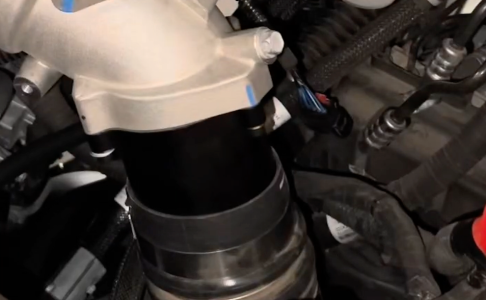
Recommended Hardware: A unit like the EGR Throttle Valve Delete Pipe serves a dual purpose. It not only deletes the throttle valve but also often deletes the EGR mixing port on the intake horn. It's a single, mandrel-bent aluminum piece that bolts directly in place, eliminating the valve, its housing, and the associated vacuum components.
You must have a custom tune installed that:
A: Not directly. The primary goal is reliability and longevity. The removal of intake restrictions and heat sources provides a foundation for better performance and can yield minor gains in throttle response and efficiency. Real power gains come from subsequent tuning, turbo, and fuel system upgrades.
Q: Will my truck smoke more or run differently?
A: With a correct tune, it should run significantly better—smoother, more responsive, and with no negative side effects. Smoke is a function of air-fuel ratio, controlled by the tune. A proper delete tune aims for clean combustion.
Q: Can I do just the EGR delete or just the throttle valve delete?
A: You can, but they are complementary. Doing both removes all related components and maximizes the reliability benefit. The throttle valve delete is quick and easy once you're in there for the EGR.
Q: What about the DPF/SCR? Does this delete those too?
A: No. The EGR and Throttle Valve are upstream, intake-side systems. The DPF and SCR are downstream, exhaust-side systems. They are separate components and require their own, more complex removal process and tuning strategies.
Q: The legal disclaimer again – what's the real-world risk?
A: Federally, it is illegal. Enforcement typically happens at the state level during emissions inspections. If you live in an area with no testing, the primary risk is from failing a random inspection or when selling the vehicle. The responsibility and liability are yours. Many owners choose to retain all factory parts for potential reinstallation in the future.
Part 1: The Problem Children – Understanding the EGR and Throttle Valve
The EGR System: A Well-Intentioned Flaw
The EGR system's job is to reduce combustion chamber temperatures by recirculating a metered amount of inert exhaust gas back into the intake stream. This lowers the production of nitrogen oxides (NOx), a key emissions target.The Downsides for Your Engine:
- Soot & Carbon Buildup: You are routing dirty, soot-laden exhaust gases back into your clean intake manifold, intercooler, and intake ports. This creates a thick, abrasive carbon sludge that clogs components, reduces airflow, and can contaminate engine oil.
- Heat Soak: The EGR cooler, which uses engine coolant to lower the temperature of the exhaust gases before reintroduction, becomes a major source of unnecessary heat transfer into your cooling system. This contributes to higher overall engine coolant temperatures, especially under load.
- Restriction & Failure Points: The EGR valve itself is a complex, electronically controlled component that can stick, fail, or leak. The cooler is also prone to failure; a leak can allow coolant to be ingested into the intake or exhaust, leading to hydrolock or severe white smoke.
- Reduced Efficiency: By design, it dilutes the fresh air charge with inert gas, which can slightly dampen throttle response and combustion efficiency.
The Throttle Valve: A Solution in Search of a Problem
Mounted on the intake horn, this butterfly valve looks oddly out of place on a diesel. Its primary function is to snap shut during a Diesel Particulate Filter (DPF) regeneration cycle, creating an intake restriction that increases exhaust gas temperature (EGT) to help burn soot out of the filter.The Downsides for Your Engine:
- A Catastrophic Failure Point: This is the big one. The valve is spring-loaded to the closed position and is held open by engine vacuum. If the control solenoid, vacuum line, or valve itself fails, the valve can slam shut unexpectedly. At idle, this will stall the engine. At highway speeds or under heavy load, a sudden loss of all airflow can cause a violent compressor stall in the turbocharger, potentially leading to catastrophic turbo and engine damage from ingested compressor wheel fragments.
- Unnecessary Restriction: Even when fully open, the valve and its housing create a slight airflow restriction in the intake tract.
- Complexity: It adds another layer of unnecessary vacuum lines, sensors, and solenoids to the engine bay.
Part 2: The Solution – A Two-Part Delete Strategy
Removing these systems is straightforward from a mechanical perspective, but it must be done completely and correctly.1. The EGR Delete
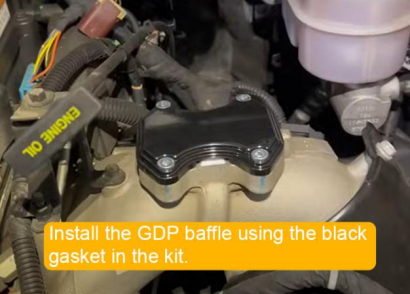
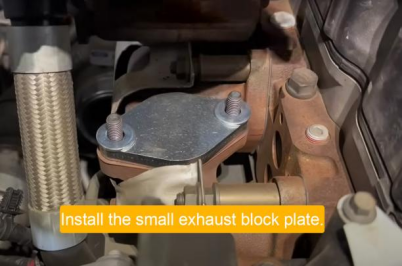
This involves physically blocking off the exhaust gas at the exhaust manifold and the intake manifold, and rerouting the coolant lines that formerly serviced the now-removed EGR cooler.Recommended Hardware: For the 2007-2009 specific trucks, a dedicated kit like the 2007.5-2009 Cummins EGR Delete Kit is ideal. Key features to look for:
- Proper Block-Off Plates: Thick, CNC-machined aluminum plates that seal the exhaust ports on the manifold and the intake manifold inlet. Quality kits have these plates pre-tapped for an Exhaust Gas Temperature (EGT) probe, which is a critical sensor to add during this process.
- Complete Coolant Reroute: It includes a high-temperature silicone hose and necessary brackets to connect the now-open coolant lines directly to each other, maintaining proper flow through the engine and heater core. Never simply cap these lines—it will cause cooling system airlocks and overheating.
- All Necessary Hardware: Includes gaskets, bolts, and often a relocation bracket for the transmission dipstick tube that gets moved during the EGR cooler removal.
2. The Throttle Valve Delete
This is simpler: you remove the entire throttle valve assembly from the intake horn and replace it with a straight, open pipe.Recommended Hardware: A unit like the EGR Throttle Valve Delete Pipe serves a dual purpose. It not only deletes the throttle valve but also often deletes the EGR mixing port on the intake horn. It's a single, mandrel-bent aluminum piece that bolts directly in place, eliminating the valve, its housing, and the associated vacuum components.
Part 3: Installation Essentials & The Critical Supporting Mod
Mechanical Installation Overview:
- Drain & Depressurize: Allow the engine to cool completely. Drain a portion of the coolant from the system to below the level of the EGR cooler lines. Relieve fuel system pressure.
- Remove Factory Components: Disconnect the battery. Remove the intake piping. Unbolt and remove the throttle valve assembly. Disconnect all electrical connectors, vacuum lines, and coolant hoses from the EGR valve and cooler. Unbolt and carefully remove the EGR valve and cooler assembly.
- Install Delete Components: Install the exhaust manifold block-off plates using the provided high-temperature gaskets. Install the throttle valve delete pipe onto the intake horn. Route and install the coolant reroute hose, securing it with the provided brackets. This is a good time to install an EGT probe in the pre-tapped block-off plate.
- Reassemble & Refill: Reinstall the intake piping. Refill the cooling system, burping it carefully to remove air. Reconnect the battery.
The ABSOLUTE MUST-DO: ECU Tuning
This is not optional. Your truck's Engine Control Module (ECM) is programmed to monitor and control both the EGR valve and the throttle valve. If you remove them physically without telling the ECM, you will be greeted by a dashboard lit up with warning lights (MIL/CEL), and the engine will likely derate power or enter "limp mode."You must have a custom tune installed that:
- Disables the EGR System: Turns off all EGR valve commands and diagnostic fault codes (e.g., P0403, P0404, P0406).
- Disables the Throttle Valve: Turns off commands to the throttle valve solenoid and related diagnostics.
- Optimizes Parameters: Adjusts fueling and timing tables that were previously accounting for EGR flow, often resulting in a smoother idle and cleaner throttle response.
Part 4: The Rewards – What You Gain
- Unmatched Reliability: You eliminate two of the most common failure points on the 6.7L engine. No more worrying about a stuck EGR valve, a leaking EGR cooler, or the dreaded throttle valve slam.
- Cleaner Engine Internals: The intake manifold, valves, and intercooler will stay clean, promoting better airflow and more efficient combustion for the life of the engine.
- Improved Engine Cooling: Removing the EGR cooler as a heat source from the coolant loop can lower overall engine operating temperatures, especially beneficial for towing.
- Simplified Engine Bay: The removal of vacuum lines, coolers, valves, and associated wiring makes for a cleaner bay that is easier to work on.
- Enhanced Throttle Response & Driveability: With a clean, unrestricted intake path and no inert exhaust gas diluting the charge, the engine breathes easier and responds more directly to the pedal.
Part 5: FAQ – Your Questions Answered
Q: Is this a "performance" mod that adds huge horsepower?A: Not directly. The primary goal is reliability and longevity. The removal of intake restrictions and heat sources provides a foundation for better performance and can yield minor gains in throttle response and efficiency. Real power gains come from subsequent tuning, turbo, and fuel system upgrades.
Q: Will my truck smoke more or run differently?
A: With a correct tune, it should run significantly better—smoother, more responsive, and with no negative side effects. Smoke is a function of air-fuel ratio, controlled by the tune. A proper delete tune aims for clean combustion.
Q: Can I do just the EGR delete or just the throttle valve delete?
A: You can, but they are complementary. Doing both removes all related components and maximizes the reliability benefit. The throttle valve delete is quick and easy once you're in there for the EGR.
Q: What about the DPF/SCR? Does this delete those too?
A: No. The EGR and Throttle Valve are upstream, intake-side systems. The DPF and SCR are downstream, exhaust-side systems. They are separate components and require their own, more complex removal process and tuning strategies.
Q: The legal disclaimer again – what's the real-world risk?
A: Federally, it is illegal. Enforcement typically happens at the state level during emissions inspections. If you live in an area with no testing, the primary risk is from failing a random inspection or when selling the vehicle. The responsibility and liability are yours. Many owners choose to retain all factory parts for potential reinstallation in the future.
Conclusion: An Investment in Long-Term Health
For the 2007-2009 6.7L Cummins owner focused on durability and building a solid foundation for their truck, the EGR and Throttle Valve delete is a logical first step. By investing in quality delete kits like the ones outlined and, most crucially, a professional custom tune, you are not just removing parts—you are removing systemic vulnerabilities. You're trading government-mandated complexity for elegant simplicity, resulting in an engine that runs cooler, cleaner, and with far greater long-term reliability. It’s about restoring the Cummins to a more pure, and ultimately more trustworthy, state of operation.
Last edited:
