

If you drive a 2006-2016 GM Duramax, you know the feeling. The factory tune is a compromise—a one-size-fits-all calibration designed to please regulators and meet averages, not to maximize the potential of your specific truck or adapt to your ever-changing needs. You’re left with a single, static performance profile, whether you’re hauling a heavy trailer up a mountain pass or cruising empty on the highway for maximum fuel economy.
For years, the pinnacle of custom tuning for these trucks has been the DSP5 (Duramax Switchable Position 5) system. It promises the dream: five distinct tune files stored in your truck's Engine Control Module (ECM), accessible at the twist of a dial on your dash. But not all DSP5 switches are created equal, and the era of your truck dictates everything about how this system works, what it can do, and what you need to know before installing one.
Today, we’re breaking down the two key hardware kits that make this possible: the TruckTok switches for the 2006-2010 LBZ/LMM and the 2011-2016 LML. We'll cover what you're fixing, the critical technical differences between generations, how to install them correctly, and the transformative benefits (and important limitations) you can expect.
From the factory, your Duramax's ECM runs one calibration. It must account for emissions equipment, a wide range of fuel qualities, varying altitudes, and the need to protect the drivetrain—often at the expense of throttle response and power. This results in common complaints like "dead pedal" (a laggy, unresponsive throttle), conservative timing and fueling, and transmission shift patterns that may not suit aggressive driving or heavy towing. You’re stuck with these behaviors in every situation.
The Solution: Dynamic, Situational Control
A true DSP5 system, when paired with custom EFILive tuning, rewrites this rulebook. It loads a custom operating system onto your ECM that can hold five separate tune files. A simple 5-position switch, wired to specific pins on the ECM, allows you to select between them in real-time, without stopping the truck.
Imagine this:
Understanding The 2011+ "Myth": A Vital Distinction
For owners of 2011-2016 LML trucks, this is the most important concept to grasp. Starting in 2011, General Motors changed the ECM architecture, making it impossible to install the traditional custom DSP5 operating system. Therefore, any switch you install on an LML does not function in the same way as it does on an LBZ or LMM.
As outlined by industry experts, the switch on an LML usually acts as an "electronic throttle limiter". You have one high-performance base tune. The switch settings don't load new files; they apply different levels of restriction to that single tune, often by manipulating sensor data. This can lead to unpredictable drivability and, crucially, confuses the transmission, as it's receiving inconsistent torque signals from the ECM, potentially leading to erratic shifting and accelerated wear.
Tools You’ll Need:
Once paired with proper tuning, the difference is night and day. Throttle response is sharpened, power delivery is smooth and abundant, and you gain incredible flexibility. For LBZ/LMM owners, it’s true multi-tune versatility. For LML owners, even with its limitations, a well-calibrated system can offer a safer "tow mode" that limits peak power and reduces EGTs while towing.
Crucial Considerations and Warnings:
The key to success with either system is the same: quality hardware, expert tuning from a professional who understands the platform's intricacies, and the mandatory companion of a custom transmission calibration. Do your research, choose your tuner wisely, and you can transform your truck from a compromised workhorse into a finely tuned instrument of power and utility.
Have you installed a DSP5 switch? What was your experience with tuning and transmission management? Share your stories and tips below to help the community!
For years, the pinnacle of custom tuning for these trucks has been the DSP5 (Duramax Switchable Position 5) system. It promises the dream: five distinct tune files stored in your truck's Engine Control Module (ECM), accessible at the twist of a dial on your dash. But not all DSP5 switches are created equal, and the era of your truck dictates everything about how this system works, what it can do, and what you need to know before installing one.
Today, we’re breaking down the two key hardware kits that make this possible: the TruckTok switches for the 2006-2010 LBZ/LMM and the 2011-2016 LML. We'll cover what you're fixing, the critical technical differences between generations, how to install them correctly, and the transformative benefits (and important limitations) you can expect.
Part 1: The Stock Limitation & The DSP5 Promise
The Problem: A Static, Compromised TuneFrom the factory, your Duramax's ECM runs one calibration. It must account for emissions equipment, a wide range of fuel qualities, varying altitudes, and the need to protect the drivetrain—often at the expense of throttle response and power. This results in common complaints like "dead pedal" (a laggy, unresponsive throttle), conservative timing and fueling, and transmission shift patterns that may not suit aggressive driving or heavy towing. You’re stuck with these behaviors in every situation.
The Solution: Dynamic, Situational Control
A true DSP5 system, when paired with custom EFILive tuning, rewrites this rulebook. It loads a custom operating system onto your ECM that can hold five separate tune files. A simple 5-position switch, wired to specific pins on the ECM, allows you to select between them in real-time, without stopping the truck.
Imagine this:
- Position 1 (Stock/High MPG): A mild, efficient tune for daily driving or break-in.
- Position 2 (Light Tow): Added torque and revised transmission shifting for smaller trailers.
- Position 3 (Heavy Tow): Serious power and tow-optimized parameters for max payloads.
- Position 4 (Performance): Aggressive throttle response and power for spirited driving.
- Position 5 (Race/Max Effort): Unleashes the maximum safe power for your setup.
Part 2: The Hardware – Two Switches, Two Different Eras
It is absolutely critical to choose the switch designed for your truck's model year, as the ECM wiring and underlying technology are different. Here is a direct comparison of the two TruckTok kits:| Feature | For 2006-2010 LBZ/LMM Models | For 2011-2016 LML Models |
| Core Product | TruckTok 2006-2010 Duramax 5-Position Switch | TruckTok 2011-2016 Duramax 5-Position Switch |
| Compatible Engines | 6.6L LBZ (2006-2007), LMM (2007.5-2010) | 6.6L LML (2011-2016) |
| Key Installation Info | White wire → ECM Pin #46 / Black wire → ECM Pin #54 | Yellow wire → ECM Pin #11 / Black wire → ECM Pin #35 |
| Common Construction | Both feature an aluminum control knob, heat-resistant braided wiring, and are designed for durability in engine-bay temperatures. | |
| The Critical Difference | True DSP5 System: The ECM can store and switch between five different tune files for genuine performance changes. | "Sensor Fooling" System: Due to a locked ECM, it typically works by modifying signals (like fuel temp) to limit a single, high-power tune. |
| Image | 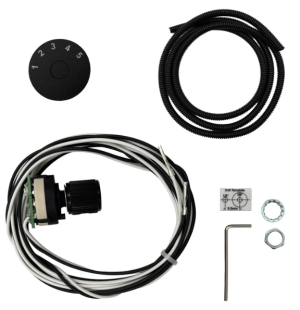 | 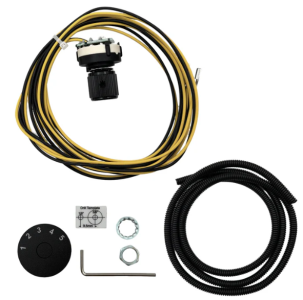 |
Understanding The 2011+ "Myth": A Vital Distinction
For owners of 2011-2016 LML trucks, this is the most important concept to grasp. Starting in 2011, General Motors changed the ECM architecture, making it impossible to install the traditional custom DSP5 operating system. Therefore, any switch you install on an LML does not function in the same way as it does on an LBZ or LMM.
As outlined by industry experts, the switch on an LML usually acts as an "electronic throttle limiter". You have one high-performance base tune. The switch settings don't load new files; they apply different levels of restriction to that single tune, often by manipulating sensor data. This can lead to unpredictable drivability and, crucially, confuses the transmission, as it's receiving inconsistent torque signals from the ECM, potentially leading to erratic shifting and accelerated wear.
Part 3: Installation Guide & Critical Pitfalls
Installing the switch itself is straightforward, but precision is key.Tools You’ll Need:
- Trim removal tools
- Drill and bits (for mounting the switch in your dash)
- Small flat-head screwdriver or dedicated terminal tool
- Wire strippers/crimpers
- Electrical tape or heat shrink
- Torx bit set (for accessing the ECM)
- Disconnect the Batteries: Always start here. Disconnect both the negative and positive terminals.
- Choose and Prep Switch Location: Pick a clean, accessible spot on your dash or center console. Drill the required hole and test-fit the switch.
- Route the Wiring: Run the switch's wiring harness through the firewall and neatly along the factory loom towards the ECM, which is located on the driver's side of the engine bay.
- Access the ECM Connectors: Carefully unclip and remove the ECM weather cover. Identify the correct connector (for the LBZ/LMM, it's often the gray one at the bottom). You may need to depin the specific cavity for the wire.
- Connect the Wires (THE MOST IMPORTANT STEP):
- For LBZ/LMM: Insert the white wire into Pin #46 and the black wire into Pin #54 of the specified ECM connector.
- For LML: Insert the yellow wire into Pin #11 and the black wire into Pin #35.
- Pro Tip: Double-check that the target pin cavities are empty. Forum users have occasionally found mystery wires in these slots from prior work. If a pin is occupied, do not "double up." You must identify the existing wire's purpose or choose a verified alternate pin based on an up-to-date wiring diagram.
- Secure and Reassemble: Secure all wiring with zip-ties, reattach the ECM cover, and reconnect both batteries.
Part 4: The Payoff & The Reality Check
Benefits and Real-World Experience:Once paired with proper tuning, the difference is night and day. Throttle response is sharpened, power delivery is smooth and abundant, and you gain incredible flexibility. For LBZ/LMM owners, it’s true multi-tune versatility. For LML owners, even with its limitations, a well-calibrated system can offer a safer "tow mode" that limits peak power and reduces EGTs while towing.
Crucial Considerations and Warnings:
- The Switch is Just a Dial: The switch is only an interface. Its value is zero without the custom EFILive DSP5 tuning for your specific truck. This is a separate, essential purchase and installation from a reputable tuner.
- Transmission Tuning is NON-NEGOTIABLE: Especially for LML trucks, but highly recommended for all, a custom Transmission Control Module (TCM) tune is mandatory. The stock transmission calibration cannot handle the increased torque and altered power delivery, risking failure. A good TCM tune will adjust shift points, firmness, and torque management to protect your investment.
- Know Your LML's Limits: If you own a 2011-2016 truck, have a frank discussion with your tuner. Understand that you are not getting a true 5-file system. The goal should be a reliable, single great tune with a safety-oriented tow setting, not chasing multiple high-horsepower levels that stress the drivetrain.
- Legality and Warranty: These modifications almost certainly violate EPA emissions laws if they disable any emissions equipment and will void your powertrain warranty. This is for off-road and competition use only.
Conclusion: Unlocking Potential, Responsibly
The DSP5 switch represents the height of customizable performance for the Duramax owner. For the 2006-2010 crowd, it remains a robust and fantastic system that delivers on the promise of true switch-on-the-fly versatility. For the 2011-2016 owners, it offers a more nuanced form of control that requires careful tuning and managed expectations.The key to success with either system is the same: quality hardware, expert tuning from a professional who understands the platform's intricacies, and the mandatory companion of a custom transmission calibration. Do your research, choose your tuner wisely, and you can transform your truck from a compromised workhorse into a finely tuned instrument of power and utility.
Have you installed a DSP5 switch? What was your experience with tuning and transmission management? Share your stories and tips below to help the community!
Last edited:
