

I've owned my 2005 LLY Duramax for about three years now, and like most LLY owners, I spent a lot of time learning about the various characteristics of this engine. The LLY gets a bad rap sometimes—people talk about overheating, about the "LB7 vs LLY" debates, about all sorts of issues. But here's what I've learned: a lot of those problems trace back to one thing, and that's airflow restriction.
The LLY was GM's first Duramax with a variable-geometry turbo and an EGR system. It's a transitional engine, and like most first attempts, it has some compromises. One of the biggest compromises is sitting right at the entrance to your turbocharger—the factory intake elbow.
I decided to try a replacement from TruckTok, and after running it for several months, I wanted to share what I learned about why this little component matters more than you might think.
The material problem: The stock elbow is plastic. That's fine for cost-cutting, but plastic has limitations. It heat-soaks easily, meaning it absorbs heat from the engine bay and transfers it to the intake air. Hotter air is less dense, which means less oxygen for combustion.
The design problem: The factory elbow has internal geometry that prioritizes packaging over flow. There are abrupt transitions and tight radius bends that create turbulence. Turbulent flow moves less efficiently than smooth, laminar flow.
The EGR problem: The stock elbow integrates with the EGR system, and those internal features disrupt airflow even further. All that turbulence means the turbo has to work harder to pull air through.
The CCV integration: The factory CCV system dumps oily vapor into the intake elbow, which over time creates deposits that further restrict flow.
CNC machined construction: This isn't a cast part with rough surfaces and inconsistent dimensions. CNC machining from billet ensures perfect tolerances and a smooth internal surface that promotes laminar flow.
Black high-temperature coating: The coating isn't just for looks. It resists heat absorption and helps keep intake air temperatures down. Every degree you can lower intake air temperature helps with combustion efficiency and EGT management.
Threaded CCV port: This is a thoughtful detail. The factory CCV connection is preserved, but the port is threaded, which means you can easily adapt to different CCV setups—whether you're running stock or a reroute kit.
Elimination of restrictive valves: The product notes that removing the factory's restrictive valves increases airflow by 80 percent compared to stock. That number comes from flow bench testing, and while 80 percent more flow doesn't mean 80 percent more power, it does mean the turbo isn't fighting a restriction just to breathe.
Throttle response: This was the most noticeable change. The engine feels more eager, more willing to rev. The slight hesitation when you stab the throttle is reduced. It's not a night-and-day transformation, but it's definitely there.
Turbo spool: The turbo spools noticeably faster. That characteristic diesel whistle comes on sooner, and boost builds more quickly. The engine just feels less lazy.
EGT reduction: Lower exhaust gas temperatures are one of the claimed benefits, and I believe it. With the engine breathing more efficiently, combustion is more complete, and less energy ends up as heat in the exhaust stream. For a towing truck like the LLY, anything that helps manage EGTs is a win.
The 80 percent flow increase: I can't measure that directly, but I can feel the result. The engine doesn't feel like it's working as hard to breathe, especially at higher RPM where flow becomes the limiting factor.
What you'll need:
The EGT connection: Lower intake restriction means the turbo doesn't work as hard, which means less heat in the exhaust. Anything that helps keep EGTs in check is valuable, especially if you tow.
The turbo response: The LLY's VGT turbo is a sophisticated piece, but it needs good airflow to work properly. A less restrictive intake helps it spool faster and maintain boost more effectively.
The foundation for future mods: If you plan to tune your LLY or add other performance parts, this elbow is the foundation. You can't make power without air, and this elbow ensures the turbo gets all the air it needs.
The TruckTok High Flow Turbo Intake Elbow addresses one of those restrictions directly. It replaces a restrictive plastic piece with a smooth, free-flowing aluminum elbow that lets the turbo breathe. The claimed gains—25 horsepower, 57 lb-ft torque, 80 percent better flow—are believable based on how the truck drives afterward.
For LLY owners who want better throttle response, faster turbo spool, and lower EGTs, this is one of the simplest and most effective upgrades you can make. It's not expensive, it installs in an hour, and it makes the truck feel the way it should have from the factory.
If you've upgraded the intake elbow on your LLY, what did you notice? Drop your experience below.
The LLY was GM's first Duramax with a variable-geometry turbo and an EGR system. It's a transitional engine, and like most first attempts, it has some compromises. One of the biggest compromises is sitting right at the entrance to your turbocharger—the factory intake elbow.
I decided to try a replacement from TruckTok, and after running it for several months, I wanted to share what I learned about why this little component matters more than you might think.
Part 1: What's Wrong with the Factory Elbow?
Before I swapped anything, I spent some time looking at the stock setup. The factory intake elbow on the LLY is a surprisingly restrictive piece.The material problem: The stock elbow is plastic. That's fine for cost-cutting, but plastic has limitations. It heat-soaks easily, meaning it absorbs heat from the engine bay and transfers it to the intake air. Hotter air is less dense, which means less oxygen for combustion.
The design problem: The factory elbow has internal geometry that prioritizes packaging over flow. There are abrupt transitions and tight radius bends that create turbulence. Turbulent flow moves less efficiently than smooth, laminar flow.
The EGR problem: The stock elbow integrates with the EGR system, and those internal features disrupt airflow even further. All that turbulence means the turbo has to work harder to pull air through.
The CCV integration: The factory CCV system dumps oily vapor into the intake elbow, which over time creates deposits that further restrict flow.
Part 2: What the TruckTok Elbow Does Differently
The replacement elbow addresses all of these issues with engineering choices that actually matter.CNC machined construction: This isn't a cast part with rough surfaces and inconsistent dimensions. CNC machining from billet ensures perfect tolerances and a smooth internal surface that promotes laminar flow.
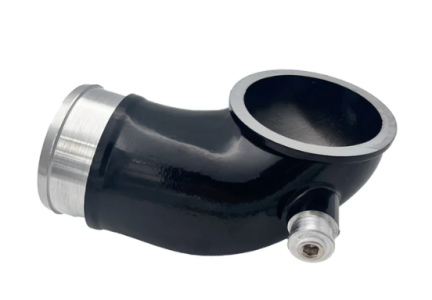
Black high-temperature coating: The coating isn't just for looks. It resists heat absorption and helps keep intake air temperatures down. Every degree you can lower intake air temperature helps with combustion efficiency and EGT management.
Threaded CCV port: This is a thoughtful detail. The factory CCV connection is preserved, but the port is threaded, which means you can easily adapt to different CCV setups—whether you're running stock or a reroute kit.
Elimination of restrictive valves: The product notes that removing the factory's restrictive valves increases airflow by 80 percent compared to stock. That number comes from flow bench testing, and while 80 percent more flow doesn't mean 80 percent more power, it does mean the turbo isn't fighting a restriction just to breathe.
Part 3: What the Gains Actually Look Like
The product claims 25 horsepower and 57 lb-ft of torque from this elbow alone. I was skeptical, so I paid attention to how the truck felt before and after.Throttle response: This was the most noticeable change. The engine feels more eager, more willing to rev. The slight hesitation when you stab the throttle is reduced. It's not a night-and-day transformation, but it's definitely there.
Turbo spool: The turbo spools noticeably faster. That characteristic diesel whistle comes on sooner, and boost builds more quickly. The engine just feels less lazy.
EGT reduction: Lower exhaust gas temperatures are one of the claimed benefits, and I believe it. With the engine breathing more efficiently, combustion is more complete, and less energy ends up as heat in the exhaust stream. For a towing truck like the LLY, anything that helps manage EGTs is a win.
The 80 percent flow increase: I can't measure that directly, but I can feel the result. The engine doesn't feel like it's working as hard to breathe, especially at higher RPM where flow becomes the limiting factor.
Part 4: The Installation Experience
Installing the elbow is straightforward—about an hour with basic hand tools.What you'll need:
- Socket set
- Screwdrivers
- Pliers
- Maybe a pick for hose clamps
- Disconnect the intake tube from the factory elbow
- Remove the CCV hose
- Unbolt the factory elbow from the turbo inlet
- Clean the mounting surface
- Install the new elbow with the provided hardware
- Reconnect the intake tube and CCV hose
Part 5: Why the LLY Specifically Benefits
The LLY has a reputation for running hot, especially under load. While the overheating issues are often overstated, there's no question that these trucks benefit from anything that improves airflow efficiency.The EGT connection: Lower intake restriction means the turbo doesn't work as hard, which means less heat in the exhaust. Anything that helps keep EGTs in check is valuable, especially if you tow.
The turbo response: The LLY's VGT turbo is a sophisticated piece, but it needs good airflow to work properly. A less restrictive intake helps it spool faster and maintain boost more effectively.
The foundation for future mods: If you plan to tune your LLY or add other performance parts, this elbow is the foundation. You can't make power without air, and this elbow ensures the turbo gets all the air it needs.
Part 6: The Verdict
The 2004.5-2005 LLY Duramax is a good engine that gets a worse reputation than it deserves. A lot of the complaints trace back to airflow restrictions that make the engine work harder than it should.The TruckTok High Flow Turbo Intake Elbow addresses one of those restrictions directly. It replaces a restrictive plastic piece with a smooth, free-flowing aluminum elbow that lets the turbo breathe. The claimed gains—25 horsepower, 57 lb-ft torque, 80 percent better flow—are believable based on how the truck drives afterward.
For LLY owners who want better throttle response, faster turbo spool, and lower EGTs, this is one of the simplest and most effective upgrades you can make. It's not expensive, it installs in an hour, and it makes the truck feel the way it should have from the factory.
If you've upgraded the intake elbow on your LLY, what did you notice? Drop your experience below.
Last edited:
